Registration No.:
137081/072/073


Annapurna Base Camp Trek

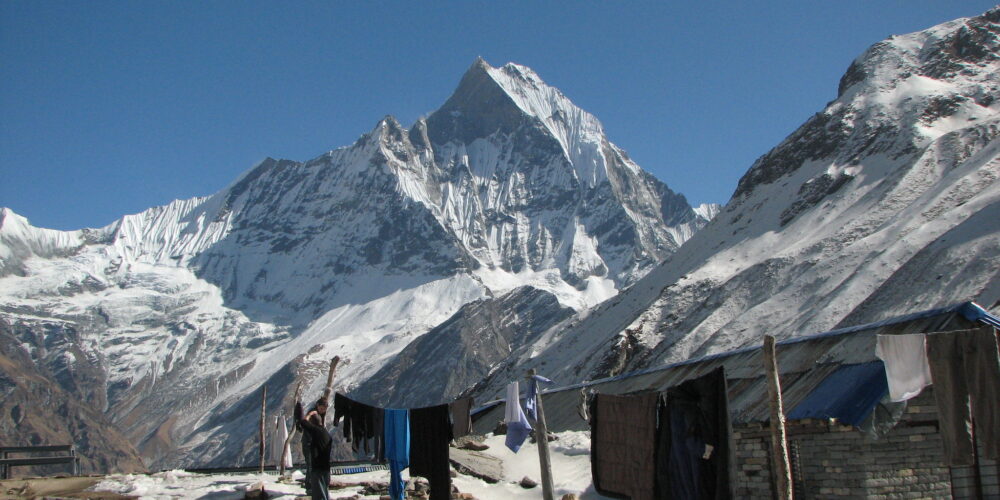

Trip Difficulty
Moderate

Max. Altitude
4,130m./13,550ft.

Meal
Breakfast, Launch, Dinner

Accommodation
4*Hotel and Teahouse/Lodges

Trip Duration
12 Days

Group Size
2-12 People People
Price Starts From
US$ 1155
-
1 person
US$ 1155
-
2 -
5 person
US$ 1045
-
6 over
9999
US$ 985
US$ 1155

Need Help?
Ask to Travel Expert
Trip Highlights
- Kathmandu Cultural Tour: Begin by taking a cultural tour of Kathmandu, exploring the ancient temples, stupas, and palaces that are UNESCO World Heritage Sites. Discover Nepal’s rich spiritual heritage before continuing on to the breathtaking Annapurna region.
- Pokhara—City of Lakes and Adventure: Spend leisure time in Pokhara, the beautiful city of lakes located beneath the Annapurna range, with its great mountain views and calm atmosphere. Take optional adventure activities such as paragliding, bungee jumping, ultralight flights, zip-lining, or boating in Phewa Lake.
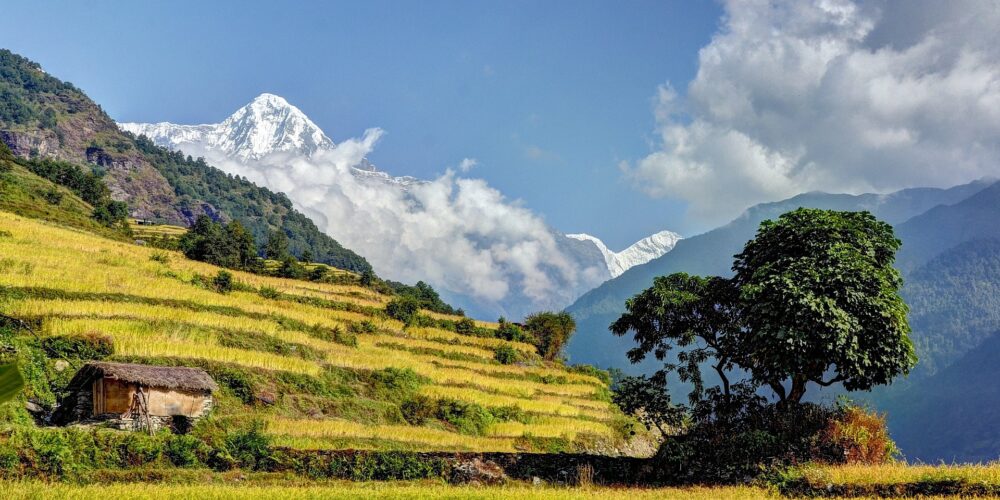
- Trek Through Local Villages and Farmlands: Start your trek walking through picturesque terraced fields and traditional villages where local farming is alive. Become familiar with friendly locals and see Gurung culture firsthand when you trek through villages like Ghandruk and Chhomrong.
- Gurung Heritage and Culture Tour: Experience the warm hospitality and lifestyle of the Gurung people in hilltop villages with stone homes and prayer flags fluttering in the wind. Interact with locals and observe their Himalayan culture-based daily activities and harmonious relationship with nature.
- Rhododendron Forests and Jungle Streams: Walk through serene rhododendron and bamboo forests with their raucous birdsong and calming sounds of gushing mountain streams. Near Bamboo, inhale the pure air and calm beauty of hidden waterfalls and jungle trails in the shade.
- Suspension Bridges and River Valleys: Trek over exhilarating suspension bridges over the Modi Khola and other Himalayan rivers that wind their way through deep valleys. These river crossings connect remote villages and offer some of the most thrilling experiences on the trek.
- Ascending to the Annapurna Sanctuary: As you increase in elevation, the landscape opens up to rock ridges and alpine meadows with stunning Himalayan scenery. The trail becomes increasingly scenic and secluded as you approach the base camp.
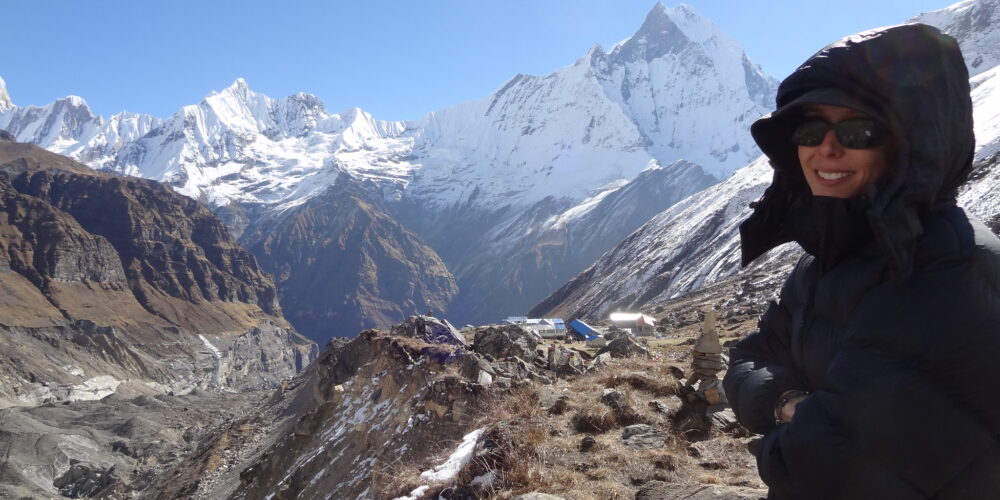
- Machhapuchhare Base Camp—Sacred Mountain Viewpoint: Reach Machapuchare Base Camp at the base of the sacred “Fishtail” mountain, revered by locals and barred to climbers. Enjoy stunning views of snowfields, cliffs, and glaciers from this phenomenal location.
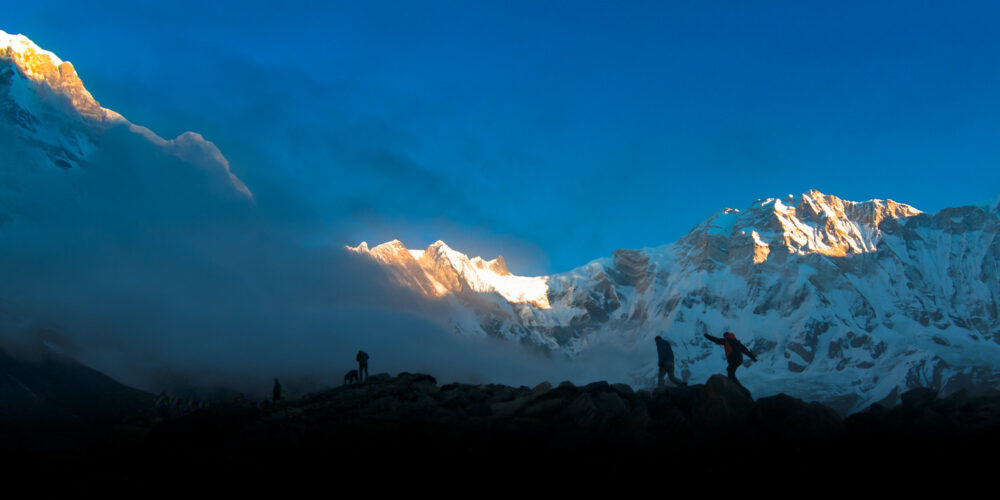
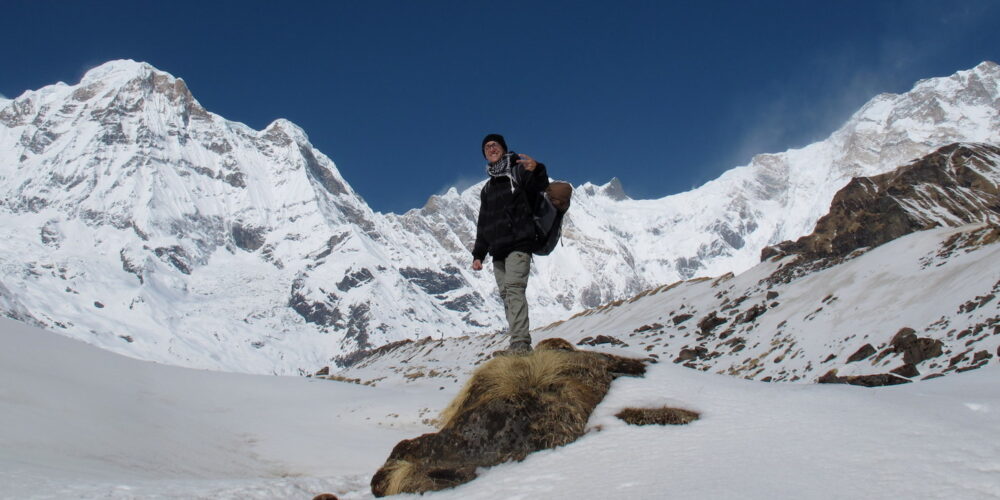
- Annapurna Base Camp (4,130m) Heart of the Himalayas: Stand in the middle of the Annapurna Sanctuary, with a 360° wall of mountains rising above you, including Annapurna I, Hiunchuli, and Gangapurna. Witness a breathtaking sunrise over the snow giants and feel the spiritual essence of the Himalayas.
- Close-Up View of the Annapurna Himalayan Range: On the trek, enjoy close and constant views of the Annapurna range of mountains that includes Annapurna South, Machapuchare, and Annapurna III. The towering Himalayas provide a dramatic and inspiring landscape every step of the way.
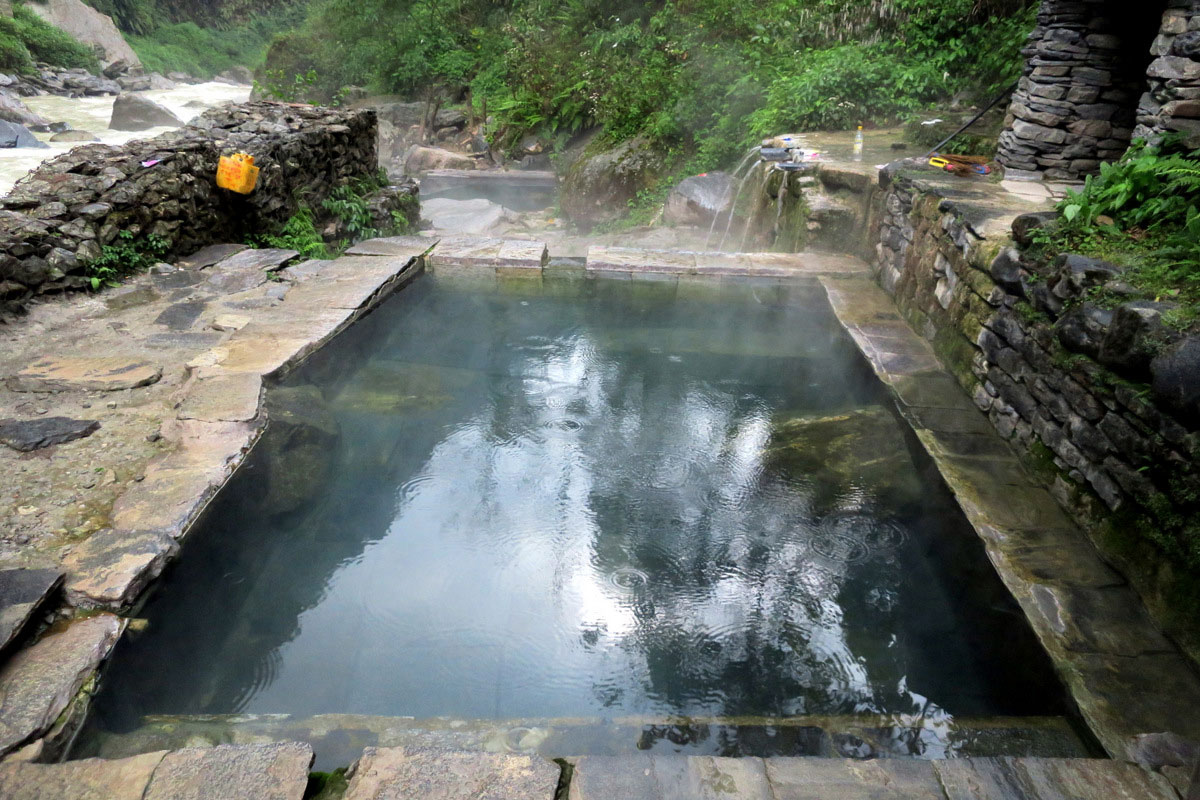
- Jhinu Danda—Natural Hot Springs Retreat: Relax weary muscles in Jhinu Danda’s natural riverside hot springs after days of trekking. This peaceful retreat offers a unique chance to unwind in the midst of nature before returning.
- Celebration in Pokhara—Rest, Reflect, and Rejoice: Complete your adventure in Pokhara with a lakeside celebration, including delicious local food and peaceful ambiance. Treat yourself to a massage, live music, or one last adventure activity before departing with lifelong memories.
Introduction of Annapurna Base Camp Trek
Annapurna Base Camp Trek is a most scenic and breathtaking trekking experience, attracting thousands of tourists from all over the world every year. Renowned for dramatic mountain vistas, profound cultural exposure, and moderate hiking challenges, this trek offers an unforgettable venture into the heart of the Annapurna Himalayan range.
Guided by Graceful Adventure Travel, your trek begins from the Kathmandu Tribhuvan International Airport. You are welcomed and escorted to your comfortable luxury 4*hotel, where you rest and prepare for the adventures ahead. A day before embarking on your trekking adventure, you explore the cultural richness of Kathmandu by experiencing UNESCO World Heritage Sites like ancient temples, stupas, and palaces that embody Nepal’s profound spiritual and historic depth.
Following an experience of Kathmandu culture, your journey continues with a stunning flight over to Pokhara, gateway to the Annapurna Region. Pokhara, also known as the “City of Lakes,” provides dramatic views of the Annapurna Himalayan chain and an easy-going, tranquil atmosphere.
In Pokhara you have an option of a variety of thrilling adventure activities such as paragliding, ultralights, bungee jumping, zip-lining, or boating on Phewa Lake. These optional activities add thrills and variety to the trekking adventure of Annapurna Base Camp trek. From here, you will drive by road to Nayapul, where the trekking trail officially begins.
The trekking itself is a great experience along green subtropical forests, colorful rural villages, and diverse landscapes. During trekking from Nayapul, you walk through farmland and picturesque villages full of local produce. The trek passes through friendly communities occupied by the indigenous Gurung and Magar tribes.
A visit to typical Gurung villages such as Ghandruk and Chhomrong provides a glimpse into their culture and way of life. You will experience stone houses, prayer flags fluttering, and terrace fields, which all present a rich picture of mountain life. Graceful Adventure Travel’s specialized guides will interpret local customs, festivals, and history for you, enhancing your cultural experience on the trek.
Following the Annapurna Base Camp trekking route, the scenery gradually changes from dense bamboo and rhododendron jungle to alpine meadows and boulder ridges. From Bamboo, which offers dense bamboo thickets and colorful rhododendron flower shows during spring, you make your way through peaceful jungle streams and hidden waterfalls that offer a calming melody of nature.
Trekking on suspenseful suspension bridges over Modi Khola and other mountain rivers provides exciting experiences and close encounters with steep valleys. Further up, you arrive at Deurali, the gateway to the alpine zone, where the gradient gets steeper, and the landscape tougher.
One of the pleasures of the Annapurna Base Camp trek is the arrival at Machhapuchhre Base Camp, at the foot of the sacred “Fishtail” mountain. Holy to the locals and unclimbed by mountaineers, Machhapuchhre offers stunning views of glaciers, cliffs, and snowfields.
From here, you proceed to the Annapurna Base Camp itself, within the Annapurna Sanctuary—a sheer natural amphitheater of lofty peaks comprising Annapurna I, Hiunchuli, Gangapurna, and Annapurna South. Here at 4,130 meters altitude, trekkers are rewarded with Himalayan vistas of stunning panoramas that capture the grandeur of the region.
On the trekking trip, there is lodging in simple mountain teahouses and lodges with warm hospitality and clean and basic rooms. The meals served are typically traditional Nepali dishes like dal bhat, momos, and vegetable curries, supplemented with international cuisine to meet diversified tastes.
Graceful Adventure Travel makes sure that meals and accommodations are of quality and hygiene standards, providing the trekking trip to be fun and secure. The company provides professional guides and porters who handle navigation, logistics, and the carrying of luggage to allow trekkers to be able to appreciate the scenery and cultural encounter.
The descent on the return involves a hike down through similar stunning scenery. A highlight of that is the visit to Jhinu Danda, where tourists soak in natural hot springs along the river, relaxing tired muscles amidst serene surroundings.
The trail then returns to Nayapul, where you are taken to Pokhara. There, you can mark the completion of your trek with a relaxing day on the lake, trying local food or participating in last-minute adventure activities before going back to Kathmandu by tourist bus or domestic flight.
In short, the Annapurna Base Camp Trek is an easy but really rewarding experience, with stunning natural beauty, rich local culture, and physical adventure. Graceful Adventure Travel, a well-established adventure travel company in Nepal, has experience in organizing this trek with professionalism, tailored itineraries, and total care from your arrival at Kathmandu airport to your departure. With expert guides, reliable logistics, and sustainable tourism, Graceful Adventure Travel ensures your Annapurna Base Camp trekking experience is safe, comfortable, simply unforgettable and lifetime experience.
Trek Temperature
| Season | Kathmandu (1400m) | Ghandruk (1940m) | Annapurna Base Camp (4130m) | Jhinu Danda (1780m) |
| Spring (Mar-May) | Day: 22–28°C, Night: 10–14°C | Day: 8–14°C, Night: -2 to 4°C | Day: 0–8°C, Night: -5 to -10°C | Day: 10–16°C, Night: 0 to 5°C |
| Summer (Jun-Aug) | Day: 26–32°C, Night: 18–22°C | Day: 10–18°C, Night: 5–10°C | Day: 2–10°C, Night: -2 to -8°C | Day: 12–20°C, Night: 5–10°C |
| Autumn (Sep-Nov) | Day: 20–28°C, Night: 10–14°C | Day: 6–14°C, Night: -3 to 2°C | Day: -2–6°C, Night: -8 to -12°C | Day: 10–16°C, Night: 0 to 4°C |
| Winter (Dec-Feb) | Day: 12–20°C, Night: 2–6°C | Day: -2–6°C, Night: -8 to -3°C | Day: -10–0°C, Night: -15 to -20°C | Day: -2–8°C, Night: -5 to -10°C |
Trek Facts
|
Tour Name |
Seven Passes Annapurna Trek |
|
Maximum Elevation |
4130 meters (Annapurna Base Camp) |
|
Duration |
12 days |
|
Total Distance |
Approx. 100-150 km (including trekking and travel) |
|
Difficulty Level |
Moderate to Challenging (for experienced trekkers) |
|
Best Time to Visit |
March-May, September-November |
|
Accommodation |
4* hotel, Guesthouse, Teahouse & Lodges |
|
Group Size |
1-12 people (ideal for guided group travel) |
Outline Itinerary
| Day | Trekking Trail / Activity | Distance (approx.) | Time (hrs) | Altitude (m) |
| 1 |
Welcome to Kathmandu. Morning breakfast & sightseeing around the city. |
– | – | 1,350 m |
| 2 |
Kathmandu Valley Sightseeing |
– | – | 1,350 m |
| 3 |
Flight to Pokhara and Trek to Ghandruk |
~10 km | 4 – 5 hrs | 1,940 m |
| 4 |
Trek from Ghandruk to Chhomrong |
~10 km | 5 – 6 hrs | 2,170 m |
| 5 |
Trek from Chhomrong to Bamboo |
~10 km | 4 – 5 hrs | 2,310 m |
| 6 |
Trek from Bamboo to Deurali |
~10 km | 5 – 6 hrs | 3,230 m |
| 7 |
Trek from Deurali to Annapurna Base Camp (via MBC) |
~15 km | 7 – 8 hrs | 4,130 m |
| 8 |
ABC to Bamboo |
~15 km | 6 – 7 hrs | 2,310 m |
| 9 |
Bamboo to Jhinu Danda |
~9 km | 4 – 5 hrs | 1,780 m |
| 10 |
Jhinu Danda to Nayapul and Drive Back to Pokhara |
~10 km | 3 – 4 hrs | 827 m |
| 11 |
Pokhara to Kathmandu by Tourist Bus |
– | 7 hrs | 1,350 m |
| 12 |
Final Departure |
– | – | – |
Annapurna Base Camp Trek Detail Itinerary
01
Day 01: Welcome to Kathmandu (Nepal): Altitude: 1,360m
Welcome to the Himalayan land. Upon your arrival at Kathmandu International Airport, our official will greet you at the airport and takes you to the hotel. There will be a meeting in the evening to brief you the trekking and the essentials so that you can well prepare before heading to the Himalayas.
Highlights: Warm welcome in Kathmandu with cultural vibes and trekking briefing
Accommodation: 4* Hotel
Meals: Welcome Meal
02
Day 02: Kathmandu Valley Sightseeing (Altitude: 1,360m)
Kathmandu valley is famous for the traditional art, culture, religious places and ancient art and architectures. The medieval architecture of the Kathmandu valley is recognized by UNESCO by listing seven monuments among other numerous, Pashupatinath and Changunarayan the holy temples of Hindu, Bouddhanath and Swayambhunath, the holy Buddhist stupas and durbar squares of Kathmandu, Bhaktapur and Patan.
It is said that there are as many temples as there are houses and as many deities as there are people in Kathmandu valley. A trained city guide takes you to some of these sites and explains about them. After visiting the valley, you will back to your hotel and take rest and prepare for the next day trip.
Highlights: UNESCO World Heritage Sites – Pashupatinath, Bouddhanath, Swayambhunath, and Durbar Squares
Accommodation: 4* Hotel
Meals: Breakfast
3
Day 3: Flight to Pokhara and Trek to Ghandruk (Altitude: 1940m)
After breakfast, we will head towards the domestic airport to take a short and magnificent Mountain View flight from Kathmandu to Pokhara. We will take a drive of one and half hour through a zigzag route over the middle of the hills to Nayapool from Pokhara to begin our trek.
Now, we follow the trekking route to Ghandruk through Birethanti a prosperous riverside village on the bank of Modi Khola. Walk upstream through terraced paddy fields to Syauli Bazaar, then cross the suspension bridge and ascend, with breathtaking views of Machhapuchchhre (Fish tail), Hiunchuli and Annapurna South.
Ghandruk is the beautiful Gurung settlement village where we will explore the Gurung museum and with great views of the valley gorge – and tomorrow’s trail. Stay overnight at Ghandruk.
Walking Distance: 9–10 km (5–6 hours)
Highlights: Short scenic flight to Pokhara, riverside trail to Ghandruk with views of Annapurna South and Machhapuchhre
Accommodation: Teahouse/Lodge
Meals: Breakfast, Lunch, and Dinner
4
Day 4: Ghandruk to Chhomrong (Altitude: 2170m)
After having the breakfast, we will start the trek that heads north passing through grazing land and climbing to a ridge. You can have magnificent views of Mt. Machhapuchchhre, Annapurna South, Hiunchuli and many others.
The route then descends down into a green valley and cross suspension bridge over the Kimrong Khola. The trail then ascends through rhododendron and oak forest to Chere Danda and finally an easy trail lets you reach the Chhomrong village.
Walking Distance: 8–9 km (5–6 hours)
Highlights: Forested trails, mountain views, suspension bridge over Kimrong Khola
Accommodation: Teahouse/Lodge
Meals: Breakfast, Lunch, and Dinner
5
Day 5: Chhomrong to Bamboo (Altitude: 2310m)
After having breakfast, we start our day to a long descend down to Chhomrong Khola on the series of almost 2,500 carved stone staircase. Then the trail goes through the upper Modi Khola Valley.
The trekking route then follows the beautiful Sinuwa Village and make through the dense forest of rhododendrons, oak and cane followed to the Kuldihar Village. The trail then follows comparatively an easy route to reach the Bamboo Village. Stay overnight at Bamboo village.
Walking Distance: 9–10 km (5–6 hours)
Highlights: Thousands of stone steps, Sinuwa village, rhododendron forest, peaceful Bamboo settlement
Accommodation: Teahouse/Lodge
Meals: Breakfast, Lunch, and Dinner
6
Day 6: Bamboo to Deurali (Altitude: 3230m)
The name Bamboo village is named after its forest full of bamboos. After having the breakfast, we start our trek that goes through the middle of the dark and dense forest.
We will pass the Himalayan Hotel and the view of Glacier River that entertains you on the way. As the altitude increases, forest gives way to alpine scrub and grasses. The trail then follows a steep climb through forest and reach Hinku cave.
Explore the cave and head towards our destination. The route then drops closer to the river and a gradual climbing brings us to the Deurali Village. Collect the memories of waterfalls, diverse vegetation, rivers and cliffs and spend the night over Deurali.
Walking Distance: 6–7 km (3–4 hours)
Highlights: Dense bamboo forests, Hinku Cave, alpine scenery begins
Accommodation: Teahouse/Lodge
Meals: Breakfast, Lunch, and Dinner
7
Day 7: Deurali to Annapurna Base Camp (Altitude: 4130) Via MBC (3700m)
Today is the day to reach our final destination Annapurna Base Camp. We head early in the morning after the breakfast with a gentle climb through a river bed and join a steep trail to the mountain side and reach Bagar from where the trail becomes more challenging until we reach to the Machhapuchchhre Base Camp.
We will have a magnificent view of Mt. Machhapuchchhre (Fish Tail Peak) followed by astonishing close views of Mt. Hiunchuli, Annapurna South, Annapurna I, Annapurna III, Gandharbachuli and Gangapurna. The snowcapped towering mountains are at their best to snatch your attention and give you an everlasting memory of your life. As the trail extends towards Annapurna Base Camp (ABC), you can clearly hear your heart beats on excitement.
Upon your successful arrival at the Annapurna Sanctuary, the high glacial basin of oval shaped plateau is surrounded by ring of mountains, the Mt. Annapurna South, Annapurna I, Hiunchuli and many other peaks. You will have a magnificent 360-degree panorama view that satisfies you more than expected. Stay overnight at ABC.
Walking Distance: 10–11 km (6–7 hours)
Highlights: Annapurna Sanctuary, panoramic views from Machhapuchchhre and Annapurna Base Camps
Accommodation: Teahouse/Lodge
Meals: Breakfast, Lunch, and Dinner
8
Day 8: ABC to Bamboo (Altitude: 2310m)
We will wake up early before the dawn to have an eye-catching unforgettable views and photo opportunities from the edge of the glacier. The circle of the Himalayas is at their best at the dawn and the sunrise views are amazing. After the breakfast, we will retrace back to bamboo.
The trail today almost descends down all the way. We will descends down to the Deurali village and few ascends and most descends takes us to the Hinku Cave, Himalaya Hotel, and the same dark and dense bamboo forest with an easy walk until we reach Bamboo village. Stay overnight at Bamboo.
Walking Distance: 15–16 km (7–8 hours)
Highlights: Sunrise at ABC, retracing scenic trails through Himalaya and Deurali
Accommodation: Teahouse/Lodge
Meals: Breakfast, Lunch, and Dinner
9
Day 9: Bamboo to Jhinu Danda (Altitude: 1780m)
After breakfast, we start our journey and as earlier the route follows almost descend all the way. A few gentle ascends bring us to Kuldighar and then follows descending to Chhomrong Khola then climbing the same long stone stairs ascending takes us to the Chhomrong village.
The splendid mountain ranges, diverse and dense vegetation, natural springs, rivers and the fresh air remain with you throughout the whole trekking route. A natural hot spring bath may relieve your stress of walking and refresh your body muscles at Jhinu Danda. Stay overnight at Jhinu Danda.
Walking Distance: 10–11 km (5–6 hours)
Highlights: Return to Chhomrong, descend to natural hot springs at Jhinu
Accommodation: Teahouse/Lodge
Meals: Breakfast, Lunch, and Dinner
10
Day 10: Jhinu Danda to Nayapul (1070m) and Drive Back to Pokhara (827m)
After the breakfast, we will head downwards to Nayapul from where we will take taxi facility to reach Pokhara city. As the Pokhara excursion is not included in this itinerary, you shall explore the most beautiful city best known as the tourist city in Nepal as it has many things to offer to visit for tourists. Visit the lakes, waterfalls, caves and explore the lakeside at the evening. Stay overnight at Pokhara.
Walking Distance: 9–10 km (5–6 hours)
Drive Distance: 1–1.5 hours
Highlights: Final trek through terraced villages, return to lakeside Pokhara
Accommodation: 4 star hotel
Meals: Breakfast and Lunch
11
Day 11: Pokhara to Kathmandu by Tourist Bus
After an early breakfast, transfer to tourist bus station and leave the beautiful city at 7:30 am. The drive from Pokhara to Kathmandu is itself an excursion. The scenic drive offers you to look over the rural Nepal along with the natural beauty of the alongside.
The road follows the long distance of the famous rafting Trishuli River before you arrive to Kathmandu at mid day around 2-3pm. You will be then transferred to hotel and there will be a gathering of the group for the trip evaluation and the farewell for the trekking group in a typical Nepali restaurant at the evening before that you can explore the Thamel and make last minute shopping.
Walking Distance: Minimal
Drive Time: 6–7 hours
Highlights: Scenic drive along Trishuli River, farewell dinner in Kathmandu
Accommodation: 4 star hotel
Meals: Breakfast
12
Day 12: Final Departure
Today is the final departure day as per the itinerary. If you are going back to your next destination then you should get your bags ready and leave the hotel 3 hours prior to the schedule flight time and one of our officials will be with you to drop at the airport. If you have time and wish to join any of the other programs then we are there at your service. Please consult to us on this regard.
Activity: Fly back
If our standard itinerary doesn't fully meet your needs, we are happy to tailor it to your specific preferences and requirements.
Includes and Excludes
What’s Included?
- Airport pick up and drop with an escort
- Local transportation with private service
- Kathmandu – Pokhara by bus, car or by flight as per your request
- Full Board Plan (breakfast, lunch, dinner, accommodation, ) during trek,
- Hotel in Kathmandu and Pokhara with BB plan
- City tour guide in Kathmandu
- English speaking with license Holder Trekking guide
- Annapurna Conservation Area (ACAP) permit
- TIMS (Trekkers’ Information Management Systems)
- All government tax
- First aid kid
What is not Included?
- Lunch and dinner in Kathmandu and Pokhara
- Your travel insurance
- International flight and departure tax
- Any expense of personal nature
- Nepal entry visa fee US 30 (Duration 60 days from date of issue)
- Your personal nature expenses such as bar bill, laundry, beverages
- Bar Bill (Beer , whisky, cola, mineral water and tea, coffee )
- Tipping for guide ,Porter and driver
- Doesn’t mention service included.
Trip Map of Annapurna Base Camp Trek
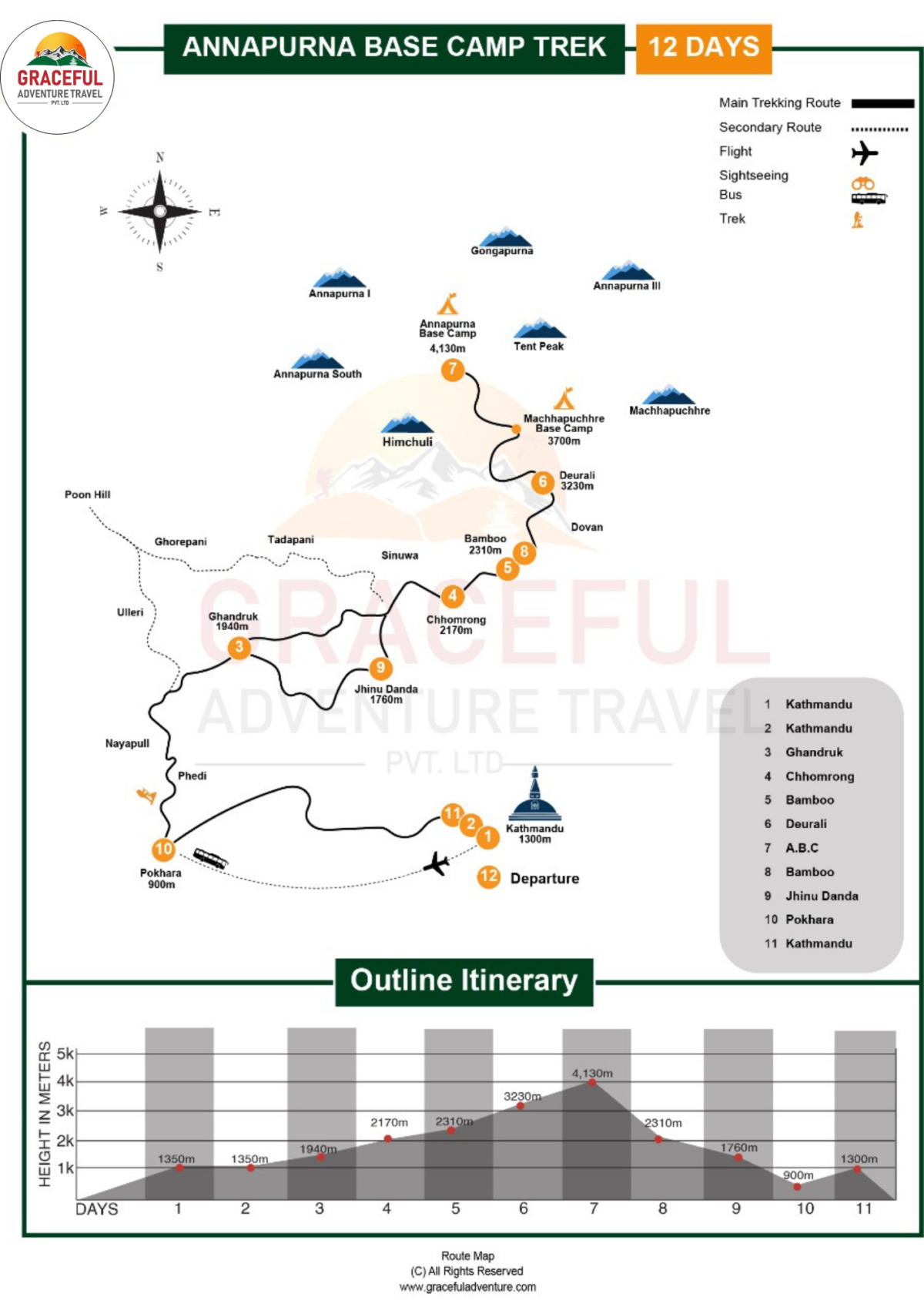
Annapurna Base Camp Trek - Trip Information
Major Attraction of Annapurna Base Camp Trek
Annapurna Base Camp trekking is known for its beautiful views, a multitude of landscapes coupled with cultural experiences. The trek exemplifies breathtaking views of the Annapurna massif including great peaks like Annapurna I, Machapuchare (Fishtail), and Hiunchuli. While ascending, trekkers are traversing through vibrant green forests, terraced fields as well as beautiful villages which speak highly of the Himalayan scenery. Varied landscapes: There are sub-tropical forests, then alpine meadows, and last to the stunning Annapurna Base Camp which lies at a height of 4130 meters above sea level. From here, a wonderful panorama of towers and glaciers is reserved for the trekker. Along the way, it also exhibits some local flavor-the Gurung and Magar and their co-ethnicities and would thus make the trek a wonderful combo of nature, adventure, and cultural discovery.
Kathmandu – The capital city of Nepal
Kathmandu-the capital full of life in Nepal-is where the trip to Everest begins. It has a mix of ancient temples, crowded markets, and streets, each quite busy with life. Travelers here encounter sacred sights such as Swayambhunath, Boudhanath, and Pashupatinath. Each of these places has something unique to say within an ancient time frame that carries thousands of years of religious significance and spiritual beauty. Strolling through the old lanes gives some peeks into Nepal’s splendid history, with hostels and traditional architecture bedecked with colorful prayer flags. The local food and culture in Kathmandu are something in themselves, and being an entry point for trekkers makes it all the richer.
Apart from what can marvel the eyes, Kathmandu is a very important point for all preparations for the trek. The tourist hub of Thamel actually comprises shops renting gear, several trekking agencies, and many cozy galleries where trekkers can relax before the climb. Here permits are also issued. Ancient spirituality, on the one hand, and modern energy, on the other, create a memorable experience for trekkers. With a chilled mocha in a rooftop café or a view of a 1,500-year-old stupa, Kathmandu leaves you with an impression. A gateway offering comfort and inspiration before entering the mountains.

Pokhara – The gateway to the Annapurna region
Sitting gently beside the placid Phewa Lake, Pokhara is quite appropriately called the gateway to the Annapurna region. Most notably, this area offers views of the Annapurna Range from the lake itself. Renowned for its mellow mood, Pokhara is a great place to relax before your trekking adventure. Boating, paragliding, and trekking in the gorgeous surroundings, with stars above and mountains all around, are a few activities offered by the city.
In addition, Pokhara has many tourist attractions, namely, World Peace Pagoda, Devi’s Fall, and the International Mountain Museum. It entertains trekkers heading for Annapurna Base Camp. With its relaxing atmosphere and breathtaking views, Pokhara offers an experience to never forget. Whether you enjoy adventure or seek peace, Pokhara has something to offer for everyone.

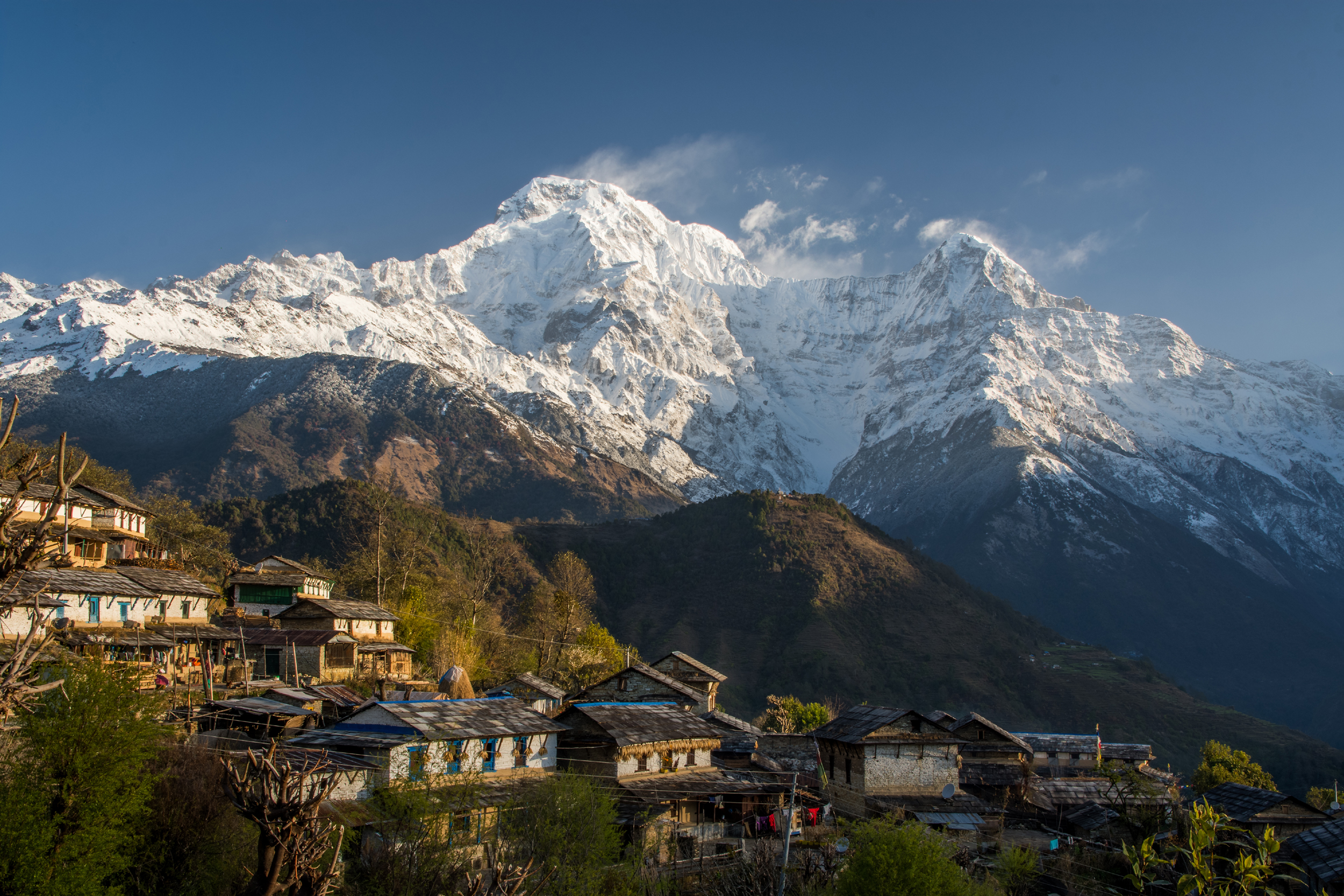
Ghandruk – A picturesque village in the Annapurna region
Ghandruk is a gorgeous Gurung village high at an elevation of 1,940m. This quaint village provides striking views of the Annapurna and Machapuchare (Fishtail) peaks. The village itself has pure Gurung culture, with its well-laid stone houses and maintained terrace fields. One of the first major stops for trekkers on the Annapurna Base Camp trek, Ghandruk provides a good opportunity for acclimatization and enjoyment.
The trek from Pokhara up to Ghandruk is an exciting one through the thick forests and scenic landscapes. Once in Ghandruk, trekkers can rest while enjoying the mighty view. The village has a number of nice guest houses where visitors may enjoy local hospitality. An ancient place, Ghandruk also has a local museum where one can learn about the Gurung lifestyle. A truly beautiful fusion of nature, culture, and history.
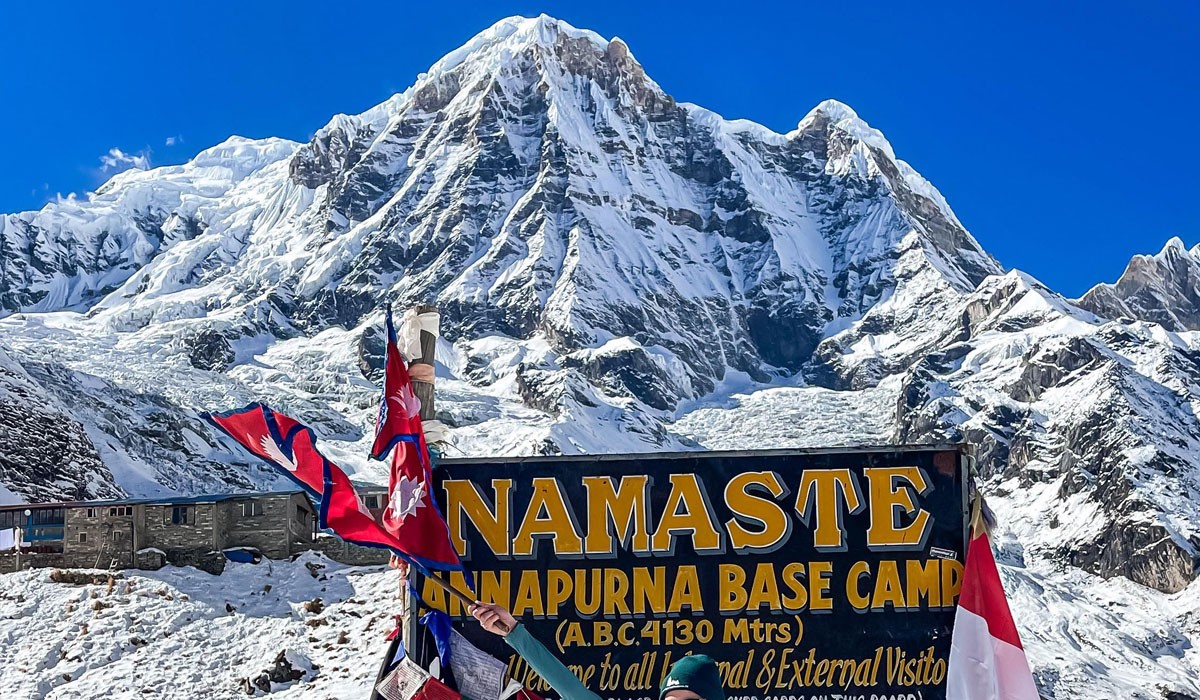
Annapurna Base Camp – The heart of the Annapurna range
Annapurna Base Camp, ABC, is the premise for the last destination for trekkers into the Annapurna region. Being at a height of 4130 meters gives a superb view of Annapurna, Machapuchare, and other peaks surrounding it. The trek to ABC gives challenging yet rewarding experiences where trekkers enjoy walking through lush forest areas, flowering alpine meadows, and rocky pathways. The scenery starts changing drastically as one nears the base camp; the high peaks begin to loom bigger and with majesty.
At ABC, a great bulk of trekkers gets one of the most magnificent views of the Annapurna massif and the surrounding glaciers. As far as the camp itself, it is quite basic; however, the surrounding scenery arguably renders it one of the world’s most beautiful spots in the Himalayas. To many, it is considered an achievement to reach Annapurna Base Camp, for it is the best view of one of the most spectacular mountain ranges in the world. This is a combination of hardships exercised and an elegant encounter with nature.
Jhinu Danda – a rejuvenating hot spring retreat
This small village is located at a height of 1,780 meters and is noted for its popular natural hot springs. After days of trekking, Jhinu Danda hosts trekkers to relax and rejuvenate. One can have a dip in the warm, soothing water while gazing at the majestic wall of mountains through this village. It’s probably the best way to unwind after a tiring trek.
This site is added another fairly scenic walk from Bamboo towards Jhinu extending through a well-cultivated valley amidst lush forests and raging rivers. The hot springs and the quiet air from the village are characteristic features that make this place a favourite resting place for trekkers. Peace and ease are not the only things, but also a very different cultural experience. Jhinu Danda forms a highlight of the Annapurna trek as it manages to provide both mental peace and bodily relief after a hard trek to Annapurna Base Camp.
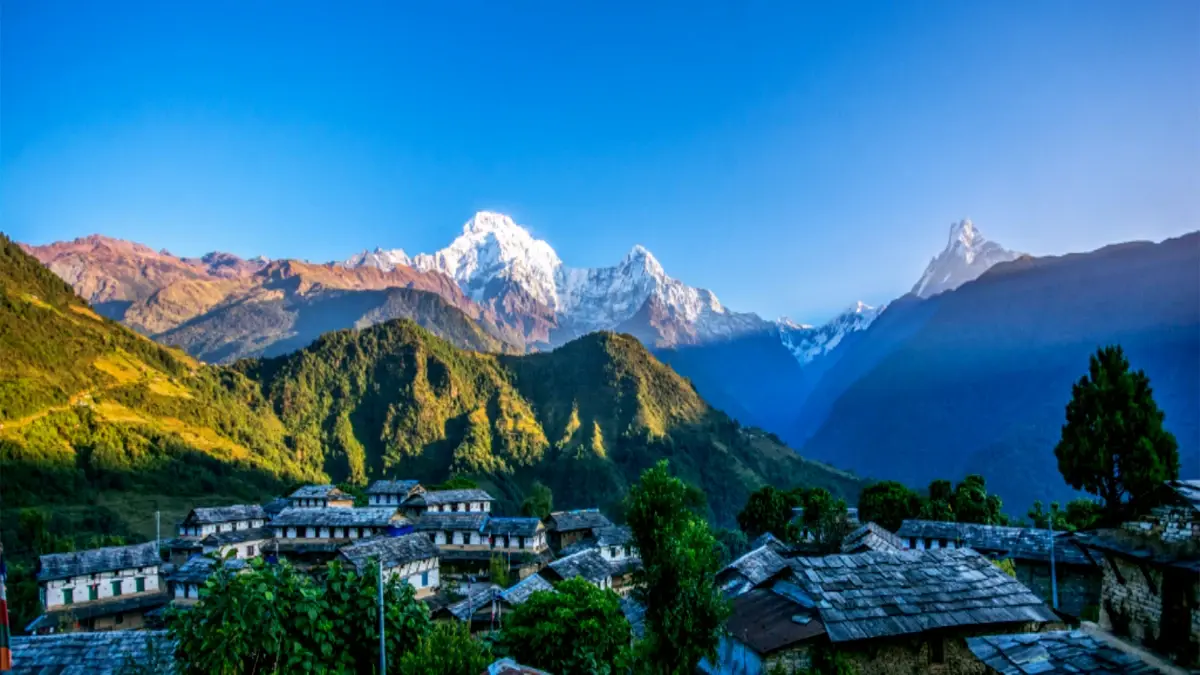
Typical Local Nepali Villages En Route to the Annapurna Base Camp Trek
The Annapurna Base Camp Trek is one of those treks whereby trekkers can commune with the tradition of Nepali villages like Ghandruk and Chhomrong, where Gurung and Magar people and their abode blending in so well with nature. Surrounding them are houses of stone built, terraced fields and the peaceful rhythm; so much character of life reverberates around it. One thing which can be stated about such villages is that they are profusely wrapped with a grandeur mountain landscape which can seduce and satisfy any trekker aesthetically while letting him absorb the regional culture. Living up to their name, it is the hospitality and good local food, such as dal bhat and momos, that will fill up your heart and complete your experience of rural Nepalese living.
So iconic is Ghandruk in the trek that it boasts of unrivaled views of Annapurna South and Machapuchare. Truly a showcase of a traditional Gurung village, it features stone pathways and wooden houses, which capture the old-world charm of Nepali architecture. In this respect, passing through these villages gives the trekker some welcome breaks amid the unavoidable tussles of trekking and opens him to the richer culture and mellower charms of local people, truly essential aspects in the Annapurna Base Camp experience.
Best Season for Annapurna Base Camp Trek
Trekking during the pre-monsoon spring or the post-monsoon autumn seasons is the best time to make a visit to the Annapurna Base Camp. These times provide excellent visibility with moderate temperatures and favorable trekking conditions. During the long March to May period, rhododendrons bloom and temperatures chill enough for those who want to undertake long treks. If that isn’t enough, autumn (September to November) has the beautiful sight of the Annapurna range after the monsoon clears away and, of course, an additional promise of good weather and less chance of snowstorm or heavy rains complicating the trek.
Spring (March to May)
The most beautiful season for going for the Annapurna Base Camp Trek is spring. From March to May, one can enjoy the weather with not-so-harmful daytime temperatures ranging from 10°C to 20°C, considered best for trekking. Along the paths will be some rhododendron flowers, which will give a fantastic animated experience to the trek. Apart from that, skies are mostly ideal for taking panoramic shots of the majestic peaks like Annapurna, Machapuchare, and Hiunchuli. It is the time for the annual trekking season and yet the trails have fewer trekkers, giving the hikers the opportunity to enjoy the sight and serene environment.
Autumn (September-November)
Autumn is regarded as the peak season for trekking or touring within Nepal, including the Annapurna Base Camp Trek. The weather during these months from September to November is mostly stable, and the skies are mostly clear, offering incredible views of the mountains surrounding the participants. Daytime temperatures range from about 10-15 degrees Celsius, but nights can get quite chilly as you near base camp. The season boasts the best trekking conditions because it receives little rain and little or no snowfall, making the trails dry and usable. Also, autumn is the period in which many trekkers come to adventure in the Himalayas, hence the trekkers’ community is lively and the provisions along the way are well stocked.
Summer/Monsoon (June to August)
In Nepal, it’s called the monsoon season, and those months are not the best for the Annapurna Base Camp Trek. During June to August, heavy rains near the base camp make trekking extremely tricky, if not impossible. Trails become slippery, landslide-prone, and lower lying areas are subject to flooding. Although temperatures are still warm in this season – between 15-20 degrees Celsius for lower altitudes – continuous rains make trekking conditions very tough. The trails turn muddy and dangerous, and the mountains become concealed by the beautiful green forests that shroud them. However, for the adventurous, hardy trekkers who don’t mind most showers, monsoon could probably mean an isolated experience with fewer trekkers on the trails.
Winter (December to February)
When winter sets in, which is from December to February, brings very cold temperatures particularly high up, and although it is less cool in lowland areas, daytime temperatures hover between 5 and 10°C. Nighttime temperatures, however, can plummet to well below freezing, especially near places like Annapurna Base Camp: the temperature can drop as low as -10°C or even lower. Longer months of winter have a peaceful trekking experience with fewer people, although there is the risk of snowstorms and icy conditions, which may make trekking a lot tougher, particularly at higher altitudes. However, the beauty of the landscape covered in snow is truly unique, and trekking is perfect for solitude seekers as long as they are well prepared for the cold conditions.
Trek Route Of Annapurna Base Camp
Annapurna Base Camp trek starts after your arrival in Kathmandu the capital of Nepal. You will visit this historically and culturally significant city. Early morning, you will take a bus or flight to the beautiful city Pokhara; lying 200 km from capital. If you catch the early flight, you will witness the grandeur majestic Himalayan peaks. The same day we will drive to nayapul and ascend up to Birethati by the side of Modi Khola to Ghandruk village.
Ghandruk, a typical Nepali Gurung community, is a great place to experience the local culture and traditions, as well as to taste local food and drinks. The journey continues to Chomrung, where the trekker is treated to stunning views of the Himalayan range, including Mt. Fishtail, Annapurna, and Huichuli. The trail then takes the trekker through dense jungles teeming with flora and fauna before reaching Chomrung.
From Chomrung, the trekker descends to Chomrung Khola and then ascends through Modi Khola Valley to Sinuwa village. The journey continues through a dense, dark forest to Kuldihar village before reaching Bamboo village through an easy route. The trail from Bamboo village to Deurali is breathtaking, winding through a bamboo jungle and offering spectacular views of the glacier river.
The trekker will then climb up the steps to Hinku Cave before dropping down to the river and ascending to Deurali. The journey continues through the riverbed and then up the mountainside, passing through Bagar to Machhapuchre Base Camp and ultimately to Annapurna Sanctuary, where the trekker will stay at Annapurna Base Camp.
After spending some time at Annapurna Base Camp in the morning, we will begin us descend back to Deurali, with a few ascending and descending portions, including Hinku Cave and the bamboo forest trail. After spending a night in Bamboo village, we will descend all the way to Kuldighar and then descend again to Chomrong Khola before ascending to Chomrong village and moving forward to Jhinu Danda, where we will have the chance to dip into natural hot springs. After an overnight stay in Jhinu Danda, we will trek to Nayapul and drive back to Pokhara before returning to Kathmandu, where the trek will end.
Best Time for Annapurna Base Camp Trek
Trekking in Nepal is a remarkable experience that offers visitors the chance to explore the country’s natural beauty and cultural richness. Among the many trekking routes available in Nepal, Annapurna Base Camp stands out as a must-visit destination, offering stunning views of the Himalayan mountains and the surrounding landscape. While the trek is feasible year-round, the optimal time to visit varies based on several factors.
Spring, from March to May, is the best season explore to embark on the Annapurna Base Camp trek. During this period, the route winds through a jungle bursting with various flowers, including Nepal’s national flower, the rhododendron. The forest of rhododendron transforms into a reddish hue, creating an awe-inspiring visual spectacle. Additionally, the weather is typically sunny and clear, providing breathtaking views of the snow-capped peaks. With minimal rainfall, this season presents an ideal time to trek.
Autumn, from September to November, is another excellent time to visit the Annapurna region. The weather is dry, and the skies are clear, offering stunning views of the mountains and green forests. The season also features several cultural festivals, providing a chance for trekkers to immerse themselves in Nepal’s rich traditions and local customs.
Winter, from December to February, is ideal for visitors who prefer the cold and the snow-capped mountains. While the temperature drops below freezing, the sight of the glowing peaks during sunrise is a breathtaking experience. The dry weather also makes it an excellent time to trek in the higher Himalayas.
Summer is the least popular season for travelers due to the rainy season in Nepal, resulting in slippery trails. However, many travelers who love the natural greenery still enjoy trekking during this season. The slippery trails make the trek more challenging, but with proper equipment such as boots and trekking poles, the challenge can be overcome.
In conclusion the best time to trek to Annapurna Base Camp is spring and autumn season.
Typical Day in Annapurna Base Camp
Our trekking itinerary begins with a delicious breakfast served promptly at 7 to 7:30 am, providing our guests with the necessary energy to embark on the next part of their journey. Our experienced team will commence trekking at 8 am, and after four hours of trekking, we will reach our next destination, taking ample breaks to admire the stunning scenery of mountains, forests, rivers, waterfalls, and more, making you forget all the fatigue.
To ensure our guests’ comfort and prevent any physical strain, we have designated enough rest time during the daily trek of 6 to 7 hours. At noon, we will take a break for a well-deserved lunch, allowing our guests to recharge themselves and relish the surrounding natural beauty.
In the evening, our guests will be treated to a delectable dinner between 6 to 7 pm, consisting of both local and international cuisine. Our skilled chefs will utilize fresh, locally-sourced ingredients to create an unforgettable dining experience. Our commitment to exceptional hospitality and attention to detail will make our guests’ trekking experience both pleasant and unforgettable.
Acclimatization On Annapurna Base Camp Trek
When individuals immigrate to a foreign country with a dissimilar climate or cultural norms, they may require an adjustment period to acclimate to their new environment and feel comfortable in their surroundings. Nepal, in particular, is a highly sought-after destination for trekking and touring. However, the country’s environment can be vastly different from other locations on the planet.
Travelers hailing from lower altitudes may encounter obstacles when embarking on the Annapurna Base Camp, which culminates at a towering altitude of 4130 meters. Although the view from beyond the tree line is awe-inspiring, altitude sickness is a frequent ailment that can affect those who ascend too rapidly without sufficient acclimatization.
Fortunately, our highly experienced team is well-equipped to assist trekkers in combating altitude sickness. We strongly advise our guests to consume an abundance of fluids, including water, hot soup, and tea, to help prevent altitude sickness. Furthermore, we employ a gradual approach to ascending to higher elevations, affording the trekkers’ bodies sufficient time to adjust to the changing environment. To allow the body to acclimatize, it is essential to rest frequently and avoid overexertion during hikes or climbs. Even physically fit individuals may be susceptible to altitude sickness, which is why we ascend slowly, typically 300 to 1000 meters per day, to ensure proper rest.
At our company, we prioritize providing the best service while taking care of our guests. In the event that a trekker is unable to fend off altitude sickness, we will take them back. Our company’s utmost concern is the well-being of our guests, and we guarantee that our seasoned team will do everything possible to ensure a safe and unforgettable experience for everyone involved.
Trekking Difficulties to Annapurna Base Camp Trek
Nepal’s topography is known to be rugged and diverse, encompassing elevations ranging from 60 to 8848 meters above sea level. As such, travel in the region can pose various challenges, from navigating varying land structures and weather conditions to managing seasonal changes. However, for those seeking a moderate-level trekking experience, Annapurna Base Camp presents a compelling option.
The trek begins at a modest altitude of 1000 meters and gradually rises to a maximum of 4130 meters, making it one of the less arduous trails in Nepal. While the path may be narrow and steep in certain places, the overall altitude range is relatively small compared to other well-known treks. It is worth noting, however, that the weather can be unpredictable, with rain in the summer months creating slippery conditions.
Despite these potential obstacles, Annapurna Base Camp remains a sought-after trekking destination, attracting travelers from around the world. This is due in part to the local youth, who are highly educated and socially active, taking great pride in maintaining the trail in excellent condition. As a result, the path is remarkably clean, and with fewer travelers, the trek offers a more relaxed and comfortable experience.
At our adventure travel company, we understand the importance of a safe and enjoyable journey for our clients. Our team is comprised of experienced and knowledgeable guides who will provide proper advice and support throughout your trek, ensuring your comfort and enjoyment every step of the way. We are always available to address any questions or concerns you may have, and we take great care to ensure your safety and well-being throughout your journey.
In conclusion, if you are seeking a moderate-level trekking experience amidst the breathtaking landscapes of Nepal, Annapurna Base Camp is an excellent choice. With its relatively gentle altitude range, well-maintained path, and exceptional local guides, this trek offers an unforgettable adventure that you will cherish for years to come.
Health and Physical Requirements:
ABC trek is a moderate trek favorable for individual, family and group who have the ability to walk 4-6 hours a day with a light back-pack. Walking in higher elevation demands more physical fitness however if you are in excellent health with average physical fitness with positive attitude you can make this trek. Exercising and jogging regularly 2-3 months prior to the trek date is a good idea to enhance your stamina. Past trekking experience is not compulsory though certainly helpful. If you are suffering from heart, blood diseases and lung problems should consult to your doctor and inform to us before you book the trekking date.
Guide and Porter System of Annapurna Base Camp Trek
The Annapurna Base Camp Trek is the perfect choice for anyone looking to experience the natural beauty of Nepal. Whether you are traveling with colleagues, friends, or family, this trek is sure to be an unforgettable adventure. While it is possible to trek independently, please note that foreign tourists are required by regulations to have a guide and porter.
We provide highly qualified and experienced guides and porters who are fluent in English and renowned for their politeness and friendliness. Our team will introduce you to Nepalese culture and traditions, and if necessary, we can arrange for a translator to assist you.
Our trekking package is for 12 days and is best suited for group trekking. Since we need to carry warm clothing and personal belongings, we provide porters. However, each porter is allowed to carry only 20 to 25 kg, so it is important to pack efficiently.
The number of guides and porters we provide will depend on the size of the group as follows:
| Number of Trekkers | Numbers of Guide | Numbers of Porter |
| For 1 or 2 trekkers | 1 guide | 1 porters |
| For 3, 4, or 5 trekkers | 1 guide | 2 porters |
| For 6 or 7 trekkers | 1 guide | 3 porters |
| For 8 trekkers | 1 guide & 1 assistant guide | 4 porters |
| 9 trekkers | 1 guide & 1 assistant guide | 4 porters |
| For 10 trekkers | 1 guide & 2 assistant guide | 5 porters |
Please note that our guide and porter services are tailored to the number of trekkers in your group to ensure the best experience for you. With our team of experienced guides and porters, you can be confident that you will have a safe and enjoyable trekking experience.
Annapurna Base Camp Trekking Permit
In Nepal, trekking is a popular activity that is permitted throughout the country for individuals or groups. However, certain areas, such as conservation areas, wildlife reserves, and the Himalayas, are restricted, and trekkers must obtain permits issued by the Nepalese government and tourism board. It’s important to note that permits can only be obtained through government but not through any trekking agencies and not by individuals directly.
For those planning to trek to Annapurna Base Camp, obtaining a Trekkers Information Management System (TIMS) card is mandatory. The Nepal Tourism Board in Kathmandu or in Pokhara issues TIMS cards, which typically take 20-30 minutes to obtain. The process involves filling out a form and paying a fee of 20 USD.
Additionally, Annapurna Base Camp Trek lies in Annapurna Conservation Area. So, to enter the Annapurna Conservation Area must obtain an Annapurna Conservation Area Entry Permit, which can be acquired from the Nepal Tourism Board in Kathmandu or its office in Pokhara. The permit fee is approximately 3000 NPR, and a photograph is required for the application.
To summarize, both a TIMS card and Annapurna Conservation Area Entry Permit are necessary for trekking in Annapurna Base camp. It’s crucial to keep in mind that the TIMS card can only be obtained from the Nepal Tourism Board in Kathmandu, while the permit can be obtained from either the Nepal Tourism Board or its office in Pokhara. By obtaining these permits, trekkers can ensure a safe and enjoyable experience while also supporting the conservation efforts in the region.
Food Services on the Annapurna Base Camp Trek
The Annapurna Base Camp Trek has trekkers in for an exciting and delectable food experience that is a reflection of the local culture of the region. Such nutrition is provided while trekking because it enables trekkers to carry out the arduous journey on foot through the wild. The various tea houses spread along the route serve nutritionally filling yet simple dishes which are prepared from the locally available ingredients. A few commonly consumed dishes include dal bhat, momos, and chapati. They have their essential carbohydrates, protein, and energy contents to keep trekkers going on trekking adventures throughout the day. Most of the meals with local content such as vegetables, grains, and dairy products are common; hence they are well combined so that food nourishes and energizes trekkers.
Meals in the trekking journey about the Annapurna Base Camp are created by the influence of the Gurungs and Magar people, the community in which they reside. Although trekkers might come across simple meals, they all promise the quality and freshness to get an experience as a unique and cherished part of the adventure. Trekers can also taste local favorites like gundruk (fermented leafy greens) and yak cheese, which are particularly popular in high altitudes. Such traditional foods ensure that the trekker gets the full benefit of the real cuisine of the area through which he is moving, connecting him to the local populace while recharging him for the next stretch of the course.
Accommodation Services for the Annapurna Base Camp Trek
The accommodation facilities form the elements in training. While trekkers are accustomed to the high-class accommodation of four-star hotels of Kathmandu and Pokhara , the lodging for this trek is primitive but warm and welcoming. They accommodate trekkers along the Annapurna Base Camp trek in basic tea-house or lodge kind of accommodation which provides each trekker a place to rest after a taxing day’s trek. These services are basic but comfortable, as they offer the trekkers a bed and warm food, as well as a place to unwind in. Tea houses at lower altitudes come better equipped to cover attached bathrooms, while above, the amenities are greatly simplified with shared bathrooms. The rooms are small in general and have minimal heating; thus, trekkers are strictly advised to carry sleeping bags, especially during the colder months. Simplistic as it may be, the comfort of the staff and the incredible scenery around makes it all worth it.
It may not be as fancy as the city, but Sherpa hospitality shines through, with trekkers often receiving a welcome and average service. This remoteness even forces some tea houses to rely on solar power or generators, as power outages are frequent. However, the beauty of this region, coupled with the mountains and the opportunity to learn about the local people, outweighs all these discomforts. Accommodation along the trek is part of the immersive experience because it brings a taste of life in the Himalayas into the tent while providing a space to rest and recover for the day’s journey to come.
Transportation for the Annapurna Base Camp Trek
Usually private jeep for smaller groups is used, while larger groups normally share a mixed transport, such as minibus, to minimize costs. It starts with the drive to Nayapul: The trek starts from here. The driving distance from Pokhara to Nayapul is about 1.5 to 2 hours, passing through scenic countryside views of rural villages. This route is generally taken with private vehicles or shared jeeps, and the road conditions vary from smooth to bumpy. From Nayapul onward, the trekkers operate on foot as it is only a trail through beautiful old trekking routes offering great scenery through forests, terraced fields, and mountain views. Walking becomes the only means of transportation from here on. This provides trekkers with a chance of experiencing the beauty of nature in the Annapurna region.
On the trail, the trekkers pass through many villages and the ever-present hospitality offered by the local people, and another helicopter has offered an escape into this pristine natural setting away from modern life’s busy sequence. It is a slow and steady movement, with trekking being the only kind of transport possible in the area. A well-deserved rest at the Annapurna Base Camp should be rewarded with stupendous views of the Annapurna massif and the surrounding peaks. From here, trekkers make their way back along the trail to Nayapul, where they will catch a vehicle back to Pokhara. This well-organized transport mechanism helps offer a smooth journey through scenic views so trekkers can focus entirely on the adventure while logistics take care of themselves.
Drinking Water information Annapurna Base Camp Trek
The Annapurna Base Camp Trek is a breathtaking journey that takes you through a variety of landscapes, including terrace farming, forests, and base camps. It is important to note that in order to preserve the local flora and fauna, the use of plastic materials, including plastic water bottles, is strictly prohibited. Visitors are encouraged to bring their own reusable water bottles, filled with water, to ensure that they have access to safe and clean drinking water throughout the trek.
To guarantee the safety and hygiene of our guests, we strongly advise against drinking water directly from taps or streams. When your water bottle runs out, you can refill it at any of the available teahouses or lodges along the route. However, please be aware that due to the high volume of visitors on the Annapurna Base Camp Trek, it may be necessary to purchase properly filtered and boiled water.
We understand the importance of staying hydrated on this trek, but we ask that all visitors respect the environmental regulations in place to protect the local ecosystem. By bringing your own reusable water bottle and properly disposing of any waste, you can help us preserve the beauty of the Annapurna region for generations to come.
Travel Insurance information for Annapurna Base Camp Trek
When embarking on a trek such as Annapurna Base Camp, it is crucial to obtain travel insurance to minimize the risk of mishaps or to reduce their impact. Therefore, we strongly recommend that all trekkers obtain travel insurance before commencing their journey.
The insurance must cover essential medical check-ups, helicopter rescue in case of any medical emergencies or calamities during the trek, and other necessary expenses. We consider travel insurance as a compulsory requirement and recommend that trekkers present their insurance certificate to Graceful Adventure before starting the trek.
Please note that Graceful Adventure does not sell insurance policies, and it is the responsibility of the trekkers to obtain their insurance certificates from certified insurance companies.
To assist trekkers from different regions, we recommend the following insurance companies:
For travelers from the USA and Canada: Online Global Health Insurance, Travelex, Insure My Trip.com (Online Insurance Aggregator), Mondial Assistance, Access America, HCC Medical Insurance Services, Good Neighbor Insurance (International Health), International Health, Insuremytrip dot com, MultiNational Underwriters, TIC Travel Insurance Coordinators Ltd, Travel Assist, and TraveLite.
For travelers from England: Specialty Group (UK) Limited, FirstAssist Services Limited, Harrison Beaumont, and Buy cheap travel insurance.
For travelers from Europe and Slovenia: Assistance CORIS.
For travelers from Australia and New Zealand: Cover More Travel Insurance and CGU Insurance Limited.
For travelers from South Africa: Travel insurance Consultants Pty. Ltd.
Please note that these companies were recommended by previous travelers and are for recommendation purposes only. We encourage trekkers to conduct their own research and choose an insurance company that meets their specific needs.
In summary, obtaining travel insurance is crucial for treks such as Annapurna Base Camp. It is a standard practice that helps to minimize the risk of mishaps and ensure that trekkers receive timely medical assistance if required.
Electricity and Communication on Annapurna Base Camp Trek
Electricity and internet access will be available 24/7 in urban areas. However, during treks, there may be instances of power outages in some village areas. Even in tea houses or lodges where you choose to stay, there may be additional charges for utilizing electricity or internet services due to the busy route or rural location. Please note that during the trek, access to electricity or internet will not be available. Therefore, it is advised to charge your electronic devices in the tea houses or lodges where you will be lodging.
ATM and Currency Exchange information Annapurna Base camp Trek
Nepal’s bustling urban hubs, namely Kathmandu and Pokhara, offer a plethora of convenient ATM and money exchange services that facilitate the acquisition of Nepalese currency for travelers. However, such amenities may not be readily available in rural areas, where only Nepalese currency is accepted, and modern banking infrastructure may be scarce.
To circumvent any potential inconveniences, it is strongly advised that travelers plan in advance and exchange foreign currency for Nepalese currency before embarking on a trek. This will ensure that adequate local currency is readily available to purchase essentials such as food, water, and other necessary supplies during the trek. Seeking guidance from local currency exchange services in Kathmandu or Pokhara can also help expedite the process and minimize any undue stress.
Graceful Adventure Team to Operate Annapurna Base Camp Trek
Graceful Adventure Travels Pvt. Ltd. is a highly reputable and renowned adventure travel company, registered on company registered, tax, tourism and small industries based in the beautiful country of Nepal. We specialize in offering exceptional trekking packages to guests from all over the world, who seek to explore the awe-inspiring Himalayas.
At Graceful Adventure Travels, we are committed to excellence in all aspects of our work. Our primary goal is to ensure that our guests have a safe and unforgettable adventure, which is why we have earned a reputation for providing an exceptional level of service.
Our team is composed of experienced and hardworking guides, assistant guides, and porters who are passionate about ensuring that our guests have an enjoyable and unforgettable experience. We take pride in offering a range of services and facilities that are designed to enhance the overall trekking experience, making it both fun and adventurous.
We are dedicated to meeting the needs and expectations of our valued guests, and we go above and beyond to ensure that their journey is a success. From the moment they arrive in Nepal until the end of their trek, we spare no effort in providing personalized attention, exceptional service, and genuine care.
At Graceful Adventure Travels, we are committed to upholding the highest standards in the adventure travel industry. Our mission is to provide a safe, enjoyable, and unforgettable experience that creates memories that last a lifetime.
Tipping System of Nepal while trekking in Annapurna Base Camp
Tipping is a customary way of expressing gratitude for services rendered in Nepal. It is a discretionary practice, and trekkers may choose to tip individuals at their discretion based on their personal satisfaction with the services provided.
Tipping is typically offered on the final day of the trek, although trekkers may choose to tip hotel staff, lodge employees, or other individuals at any time during their trip. When deciding on the amount to tip, it is essential to consider the quality of the service provided, the duration of the service, and the level of personal satisfaction.
While tipping is a common practice in Nepal, it is not obligatory, and trekkers should not feel pressured to tip if they are not satisfied with the services received. Additionally, if a trekker is unable to tip due to financial constraints, it is important to express gratitude verbally by saying ‘Dhanyabad’ or ‘Thank you.’
Private / Group joining trek to Annapurna Base Camp
Nepal is a popular destination for trekkers from all over the world, particularly for those who want to trek to Annapurna Base Camp. This trek is suitable for people with average physical fitness and can be enjoyed by individuals, couples, friends, colleagues, and groups of all ages.
We offer both private and group trekking options for our guests, depending on their preferences and budget. For those who prefer more privacy and a personalized experience, we can arrange a private trek. This option is particularly suitable for individuals, couples, or families who want to enjoy the trek at their own pace and with their own itinerary.
On the other hand, those who want to meet new people and make friends can opt for a group trek. This option is particularly popular among those trekkers who want to experience the natural beauty, culture, and tradition of Nepal while also enjoying the company of like-minded people. Group treks are also more cost-effective and flexible, making them a great option for those who want to trek to Annapurna Base Camp on a budget.
Regardless of the trekking option you choose, we strive to provide a professional and standard experience for all our guests. Our expert guides and porters will ensure your safety and comfort throughout the trek, while also sharing their knowledge of the local culture and traditions. We aim to make your trek to Annapurna Base Camp an unforgettable experience that you will cherish for years to come.
Booking Process of Annapurna Base Camp Trek with Graceful Adventure
1. Package Selection: Start by visiting our company’s website and browsing our Annapurna Base Camp trekking package. You’ll find all the details, including the itinerary, inclusions, exclusions, and prices. If you have any questions, feel free to contact our customer support team, who will be happy to assist you.
2. Personal and Group Information: Once you have decided to book the package, fill out the booking form on our website with the necessary personal and group information. Please ensure that all details are accurate, as any mistakes or omissions may lead to issues during the trek.
3. Confirmation: Once you submit the booking form, our company representative will review your information and contact you within 24 hours to confirm your booking. We will send you our standard agreement, which outlines the terms and conditions of the booking. Please read the agreement carefully and ask us if you have any questions.
4. Advance Payment: To confirm your booking, we require a 20% advance payment of the total cost of the package. You can make the payment through our secure online payment gateway, which accepts all major credit and debit cards. Alternatively, we can send you a payment link or provide you with our bank details for a direct bank transfer.
Account Name of the company: Graceful Adventure Travel Pvt. Ltd.
Address of the company: Z-street, Thamel, Kathmandu Nepal.
Banker Name: Himalayan Bank Ltd.
Banker Address: Tridevi marga , Kathmandu Nepal
Account No: 019 07563310013
Account Type: Current
Swift code: HIMANPKA
5. Booking Confirmation: Once we receive your advance payment and signed agreement, we will confirm your booking and send you a receipt of payment. We will also provide you with a detailed itinerary, packing list, and other essential information to prepare you for the trek.
6. Pre-Trek Briefing: Before the trek starts, we will conduct a pre-trek briefing, either in person or online, to go over the itinerary, safety protocols, and other relevant information. This briefing is essential to ensure that you have a safe and enjoyable trekking experience.
We hope that this updated booking process meets your requirements and makes it easier for your customers to book our Annapurna Base Camp trekking package. If you have any further questions or suggestions, please let us know, and we’ll be happy to help.
Frequently Asked Questions
The Annapurna Circuit Trek is an exhilarating adventure that is commonly categorized as a moderate trek, featuring some steep and uneven terrain along its path. Despite its challenges, the trail is well-maintained and kept clean, making it relatively easy to navigate. The width of the trail may not be particularly expansive, but its overall condition is excellent, enabling trekkers to undertake the journey with ease.
The Annapurna Circuit Trek spans a total distance of 115 kilometers, with altitudes ranging from 1500 to 4130 meters. Although the trek does require a certain level of fitness, it remains accessible to a broad range of people. The journey becomes more challenging during heavy snowfall or rain, but otherwise, the trail conditions are favorable.
Yes, Wi-Fi is available in most teahouses for an additional cost, but it may be slow or unreliable in higher-altitude areas.
The Annapurna Base Camp can be done throughout the year, but spring and autumn are the best seasons in which to trek. From March to early June, the same trek offers fantastic views of colorful forests full of rhododendrons and other flowers. Although the trek is peaceful, the sounds of birds, rivers, and rustling leaves add to an exhilarating atmosphere.
Besides, fall is a very good time for trekking at Annapurna Base Camp, especially those who would like to see the various cultures and customs of the place. It is the season that has numerous festivals in Nepal, of which Dashain and Tihar are among the very important festivals observed by the people of Nepal in respect of religious as well as cultural reasons.
Annapurna Base Camp is a pretty short trek. It usually takes 12 days to complete. Our standard itinerary for 12 days, but customers are welcome to create their own itinerary.
Yes, the Annapurna Base Camp is much safer as a trek in comparison to other famous trekkings of Nepal owing to it being busy and famous along with being well-maintained. The Government of Nepal also works in minimizing the risk factor in this circuit trek.
The total trekking distance of the Annapurna Base Camp is about 115km.
Annapurna Base Camp lies in the range of Annapurna Himalaya. Though the Himalayas of Annapurna stand with the height of 8091m, the base camp of Annapurna lies between altitudes ranging from 2500 to 4130 m from above sea level.
Price Starts From
US$ 1155
-
1 person
US$ 1155
-
2 -
5 person
US$ 1045
-
6 over
9999
US$ 985
US$ 1155
Need Help?
Ask to Travel Expert
Reviews


-
Price starts
US$ 1155
✖
Talk To Expert

Mr. Padam Timilsina
Travel Expert
Custom vacations, perfectly planned to fit your wishes.
Request for Assistance ⮞