Registration No.:
137081/072/073


Everest Base Camp Trek- 15 Days


Trip Difficulty
Moderate

Max. Altitude
5,545m./18,192ft.

Meal
BB plan in Kathmandu, BLD in Trekking

Accommodation
4 star Hotel & Guesthouse in Trekking

Trip Duration
15 Days

Group Size
1-15 People
Price Starts From
US$ 1755
-
1 person
US$ 1755
-
2 -
5 person
US$ 1575
-
6 over
9999
US$ 1495
US$ 1755

Need Help?
Ask to Travel Expert
Trip Highlights
- Thrilling adventure flight to Lukla: Begin your Everest Base Camp trek with a breathtaking and adventurous Kathmandu to Lukla flight, considered one of the most thrilling airstrips in the world. Bask in panoramic aerial views of the Himalayan range, including Mount Everest, on this memorable mountain flight.
- The world’s highest marketplace Namche Bazaar: Namche Bazaar is a colorful Sherpa town and one of the main acclimatization points along the trail to Everest trekking. Local shops can be visited, high-altitude cafés can be experienced, and the Sherpa Culture Museum can be seen with stunning views of Everest and other mountains.
- Riverside walks and village life: Walk alongside the Dudh Koshi River, passing through classic Sherpa villages like Phakding and Monjo. Enjoy authentic Himalayan village way of life, traditional tea houses, prayer flags, and Nepalese hospitality.
- Suspension bridges and steep inclines to Namche: Hike over suspension bridges that are high, like the famous Hillary Bridge, ascending to Namche Bazaar. The ascent up through pine forest with amazing views is much of the Everest trekking experience.
- Tengboche Monastery spiritual center of Khumbu: Visit the sacred Tengboche Monastery, located at 3,867 meters amidst stunning peaks like Ama Dablam. Join a prayer session or stroll around the monastery while learning about Buddhist culture in the Everest area.
- Himalayan landscape treks: Hike diverse Himalayan scenery from lush forests and alpine meadows to high-altitude glacial valleys. Daily trekking offers stunning views of Himalayan giants like Lhotse, Nuptse, Ama Dablam, and the broader Everest Himalaya range.
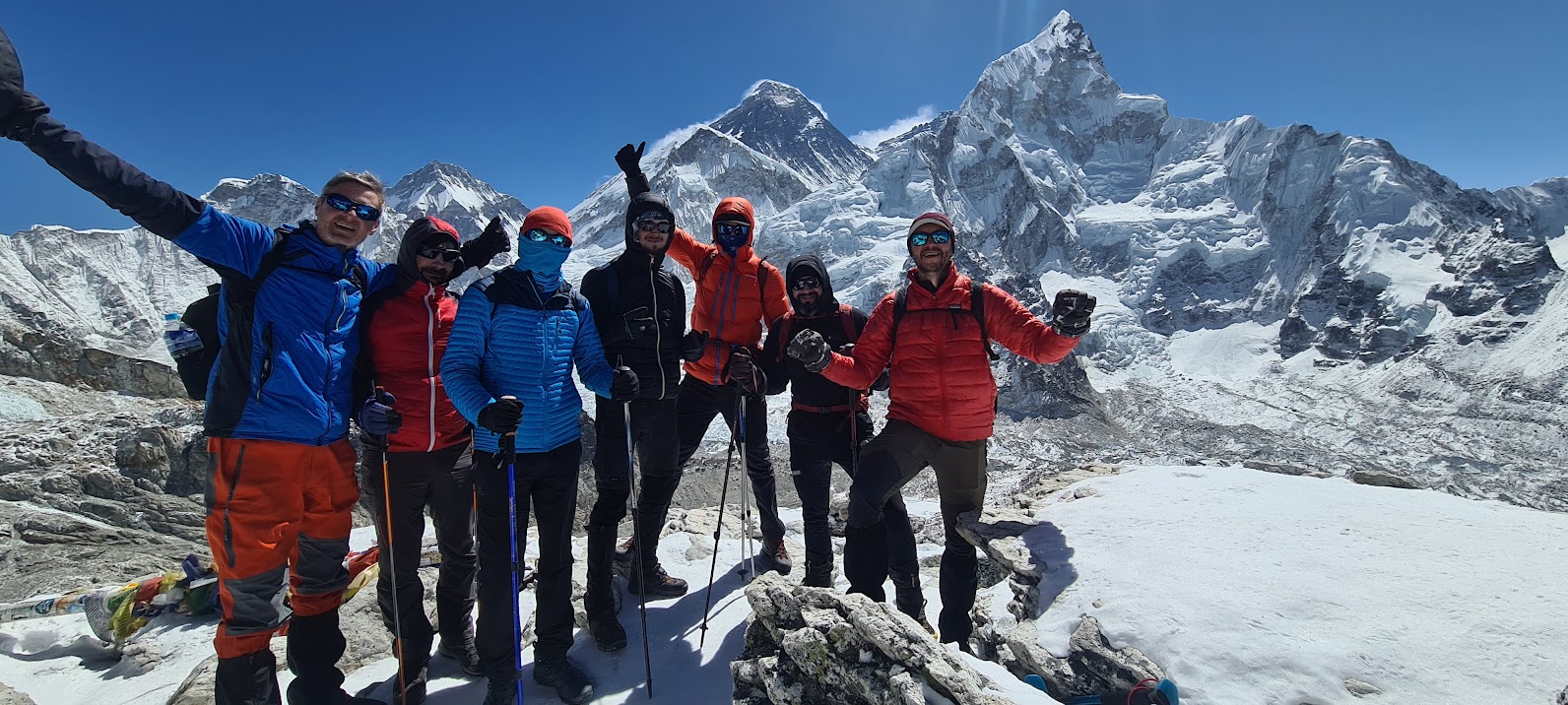
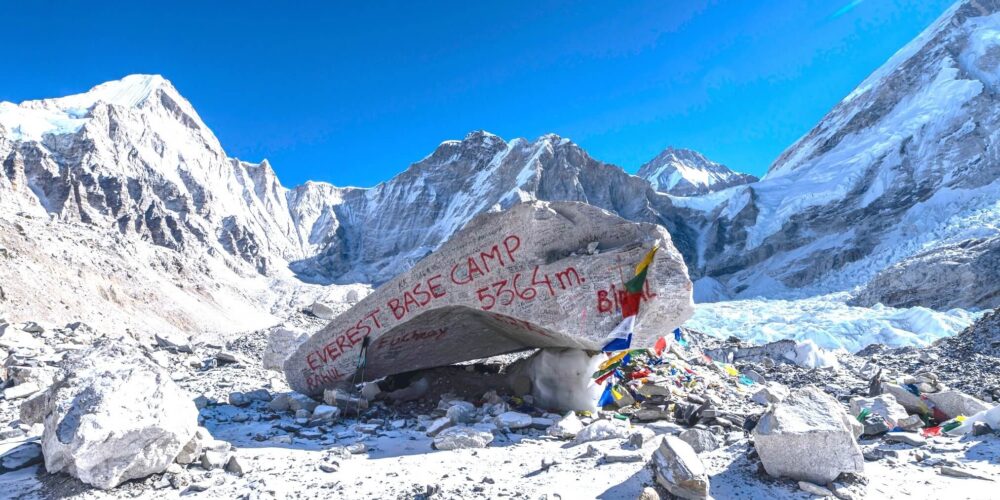
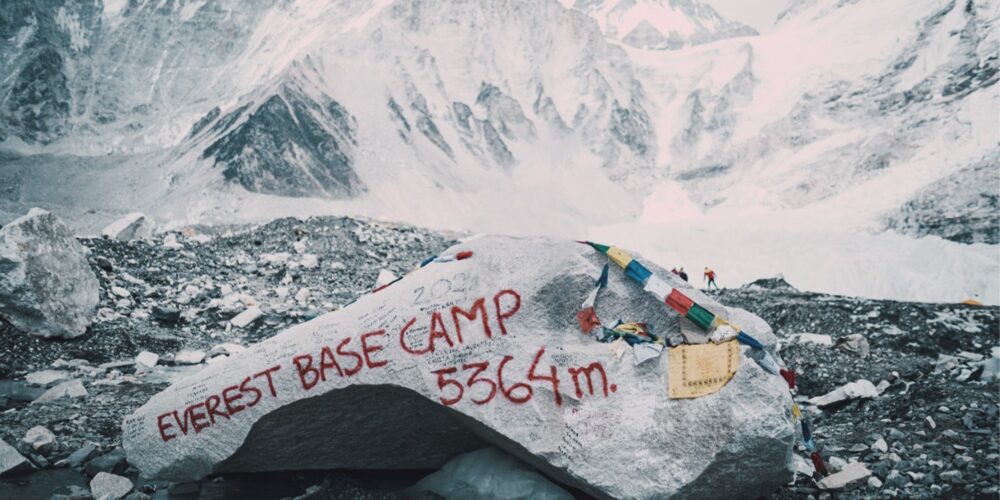
- Everest Base Camp (5,364m): Witness the iconic Everest Base Camp and stand proudly at the foot of the world’s tallest mountain. Observe the colossal Khumbu Icefall and experience the force of one of the most famous trekking icons of the world.
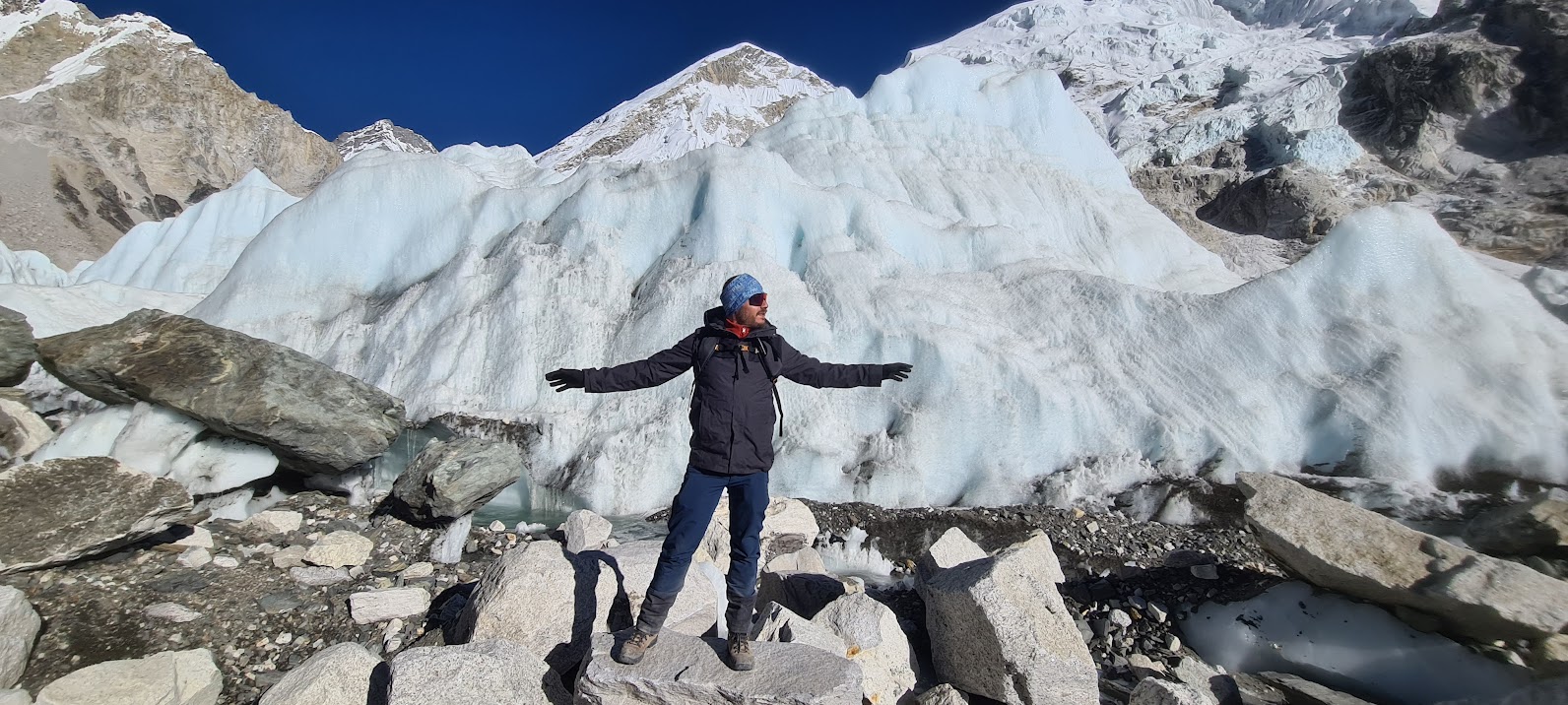
- Khumbu Glacier and Icefall: Trek across the Khumbu Glacier and watch the ever-changing forms of ice and crevasses of the Khumbu Icefall. This part of the trek gives you a close-up feel of the untainted power and beauty of the Himalayan glaciers.
- Kala Patthar viewpoint (5,545m): Climb up to Kala Patthar at sunrise to witness the most breathtaking sunrise over Mount Everest. This is the finest viewpoint along the entire Everest Base Camp trek for photography and panoramic Himalaya views.
- Sherpa culture and experiences: Engage with Sherpa communities to learn about their culture, traditions, and lifestyle. Visit monasteries, pray at prayer wheels, and indulge in traditional Himalayan food on your Everest adventure.
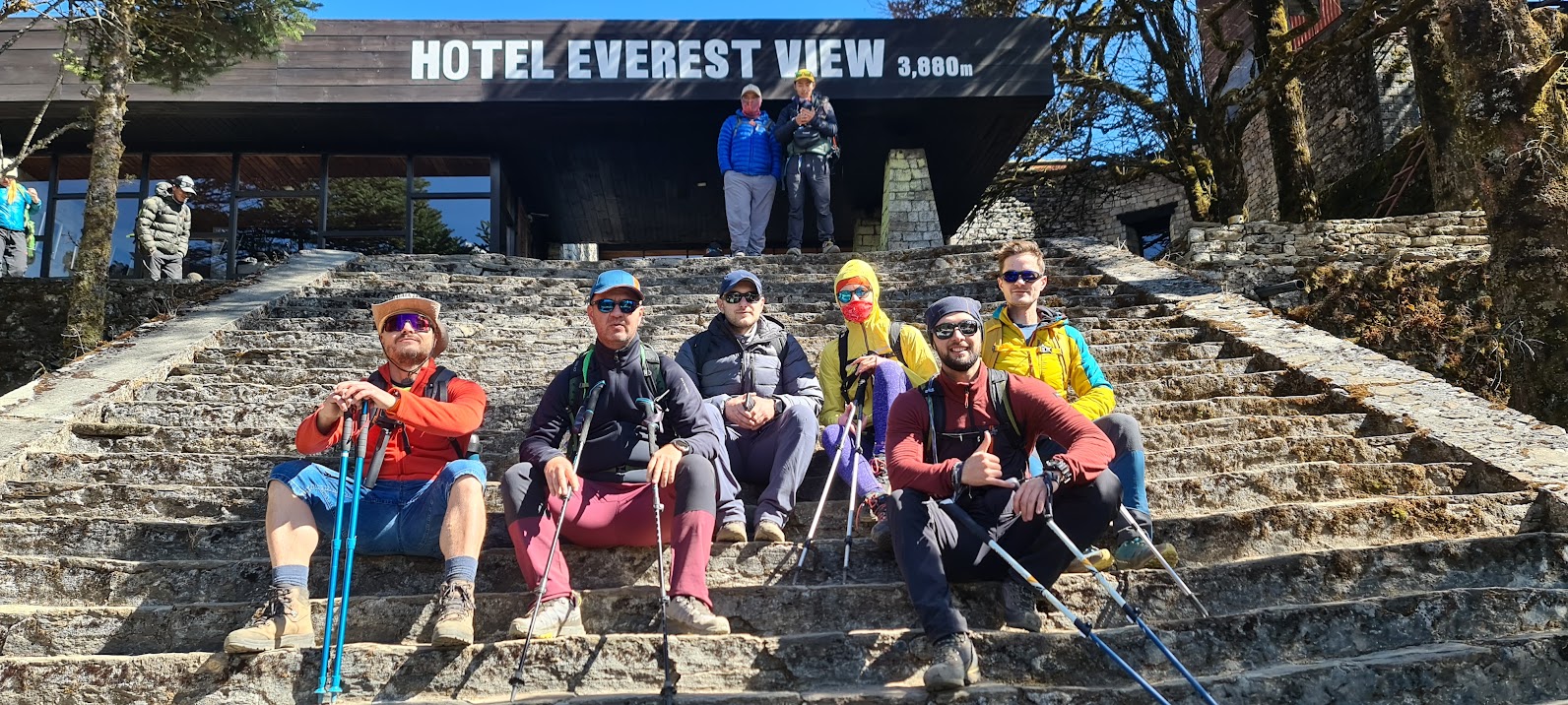
- Everest View Hotel and viewpoints: Hike to the famous Everest View Hotel for a cup of tea or coffee with a stunning view of Mount Everest and Ama Dablam. It’s a perfect stop for acclimatization and viewing with unobstructed Himalayan views.
Introduction of Everest Base Camp Trek- 15 Days
15 Days Everest Base Camp Trek is a lifetime journey to the base of the world’s highest mountain—Mount Everest (8,848m). Graceful Adventure Travel is happy to offer a 15 day Everest Base Camp trek package, which is particularly tailored for those visitors who are seeking a perfect blend of thrilling adventure, cultural experience, and high comfort.
From airport-to-airport service, professional guide support, luxury hotel accommodation in Kathmandu, and full-board tea house treks in the Himalayas, to optional helicopter return and personalized trekking schedules—this package has everything you need for a memorable Himalayan adventure.
Your journey begins at Tribhuvan International Airport in Kathmandu, where our company representative warmly welcome you and take you to a luxury hotel in the thamel. You will be kept on a bed-and-breakfast (BB) basis, with time to rest, enjoy high-quality hospitality, and explore Kathmandu’s cultural attractions. While you go sightseeing in renowned monuments such as Pashupatinath Temple, Boudhanath Stupa, and Kathmandu Durbar Square, Graceful Adventure Travel will arrange for all of the trekking permits necessary TIMS card and Sagarmatha National Park entrance permit so that you can relax and prepare for the trek ahead.
The trek begins with one of the most thrilling experiences of the journey a scenic mountain flight to Lukla. Flying over the Everest Himalayan range, including majestic peaks like Lhotse, Ama Dablam, and Thamserku, this flight offers a bird’s-eye view of the landscapes you’re about to explore. After reaching Tenzing-Hillary Airport, the trek begins with peaceful riverside trails along the Dudh Koshi River, passing through picturesque Sherpa villages such as Phakding and Monjo, and crossing iconic suspension bridges such as the famous Hillary Bridge.
As you go higher, the vibrant town of Namche Bazaar welcomes you with its busy atmosphere, local markets, and cozy mountain cafes. Namche, the world’s highest marketplace, is a necessary acclimatization stop, but also offers spectacular views of Mount Everest and the surrounding Himalayan giants. Here, you can soak up Sherpa culture, shop for handicrafts, and enjoy panoramic day hikes to the surrounding viewpoints, including the renowned Everest View Hotel.
Higher up, the trail takes you to the spiritual heart of the Khumbu Tengboche Monastery. Nestled in the mountains, the monastery is a serene spot to witness Buddhist rituals against the backdrop of the dramatic Ama Dablam landscape. En route, you’ll pass through alpine meadows, rhododendron forests, and glacial valleys, drinking in the unrestricted beauty of the Himalayan landscape. The trail winds its way through high-altitude villages like Dingboche, Lobuche, and Gorakshep, with stunning views at every turn.
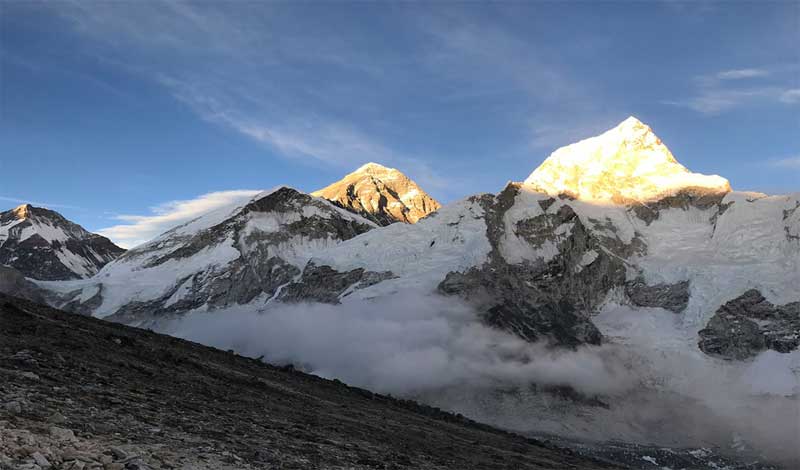
The trip highlight is eventually reaching Everest Base Camp (5,364m). Standing at the foot of the world’s tallest mountain, with views of the imposing Khumbu Icefall, colorful expedition tents, and the vastness of Everest itself is a surreal and tearful experience. The panoramic view of the area and its grandeur, an early morning climb of Kala Patthar (5,545m) reveals a 360-degree panorama of Everest, Nuptse, Pumori, and the neighboring peaks at sunrise—a lifetime memory that is the ultimate reward for your achievement.
During the trip, your safety and comfort are the prime concern for Graceful Adventure Travel. You will be staying in specially selected luxury tea houses that offer cozy rooms, clean bathrooms, delicious food, and warm hospitality. All three meals during the trek—breakfast, lunch, and dinner—are included, with hygienic and freshly cooked food to fuel your high-altitude adventure.
The trek is guided by our experienced, friendly, and well-trained guides who are trained in altitude recognition, local culture, and first aid. They will be delighted to share information on Sherpa traditions, Buddhist rituals, and Himalayan natural history, making your journey informative and enriching. Our guides and porters are not just professionals—they are friends who look after your safety, comfort, and joy on the trail.
When your Everest Base Camp trek comes to an end, you’ll return by the same path, following your own footsteps with an immense feeling of accomplishment. That being said, as a quicker and more scenic option, we also offer an optional helicopter return flight from Gorakshep or Pheriche to Kathmandu, which provides a stunning aerial farewell to the mountains.
In Kathmandu, you’ll be staying in a luxury hotel again where you can unwind, shop for souvenirs, and enjoy a celebratory dinner. Your trip comes to an end with an airport drop-off at Kathmandu airport, completing the round-trip airport-to-airport Everest Base Camp trekking experience in style and comfort.
As a prominent Nepal based luxury adventure and trekking operator, Graceful Adventure Travel has years of experience and heartily welcomes over 1,000 international travelers annually. We specialize in customized, high-quality Nepal, Tibet, and Bhutan tours and are committed to delivering expert guidance, comfortable lodging, and authentic cultural experiences that make your Himalayan adventure truly unforgettable. Join us to travel to the Everest region in utmost comfort and style.
Everest Base Camp Trek is the dream of every mountaineer to be there once in their lifetime to assimilate with the glory of the world’s highest peak “Mt. Everest (8,848m)”. The other gorgeous Himalayas on the route and at the destination are nothing but the added bonus that is beyond of your imagination and the research you made before your trip because there is no such word to exactly express those spell bounding and magical moments that you experience throughout your trip and make you feel proud of being among the one lively there to witness it by yourself.
Trek Temperature Table
| Season | Kathmandu (1,380m) | Namche Bazaar (3,440m) | Dingboche (4,410m) | Everest Base Camp (5,364m) | Kala Patthar (5,643m) |
| Spring (Mar–May) | Day: 22–28°C, Night: 10–14°C | Day: 5–12°C, Night: -3 to 3°C | Day: 0–8°C, Night: -6 to -2°C | Day: -4–2°C, Night: -10 to -15°C | Day: -6–0°C, Night: -12 to -18°C |
| Summer (Jun–Aug) | Day: 26–32°C, Night: 18–22°C | Day: 8–14°C, Night: 4–8°C | Day: 4–10°C, Night: 0 to 4°C | Day: -2–4°C, Night: -6 to -10°C | Day: -4–2°C, Night: -8 to -14°C |
| Autumn (Sep–Nov) | Day: 20–28°C, Night: 10–14°C | Day: 4–10°C, Night: -4 to 2°C | Day: -2–6°C, Night: -8 to -12°C | Day: -6–0°C, Night: -12 to -18°C | Day: -8–0°C, Night: -15 to -20°C |
| Winter (Dec–Feb) | Day: 12–20°C, Night: 2–6°C | Day: -4–2°C, Night: -10 to -14°C | Day: -6–0°C, Night: -14 to -18°C | Day: -10 to -4°C, Night: -18 to -22°C | Day: -15 to -5°C, Night: -20 to -25°C |
Trek Facts
| Trek Fact |
Details |
|
Tour Name |
Everest Base Camp Trek |
|
Maximum Elevation |
5,643 meters (Kala Patthar) |
|
Duration |
15 days |
|
Total Distance |
Approx. 130 km |
|
Difficulty Level |
Moderate to Challenging |
|
Best Time to Visit |
March–May, September–November |
|
Accommodation |
4* Hotel, Teahouse, Lodge |
|
Group Size |
1–12 people (ideal for guided group treks) |
Outline Itinerary
| Day | Trekking Trail / Activity | Distance (approx.) | Time (hrs) | Altitude (m) |
| 1 |
Arrival at Kathmandu Airport |
– | – | 1,380 m |
| 2 |
Kathmandu Valley Sightseeing |
– | – | 1,380 m |
| 3 |
Fly to Lukla and Trek to Phakding |
~8 km | 3 – 4 hrs | 2,640 m |
| 4 |
Trek from Phakding to Namche Bazaar |
~11 km | 6 – 7 hrs | 3,440 m |
| 5 |
Acclimatization Day in Namche Bazaar (hike to Everest View Hotel optional) |
~3 km (optional) | 3 – 4 hrs | 3,440 m |
| 6 |
Trek from Namche Bazaar to Tengboche |
~10 km | 5 – 6 hrs | 3,860 m |
| 7 |
Trek from Tengboche to Dingboche |
~11 km | 5 – 6 hrs | 4,410 m |
| 8 |
Acclimatization Day in Dingboche (Nangkartshang Hill hike optional) |
~4 km (optional) | 3 – 4 hrs | 4,410 m |
| 9 |
Trek from Dingboche to Lobuche |
~8 km | 5 – 6 hrs | 4,940 m |
| 10 |
Trek to Gorak Shep and Everest Base Camp, then back to Gorak Shep |
~13 km (round trip) | 7 – 8 hrs | 5,164 m (EBC) |
| 11 |
Hike to Kala Patthar & Trek down to Pheriche |
~13 km | 7 – 8 hrs | 5,643 m / 4,371 m |
| 12 |
Trek from Pheriche to Namche Bazaar |
~14 km | 6 – 7 hrs | 3,440 m |
| 13 |
Trek from Namche Bazaar to Lukla |
~19 km | 7 – 8 hrs | 2,860 m |
| 14 |
Fly from Lukla to Kathmandu |
– | 30 min | 1,380 m |
| 15 |
Final Departure |
– | – | – |
Everest Base Camp Trek- 15 Days Detail Itinerary
01
Day 01: Arrival in Kathmandu (1300 m)and transfer to hotel
You will land at the Tribhuvan International Airport in Kathmandu. Our agency representatives will pick you up at the airport and transfer you to a comfortable hotel in the heart of Kathmandu. The hotels we book are mostly located inside the tourist hub of Thamel.
Once you reach your hotel, you will have ample time for rest. If you feel fresh by the evening we can indulge you in Nepali cuisine and cultural shows. You can also take a short walk around the alleys of Thamel.
Highlights: Warm welcome and exploring the city
Accommodation: 4* Hotel
Meals: Welcome Meal
02
Day 02: Kathmandu Valley Sightseeing (Altitude: 1380m)
Kathmandu valley is recognized as the Cultural Heritage Center by the UNESCO and these are illustrated by the seven world heritage monuments (Pashupatinath and Changunarayan temples, Bouddhanath and Swayambhunath stupas, Kathmandu, Bhaktpur and Patan Durbar Square) which reveal the outstanding range of historic and artistic engineering achievements of ancient wood-carving and crafting, stone masonry, metal works and many more.
The Pashupatinath is considered as the most sacred temple of Lord Shiva and Hindu people around the world visit this place while Bouddhanath is the largest Buddhist Mandala in the world. These all give you an insight of Nepali culture.
Your second day starts at the late morning after the breakfast. A guide is appointed who will take you in these historical places and gives you information. After the completion of the sightseeing, you will be driven back to your hotel and will be briefed about the next day activities.
Highlights: Explore the valley with UNESCO Heritage sites and the night life of Thamel.
Accommodation: 4* Hotel
Meals: Breakfast, Lunch, and Dinner
03
Day 03: Fly to Lukla and a Short Trek to Phakding (Altitude: 2640m)
The flight from Kathmandu to Lukla (Tenzing Hillary Airport) is a short time flight introducing you the beginning of your charming trek. It is like a mountain flight that you will experience on the way as the topography changes from hills to the foothills of Himalayas.
Your belongings will be taken by our porters as you reach the Lukla airport and the adventurous trek begins to Phakding. This 3-4 hours easy walking heads towards north through Chheplung and Chaurikharka village and descent towards Dudhkoshi Ghat. The trekking trail goes through the Dudhkoshi river bank until you reach Phakding.
Enjoy the trekking tails with the stunning scenic beauty, deep gorge, farming terraces, Sherpa settlements, blooming rhododendrons, magnolia trees, and pine forests to Phakding. You can visit local monastery after you reach at Phakding. Take a good rest and prepare for the next day trek.
Walking Distance: 8km (3-4 hours)
Flight time: 35 min
Highlights: Breathtaking scenic mountain flight from Kathmandu to Lukla
Accommodation: Teahouse
Meals: Breakfast, Lunch, and Dinner
04
Day 04: Phakding to Namche Bazaar (Altitude: 3440m)
Hurray! One great adventure of lifetime; today is the day you are going to have the first glimpse of the Mt. Everest with your own eyes standing in front of you with the glory being the Highest Mountain of the world. After having breakfast at Phakding, we will gear up for the trek to the Namche Bazaar, the biggest Sherpa village in Nepal.
Our trekking route takes us through the Dudhkoshi River banks via series of suspension bridges where you will cross the Hillary Suspension Bridge and then through the scenery pine forest to Monjo.
The entrance of Sagarmatha National Park is just ahead where our permit is checked and registered. This National Park is famous for rare species of animals like Himalayan Thar, Red Panda, Himalayan Bear and many more and then we descend to Dudhkoshi River spotting Mani stones along the way to Jorsale and then to Namche Bazaar. It’s a tough climb but sure the toughness goes in a second as you reach to Namche Bazaar with the view of Everest in its magnificence.
Walking Distance: 10-12km (5-6 hours)
Highlights: Explore Namche Bazaar known as the gateway to Mt. Everest and the main marketplace of Khumbu region and the bakeries are famous
Accommodation: Teahouse
Meals: Breakfast, Lunch, and Dinner
05
Day 05: Acclimatization in Namche Bazaar (Altitude: 3440m)
Today is a rest day at Namche Bazaar to allow your body to adapt to the rising altitude, but it doesn’t mean the adventure takes a break. After breakfast, we hike up to the Everest View Hotel — one of the highest-altitude hotels in the world — offering spectacular views of Mt. Everest, Lhotse, Nuptse, and the striking Mt. Ama Dablam.
Along the way, we pass through Syangboche and Khumjung Village, where you can explore the famous monastery that holds a purported Yeti scalp and get a deeper insight into Sherpa culture and mountain lifestyle.
After the hike, we return to Namche Bazaar for lunch and the rest of the day is free for leisure. You can explore the vibrant market town, grab a coffee from the local bakeries, visit the Sherpa Museum, or simply relax while soaking in the views. This pause in Namche not only helps with acclimatization but also gives you a chance to connect with the heart of the Khumbu region. Rest well, as we gain more altitude from tomorrow.
Walking Distance:3–5 km (Exploration walk – 2–3 hours approx.)
Highlights: Khumjung Village, Sherpa museum
Accommodation: Teahouse
Meals: Breakfast, Lunch, and Dinner
06
Day 06: Namche Bazaar to Tengboche (Altitude: 3860m)
After the acclimatization at Namche Bazaar we head towards the Everest Base Camp. The fascinating views of the Himalayas can be seen this day when you reach at an altitude of 3,975 at Mongla Pass from where the dazzling and famous legendary mountain Ama Dablam can be viewed along with Mt. Thamserku and Mt. Khumbila which are regarded as the sacred mountain of patron god of the Khumbu region.
Perfect view of the Everest, Nuptse, Lhotse, Thamserku,Tawachee, Kangtega and Kwangde are some of the other unbelievable examples of the gorgeous Himalayas which will definitely make you to forget all the tediousness of walking ups and downs the trail with adding value by visiting the largest monastery of Khumbu region Tongboche monastery where you get blessings and have chance to meet the people who come for blessings for the successful climbing of the summit of Everest.
Walking Distance: 10km (6 hours)
Highlights: Tengboche Monastery and the views of Himalayas
Accommodation: Teahouse
Meals: Breakfast, Lunch, and Dinner
07
Day 07: Trek from Tongbuche to Dingboche (Altitude: 4410m)
On the 7th day, trek continues through the lush rhododendron, conifers and birch forest to Deboche via suspension bridge over Imja River from where the fabulous view of Mt. Ama Dablam is one of a kind. We will come across many typical Sherpa villages on the path along with the Pangboche village, the biggest settlement of Sherpas in this region letting us the knowledge about their life style.
Ascending further on the way gives you an eye catching scenes of the jaw dropping mountains i.e. Mt. Taboche, Mt. Nupse, Mt. Cholatse among others. When you reach at the today’s destination Dingboche, you will notice and love that the landscape is changing; trees are replaced with the shrubs and a desert like feeling strike to you.
Walking Distance: 11km (6 hours)
Highlights: Soaring mountain views of Taboche, Ama Dablam, Nuptse, Mt. Cholatse etc.
Accommodation: Teahouse
Meals: Breakfast, Lunch, and Dinner
08
Day 08: Acclimatization in Dingboche (Altitude: 4410m)
The altitude is above the 4000m and you have reached that height in a very short period of time which may result with the altitude sickness hence resting our body for acclimatization is important. We will make a walk to allow you to acclimatize.
The trek to the Chhukung Valley and its surroundings allows you the fantabulous views of Ama Dablam, Lhotse, Makalu, Cholatse, Taboche, Lobuche, Chooyu among others are majestic. After the fabulous views you will again return back to Dingboche. You will spend the night at Dingboche.
Walking Distance: 4–5 km (Side hike to Chhukung – 3–4 hours)
Highlights: Scenic acclimatization hike with panoramic views of Ama Dablam, Makalu, Lhotse, and surrounding peaks
Accommodation: Teahouse
Meals: Breakfast, Lunch, and Dinner
09
Day 09: Trek from Dingboche to Lobuche (Altitude: 4940m)
From Dingboche we trek towards Thugla after having the breakfast. The trek gradually becomes challenging as the altitude increases. Dungla is the place where memorial stupas are erected in memory of the climbers and trekkers who chose the death while climbing Mt. Everest in the due course of time.
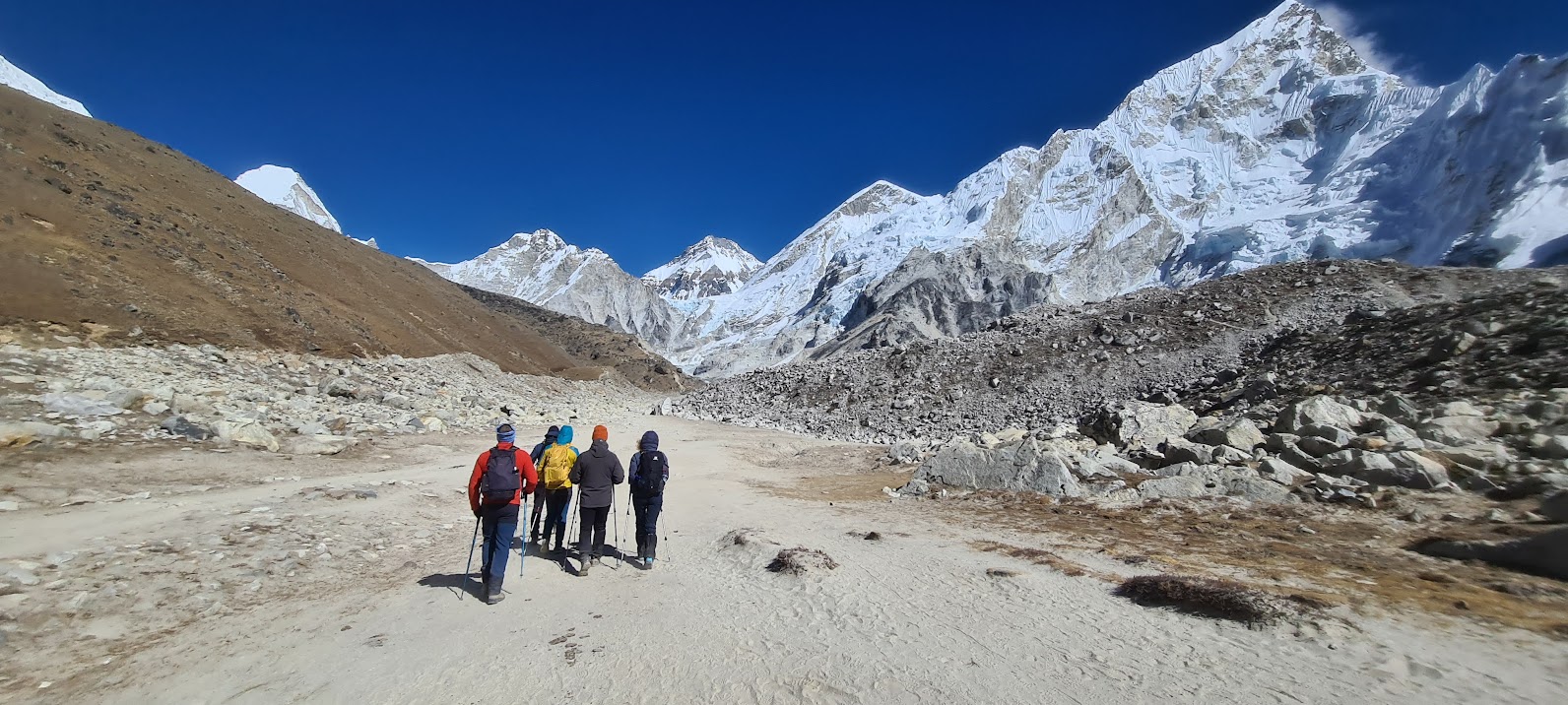
Awesome views of the Khumbu Glacier and the close views of the Himalayas keep you motivated to trek forward in anticipation of being more views ahead waiting for you no matter how difficult is the walking. The close view of Mt. Pumori and Mt. Nuptse is the attraction of the route.
You finally cross the valley to the Yak grazing land at the Lobuche. Prepare for a cold night as we are near the snow line and almost the highest altitude. You will spend a night at Lobuche.
Walking Distance: 11-12 km (6-7 hours)
Highlights: Astonishing views of Pumori and Nuptse mountains
Accommodation: Teahouse
Meals: Breakfast, Lunch, and Dinner
10
Day 10: Trek to Gorak Shep and the Everest Base Camp (Altitude: 5164m, 5545m)
The easy trail of one hour and then climbing steep trail of one and half hour you will reach to Gorak Shep a spectacular village also known as the highest settlement of the world with an altitude of 5160m surrounding with the splendid mountains Pumori, Lingtren, Nuptse and of course Everest.
The hand touching view of the Everest, Nuptse and many other mountains gears you to reach the trek destination as soon as possible. You will drop all of your belongings at Gorak Shep as you are staying the night here. The following straight trail to Everest Base Camp becomes harder as the rocky bank is formed of unconsolidated glacial debris accumulation hence slowly walking is recommended.
After one and half hour walking from the Gorak Shep, finally you step in the Everest Base Camp the most awaited moment of the whole trek and in the spring season you will have chance to meet the Everest climbers.
The famous Khumbu glacier and the blue ice pinnacles of the icefall are one of the most adventurous and memorable moment for the most of the trekkers; the immense unbelievable views of the breathtaking beauty that you will never tired of sharing those magical moments throughout your life. The achievement of reaching at the Everest Base Camp is itself tells a lot for you to be proud of the whole life.
As the sun begins step down to the west and having some quality time at the Base Camp, we leave the heavenly place and move backward to the Gorak Shep where we stay for the overnight.
Walking Distance: 15km (6-8 hours)
Highlights: Gorak Shep, Khumbu Glacier, and Everest Base Camp
Accommodation: Teahouse
Meals: Breakfast, Lunch, and Dinner
11
Day 11: Trek to Kala Patthar & Back to Pheriche (Altitude: 5643m, 4371m)
The extraordinary glorious and exceptional sunrise view of the giant Mt. Everest, Nuptse, Khumbutse,Changtse, and Lhotse would be the most valuable opportune asset of the trek and the day is to gather all of them at once from the Kala Patthar which is the best view point of the Khumbu region providing you with the 360-degree panorama view of the Himalaya surrounding and a matter of fact is that the closest view of Mt. Everest is not possible from the Everest Base Camp.
We wake up early and climb upward to Kala Patthar before the sunrises. The glowing Himalayas summits with the first light fall of the sun holds you forever. With the heavenly pleasure of the pictures of the Everest and the neighboring mountains we descend back to Gorak Shep for the breakfast and trek down to the Pheriche where we stay for the night.
Walking Distance: 12-13km (5-6 hours)
Highlights: Kala Pattar, for the 360-degree panoramic and sunrise view of the Everest and neighboring mountains.
Accommodation: Teahouse
Meals: Breakfast, Lunch, and Dinner
12
Day 12: Trek from Pheriche to Namche Bazaar (Altitude: 3440m)
Steep climbing and the glorious and majestic up-close view of mountains are being left behind at the horizon as you gently descend down to tree line area to Namche Bazaar passing through Debuche and Tengboche on the way.
There is still much to experience at Tengbuche Monastery being a holy Buddhist settlement it is quite different and pious feeling visiting the Monastery and lighting the lamp where you can explore the untold story of the history and the activities of the monks. We arrive at Namche at late afternoon and it’s time to get your souvenirs at Namche. Cherish your accomplishment.
Walking Distance: 13-15km (7-8 hours)
Highlights: Tenboche Monastery and the Namche Bazaar.
Accommodation: Teahouse
Meals: Breakfast, Lunch, and Dinner
13
Day 13: Trek from Namche Bazaar to Lukla (Altitude: 2,860m)
After breakfast, we retrace down the way through the rhododendron forest to the valley foothill alongside Dudhkoshi River crossing the series of suspension bridges. After arrival at Lukla, we enjoy the victory of the trek that others only dreamt of and the success is because of the great teamwork hence congratulating the trek crew with having party together tonight.
Walking Distance: 16km (6-7 hours)
Highlights: Explore Lukla valley and enjoy the final walk in the Everest region
Accommodation: Teahouse
Meals: Breakfast, Lunch and Dinner
14
Day 14: Fly to Kathmandu from Lukla
This is the last day amid the mountains; you will take a flight early in the morning back to Kathmandu leaving the dramatic and charismatic scenery on the way back with the last view of snow-capped mountains. You will be taken to the hotel and rest of the day celebrates your achievement. If you have plenty of time and plan for other places to visit you can consult to us. There will be a farewell party at the evening.
Activity: Fly back to Kathmandu
Accommodation: 4* Hotel
Meals: Breakfast, Lunch, and Dinner
15
Day 15: Final Departure
Our company representative drive you to international airport.
Important Note: Your safety is our prominent concern and duty. The scheduled itinerary is subject to change. The changes on itinerary may occur due to the flight cancellation, trekking members’ health problem, weather or any other emergency situation. Trekking leader has the right to take immediate action if such situation arises. We request you all to separate some additional days to balance for such emergency situations.
Flight Cancelation: The weather in Lukla cannot be predicted hence resulting in the cancellation of the flight. Returning to hotel and lodging and fooding cost is not included. We will take our flight the next day if the weather remains clear. There is another option of hiring a helicopter for Lukla that also demands the additional cost.
Activity: Fly back sweet home!
If our standard itinerary doesn't fully meet your needs, we are happy to tailor it to your specific preferences and requirements.
Includes and Excludes
What’s Included?
- beautiful and peaceful wilderness trek that feels more secluded
- The beautiful panorama and presence of Manaslu 8163 meters/26782
- A landscape that is full of dramatic contrasts and ch daily
- The constant presence of the Budhi Gandaki and its raging torrent, its endless feed
- Astonishing side trip to Pungen Gompa 4000 meters/13123 ft., Birendra Lake 3700 meters/12139 ft., Man
- Visiting unique Monasteries, Mani Walls, and Stupas
Complementary
- beautiful and peaceful wilderness trek that feels more secluded
- The beautiful panorama and presence of Manaslu 8163 meters/26782
- A landscape that is full of dramatic contrasts and ch daily
- The constant presence of the Budhi Gandaki and its raging torrent, its endless feed
- Astonishing side trip to Pungen Gompa 4000 meters/13123 ft., Birendra Lake 3700 meters/12139 ft., Man
- Visiting unique Monasteries, Mani Walls, and Stupas
What is not Included?
- beautiful and peaceful wilderness trek that feels more secluded
- The beautiful panorama and presence of Manaslu 8163 meters/26782
- A landscape that is full of dramatic contrasts and ch daily
- The constant presence of the Budhi Gandaki and its raging torrent, its endless feed
- Astonishing side trip to Pungen Gompa 4000 meters/13123 ft., Birendra Lake 3700 meters/12139 ft., Man
- Visiting unique Monasteries, Mani Walls, and Stupas
Trip Map of Everest Base Camp Trek- 15 Days
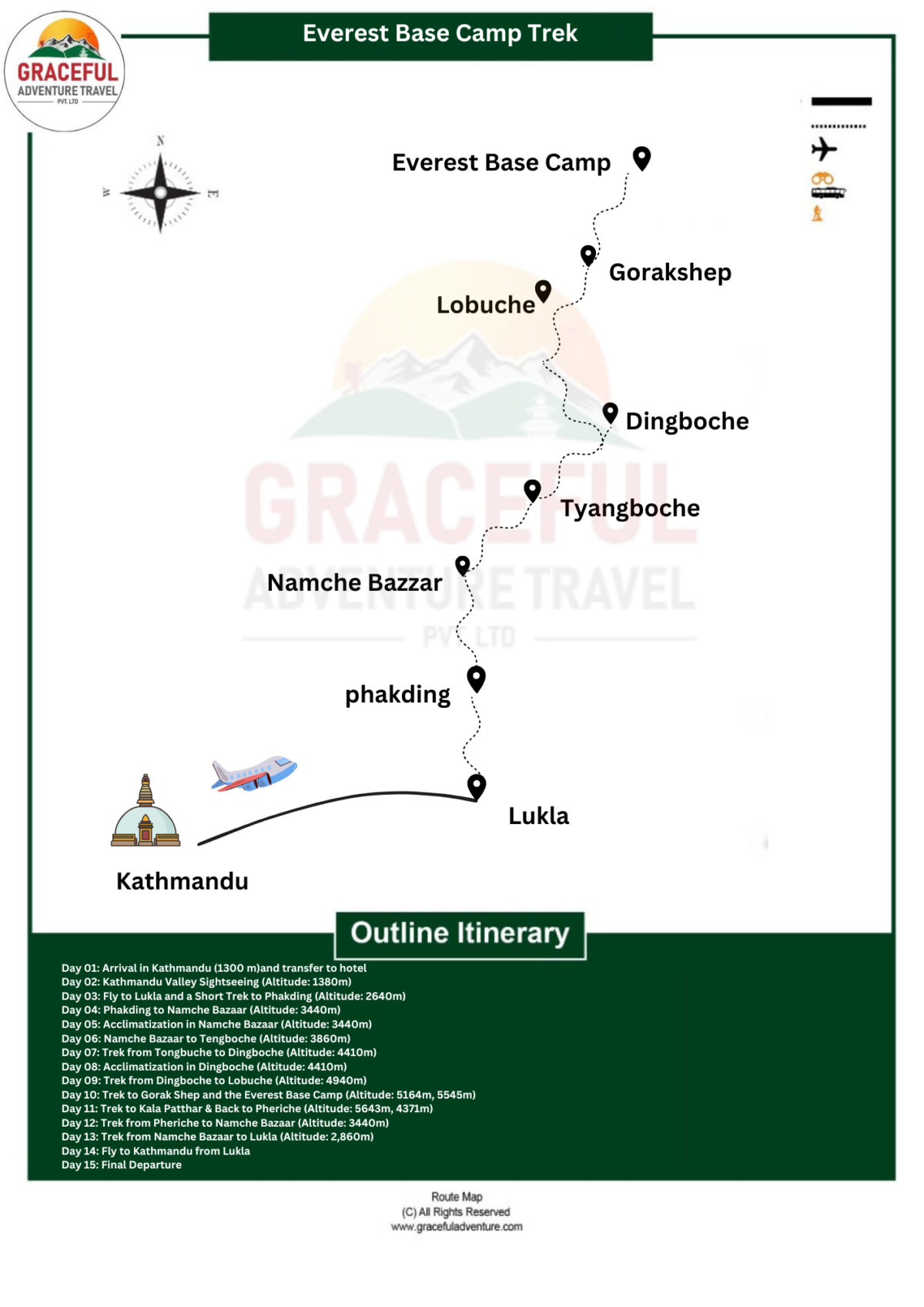
Everest Base Camp Trek- 15 Days - Trip Information
Major Attraction of Everest Base Camp Trek
Everest Base Camp Trek is considered one of the most famous trekking adventures in the world, drawing thousands of trekkers each year, enticed by the Himalayan splendor and the wish to set foot at the base of Mt. Everest. The trek ends with breathtaking panoramic views of snow-clad peaks, deep valleys, alpine forests, and glacial rivers. The trail offers trekkers a glimpse into ancient Buddhist monasteries, colorful prayer flags, and traditional Sherpa villages infused with hospitality and culture. This trek is not just about reaching a destination; it is about experiencing the magnificence of the Himalayas.
Kathmandu City Tour
Kathmandu, the capital city of Nepal, serves as the perfect entry point for the Everest Base Camp Trek. The city offers a beautiful collage of history, spirituality, and local life. During the Kathmandu tour, trekkers visit various UNESCO-listed sites, including Pashupatinath Temple, Swayambunath (Monkey Temple), and Boudhanath Stupa. These sites are adorned with intricate carvings, soothing prayer rituals, and centuries of cultural heritage. With the sounds of temple bells and chants, and the scent of incense, travelers embark on a sensory journey into Nepal’s spiritual roots.
Beyond the sacred sites, Kathmandu dazzles with rich street life and ancient architecture. Patan Durbar Square and Bhaktapur are replete with medieval buildings and age-old artistry. Local markets are buzzing with spices, handicrafts, trekking gear, and colorful fabrics. Thamel, the tourist center, is alive with cozy cafes, bakeries, and souvenir shops. To put it bluntly, Kathmandu is both an educational tour and an adventure-a perfect warm-up for acclimatizing to the Nepali atmosphere before heading up to the high mountains. It will allow one to somehow touch the very essence of Nepal’s traditions while getting mentally prepared for the trek.

Adventurous Flight Kathmandu–Lukla–Kathmandu
One of the most thrilling experiences of an EBC trek is that of the Kathmandu–Lukla Flight. This 30-minute journey is regarded as one of the most scenic and exhilarating flights in the world. The flight takes the small aircraft near to mountains and provides a fantastic aerial view of the Himalayas. The adrenaline rush manifests itself further when one sees green valleys, snow-covered peaks, and meandering rivers from the air. The flight creates ambiance for upcoming adventures and provides the first real look at the Everest area.
What is really exciting is the landing at Lukla Airport, one of the world’s most challenging airstrips. With a brief incline runway crammed between mountains, landing here is really an adrenaline rush. In spite of the fame, the flight is comparatively safe and well operated by skilful pilots. The return flight to Kathmandu after the trek is equally an adventure in itself, saying goodbye to the mountains. So, this flight begins and ends your trek in an exhilarating way and is worth telling a story about.
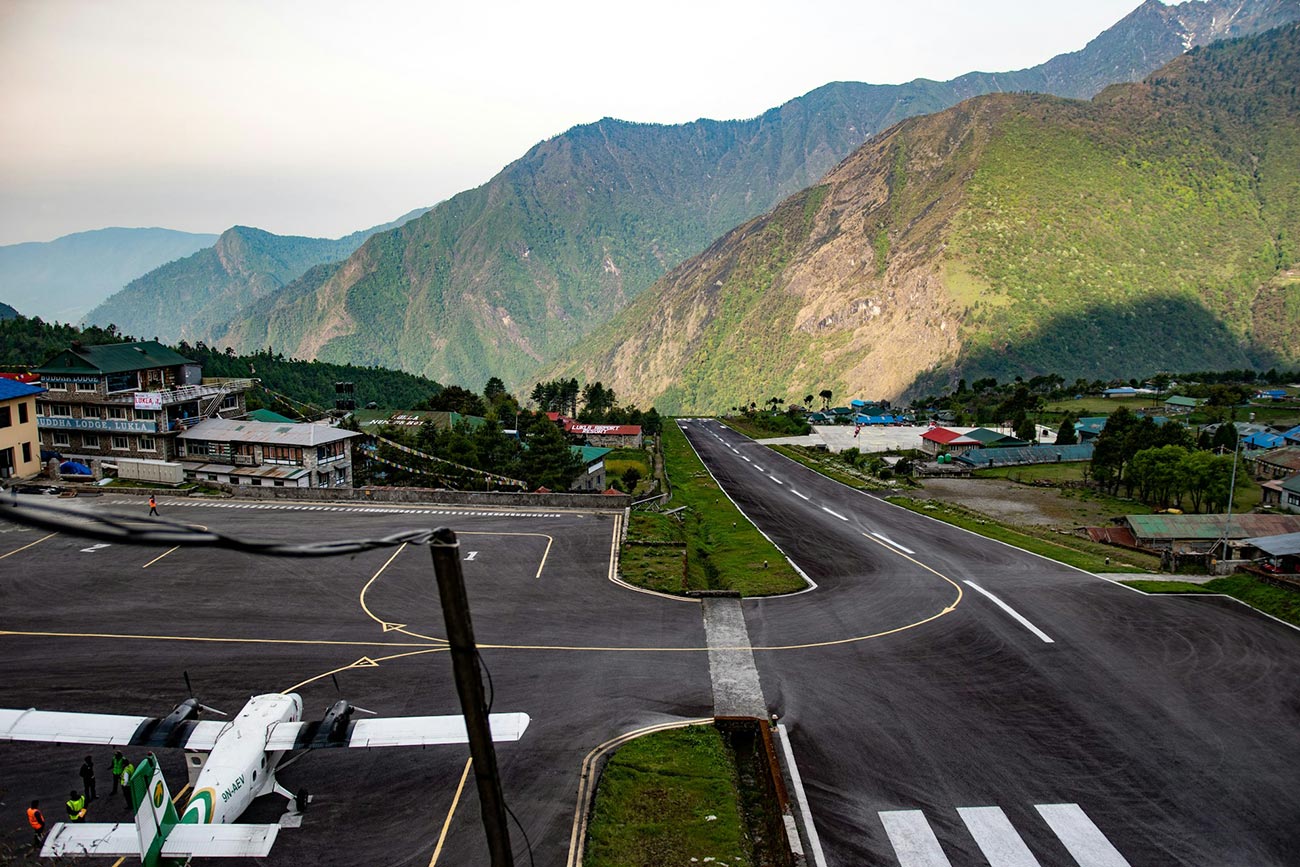
Suspension Bridges
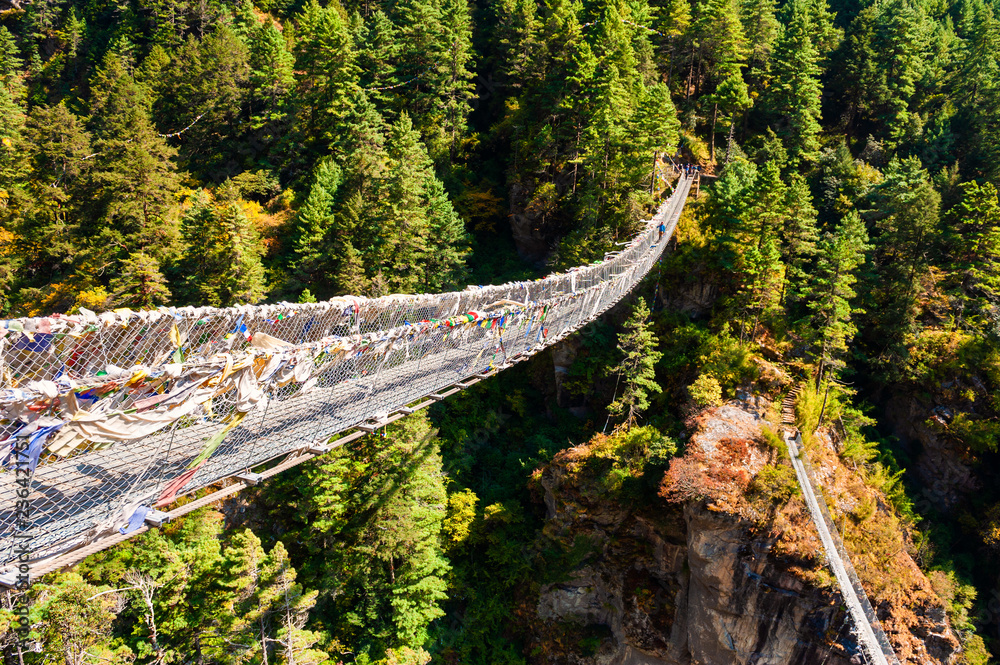
Suspension bridges in the Everest region are exciting landmarks along the trail. These long steel bridges are stretched across deep gorges and glacial rivers, swaying lightly with trekkers’ weight. Adorned with fluttering prayer flags, these bridges become postcard images and unforgettable memories. Crossing one of these bridges feels like a scene out of an adventure movie, with roaring rivers and craggy mountain cliffs beneath! Each bridge connects remote villages, acting as lifelines for the region’s essential infrastructure.
Maybe the most iconic would be the Hillary Suspension Bridge just before Namche Bazaar. It is all beautiful and then some; each crossing is a matter of courage and awe. Functionally, these bridges are an engineering spectacle and an act of Himalayan defiance. Intimidating, yes, at first, but before you know it, pit-pattering and swaying become one of the fun highlights of the entire trek. After every crossing, trekkers gain their standing; each bridge offers what can only be described as magical views from the center.
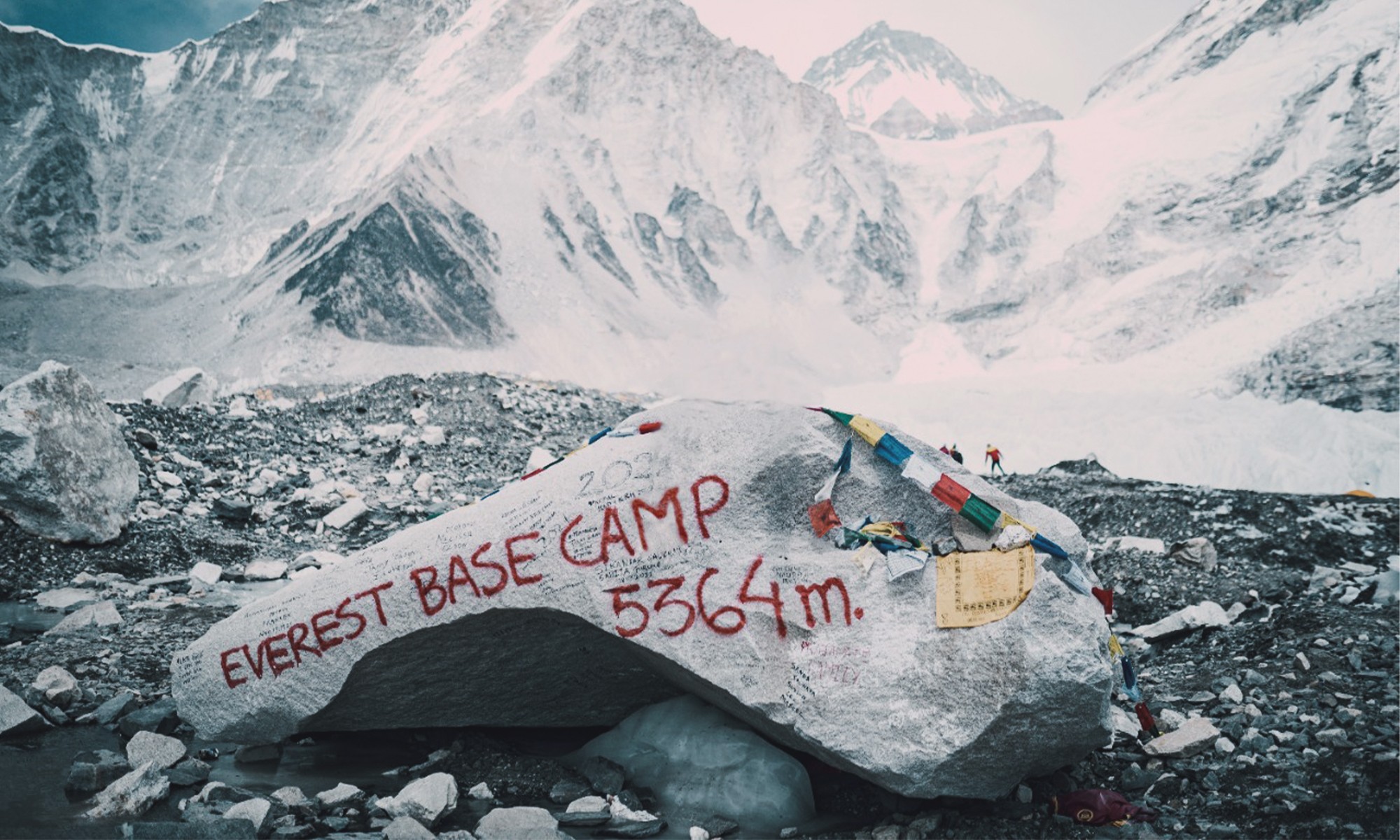
Everest Base Camp (EBC)
The final destination of the trek is Everest Base Camp, which is a truly unique experience. The EBC, which is found at a staggering altitude of 5,364 meters, provides a breathtaking view of the Khumbu Icefall on one side and majestic peaks on the other. It is surreal to stand at the foot of Mt. Everest; although you don’t climb to the peak, you feel enthralled and connected to the world’s tallest mountain. The base camp is often bedecked with prayer flags and stones, and trekkers commemorate this great feat with poses and high-fives of emotion.
This spot is also the departure point for climbers bent on summitting Everest, and you might catch a glimpse of colorful expedition tents during peak season. The air here is of excitement, tales of historians, and mountaineering legacy. It’s this place, so alive with achievement, the hushed sounds of high-altitude space, and the bitterly breathtaking icy vista that makes it an unforgettable experience. It is not just a physical place; it stands for surpassing limits and bringing forth latent strength.
Kala Patthar Viewpoint
Located near Everest Base Camp, Kala Patthar stands out as a coveted viewpoint; at an altitude of 5,545 meters, it is the highest point reached on the EBC trek for most trekkers. It is this very place that provides the breathtaking panoramic view of Mt. Everest and its near giants, Nuptse, and Lhotse. Typically, trekkers scale it early in the morning to get the view of a magnificent sunrise over the Himalayas, shedding gold on the top of Everest—a sight that simply takes the breath away.
It becomes a very steep climb due to thinning air and cold, but worthwhile. The 360 degrees of views are simply breathtaking and are not matched anywhere along the trail. It often becomes the emotional and scenic highlight of the trek. Many trekkers resonate deeply with the silence and beauty and forces of the peaks around them. This is where the majesty of Everest truly shines.
Trekking route to Everest Base Camp Trek
 The Everest Base Camp Trek begins from Tribhuvan International Airport in Kathmandu. The arrival day will serve as a rest day. The journey starts with a sightseeing tour of the UNESCO World Heritage sites in the Kathmandu Valley, which includes Pashupatinath Temple, Swayambhunath, and Boudhanath.
The next destination after Kathmandu is Lukla, which is accessible via a thrilling and adventurous flight over the green hills with picturesque mountain views. Lukla serves as the gateway to the Everest region. After arriving in Lukla, the main trek begins with a same-day trek to Phakding. The trek is about 9.5 km long and can take 5 to 6 hours, with almost constant ascent throughout the day, covering an elevation of 850m. The trek ends at Namche Bazaar.
The trek from Namche Bazaar to Tengboche takes 5 to 6 hours and covers a distance of about 9 km. The trek involves ascending initially and then descending down to the Tengboche village. The route offers a beautiful view of the Himalayas in the Everest region. The trek from Tengboche to Dingboche is quite challenging compared to other days due to higher elevation and a longer trekking distance of 10 km.
The next day’s trek starts from Dingboche, with the trail to Lobuche involving ascending and descending. Although the trek is shorter, it offers views of the Khumbu Glacier along the way. The following day, the trek continues to the Everest Base Camp. The trail is rough, stony, and snowy with ascents and descents throughout the day, ending at the Everest Base Camp.
After experiencing the breathtaking and thrilling views of the Everest Base Camp, we will trek back to Kalapatthar, where we will be treated to a 360-degree view of the Himalayas in the Everest region and an amazing sunrise above the mountains. We will then trek back to Pheriche. The descent is narrow and offers beautiful views of the snow-covered mountains. After reaching Pheriche, we will descend back to Namche Bazaar, and then back to Lukla, where we will fly back to Kathmandu. The trek concludes upon reaching Kathmandu.
Best time For Everest Base Camp Trek
 The optimal time to Everest Base Camp Trek in Nepal depends on various factors such as temperature, climate, weather, etc. Although trekking destinations in Nepal can be accessed throughout the year, some areas may be affected. Therefore, the best time to trek in Nepal depends on personal preferences and the chosen destination.
Spring Season:
For the Everest Base Camp Trek, ideal time is during the spring season. This season is lasts from early March to late May. The likelihood of heavy snowfall is minimal during this season, and rainfall is rare, resulting in clear and stunning views of the snow-capped mountains. The temperature ranges from 10°C to 20°C, making it ideal for trekking. Additionally, the forests of Rhododendron are in bloom, painting the green forests red and adding to the colorful environment. Moreover, snowmelt has begun due to the rising temperature.
Autumn Season:
Another excellent time to trek to Everest Base Camp Trek is during the autumn season, with temperatures ranging from 12°C to 16°C, making it the best temperature range for trekking at higher altitudes. During this time, many festivals occur in Nepal, allowing trekkers to witness Nepalese traditions and culture. This season occurs after the monsoon and before winter, when the environment is green and breathtaking.
Summer Season:
The summer season, on the other hand, sees fewer trekkers on the Everest base camp trail. Monsoon season begins in Nepal during the summer, resulting in nearly daily rainfall, which may disrupt the trek. The trail becomes more slippery due to rainfall, and river currents become faster with rising water levels. There may also be landslides in higher altitude regions of Nepal during this season, making the narrow and slippery trail unfavorable for trekking. Despite these challenges, nature lovers still enjoy the green, clean, and fresh environment. They can witness the traditional way of rice planting in Nepal and explore the beautiful natural springs and waterfalls in the area.
Winter Season:
Finally, winter is a season of heavy snowfall in Nepal, particularly at higher altitudes. The temperature in Everest base camp during winter drops below zero, and heavy snowfall may disrupt the trek by blocking the trail. However, trekking in lower altitude regions is still possible during this time, and those who love the snow may appreciate this season.
Typical day in Everest Base Camp Trek
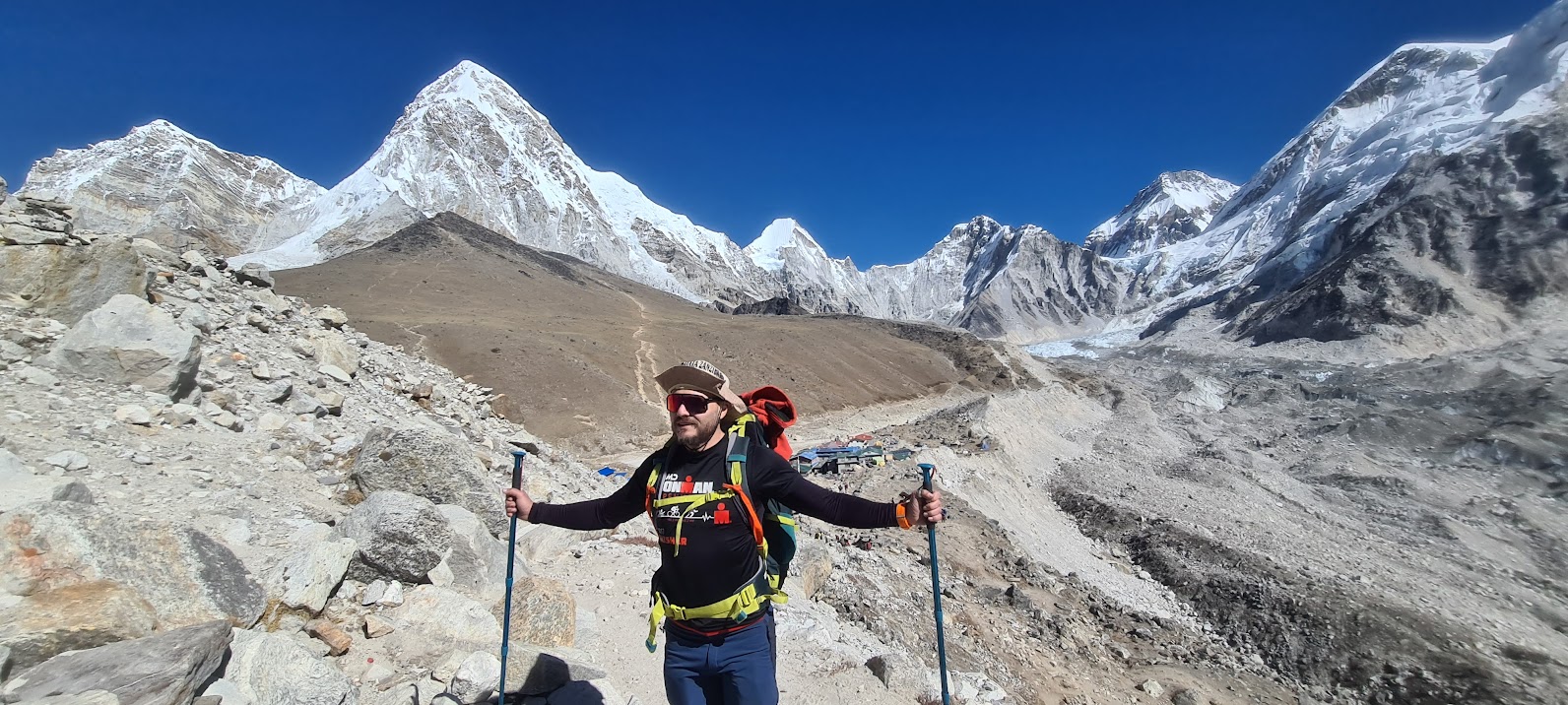 Our trekking itinerary begins with a delicious breakfast served promptly at 7 to 7:30 am, providing our guests with the necessary energy to embark on the next part of their journey. Our experienced team will commence trekking at 8 am, and after four hours of trekking, we will reach our next destination, taking ample breaks to admire the stunning scenery of mountains, forests, rivers, waterfalls, and more, making you forget all the fatigue.
To ensure our guests comfort and prevent any physical strain, we have designated enough rest time during the daily trek of 6 to 7 hours. At noon, we will take a break for a well-deserved lunch, allowing our guests to recharge themselves and relish the surrounding natural beauty. In the evening, our guests will be treated to a delectable dinner between 6 to 7 pm, consisting of both local and international cuisine. Our skilled chefs will utilize fresh, locally-sourced ingredients to create an unforgettable dining experience. Our commitment to exceptional hospitality and attention to detail will make our guests trekking experience both pleasant and unforgettable.
During the Everest Base Camp Trek we will have the trek with the beautiful and stunning view of nature, snow covered mountain, different flora and fauna which varies with the variation of geographical structure. We will also get introduced with the local tradition and culture during the trek.
Physical Requirements for Everest Base Camp Trek
The physical requirement for The Everest Base Camp Trek doesn’t demand extra physical fitness but you should not be suffering from the knee and ankle problem and heart and lung diseases. A 4-6 hours walk in a day with small backpack having enough breaks in between is quite enough. Yes, it is better for yourself to prepare for the trek with simple preparation 1-2 months before the trek date. These could include, daily walking, go for a hike, a long walk once in a week, doing yoga related to breathing etc.
Acclimatization on Everest Base Camp Trek
 When individuals immigrate to a foreign country with dissimilar climates or cultural norms, they may require an adjustment period to acclimate to their new environment and feel comfortable in their surroundings. Nepal, in particular, is a highly sought-after destination for trekking and touring. However, the country’s environment can be vastly different from other locations on Earth. Travellers hailing from lower altitudes may encounter obstacles when embarking on the Everest Base Camp Trek, which culminates at a towering altitude of 5643 meters at Kalapathar Viewpoint and 5365m at Everest base camp. Although the view from beyond the tree line is awe-inspiring, altitude sickness is a frequent ailment that can affect those who ascend too rapidly without sufficient acclimatization.
Everest Base Camp Trek starts from an elevation of 2800 meters at Lukla. The risk of altitude sickness mainly starts above 3000 meters. Our Everest Base Camp Trek is done almost entirely above an altitude of 3000m from sea level, where the air density may be low, and some symptoms of altitude sickness can occur. Altitude sickness can affect anyone, even those with proper physical fitness, who are ascending without proper acclimatization. To ensure proper adjustment to the environment, we spend a full day and two nights in Namche Bazaar.
You can visit the beautiful and colorful Namche Bazaar, surrounded by snow-covered mountains. We will utilize the day to visit nearby Sherpa villages and learn about the culture and traditions of Sherpa people. If you are lucky, you may get the chance to see some cultural programs. You can even wear Sherpa local dress and take photos, although there may be some charges according to local customs.
Fortunately, our highly experienced team is well-equipped to assist trekkers in combating altitude sickness. We strongly advise our guests to consume an abundance of fluids, including water, hot soup, and tea, to help prevent altitude sickness. Furthermore, we employ a gradual approach to ascending to higher elevations, affording the trekker’s body sufficient time to adjust to the changing environment. To allow the body to acclimatize, it is essential to rest frequently and avoid overexertion during hikes or climbs. Even physically fit individuals may be susceptible to altitude sickness, which is why we ascend slowly, typically 300 to 1000 meters per day, to ensure proper rest.
At our company, we prioritise providing the best service while taking care of our guests. In the event that a trekker is unable to fend off altitude sickness, we will take them back. Our company’s utmost concern is the well-being of our guests, and we guarantee that our seasoned team will do everything possible to ensure a safe and unforgettable experience for everyone involved.
Everest Base Camp Trek Difficulties
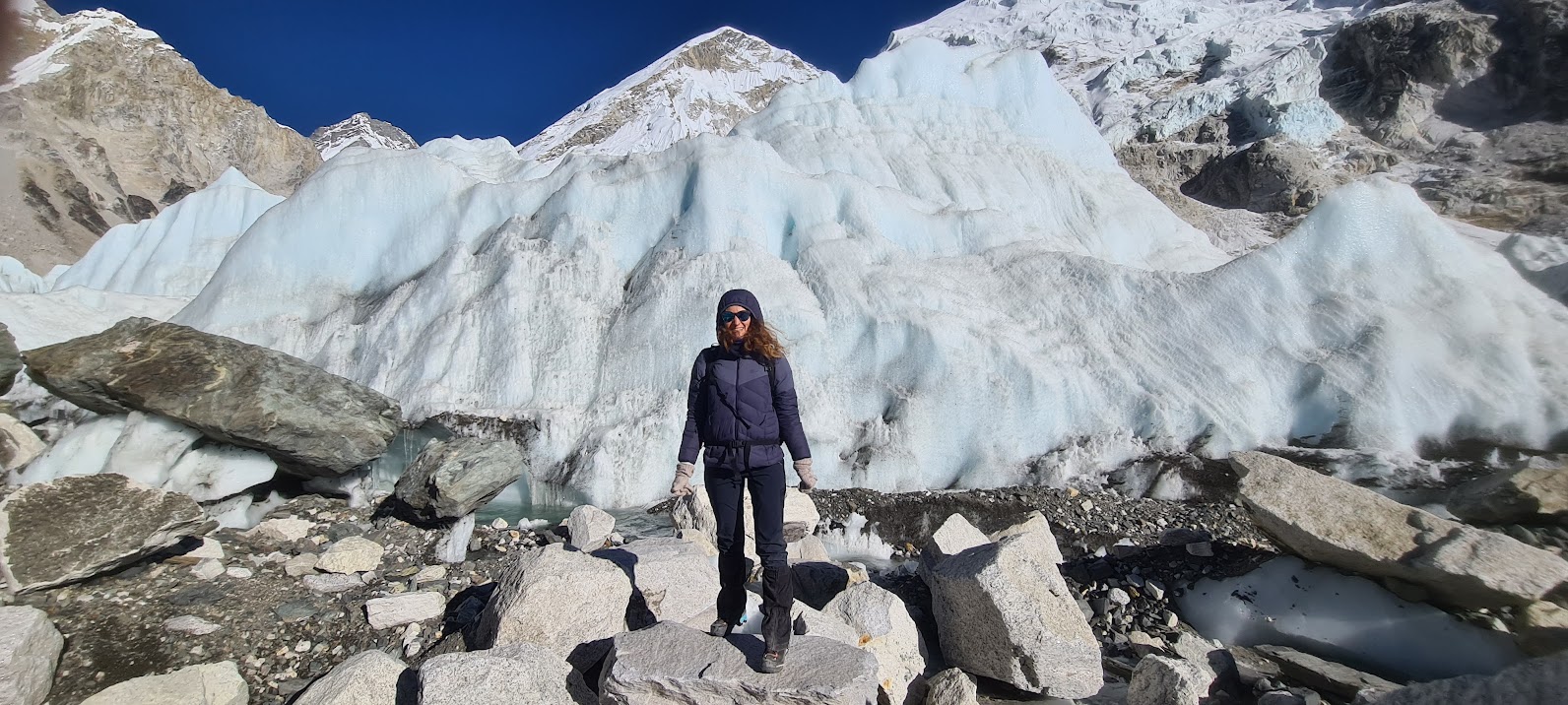 Everest Base Camp Trek is considered as the moderate to challenging trek. The main factor that affect the trek difficulties is your physical fitness level. If you are physically fit then the trek will be moderate and can be challenging if you have the fitness level below average. There are other factor that makes the trek difficult such as geographical structure, altitude, temperature, weather etc.
The geographical structure of Nepal is unevenly distributed. The altitude also varies from 60m to 8849 meter from the sea level. The trekking distance of Everest Base Camp Trek is 130 km and the highest altitude is 5643 meter from the sea level. Because of the altitude the trial is also varies. The trial is somewhere narrow, up and down stepped, snow covered, bumpy and stony path. This shift the trek difficulty level from the moderate to challenging level in this region. According to the altitude, this region is risk of altitude sickness and one should overcome altitude sickness.
To ensure a safe and comfortable experience, we provide experienced and qualified guides and porters who are fluent in English and conduct themselves politely. Our team is well-equipped to handle any challenges that may arise during the trek and will arrange all necessary services and facilities.
Moreover, our guides and porters will provide valuable information about the area’s flora, fauna, mountains, jungles, rivers, and local communities’ traditions and cultures. This enriches the trekking experience with cultural insights. However, due to the trek’s moderate to challenging difficulty level, we recommend that infants, children, elderly people, pregnant women, regular medicine users, or those with below-average physical fitness avoid this trek.
Equipments for Everest Base Camp Trek

Guide and Porter Service for Everest Base Camp Trek
The Everest Base Camp Trek is a perfect opportunity to immerse yourself in nature and disconnect from the stresses of daily life. Whether you’re traveling with colleagues, friends, family, or as a female trekker, this trek is an excellent option for those who are moderately fit. While it’s possible to trek independently, foreign visitors are required to have a guide and porter due to local regulations.
Our company provides highly qualified and experienced guides and porters who are fluent in English and renowned for their kindness and professionalism. We’re committed to introducing you to the rich culture and traditions of Nepal, and we can arrange for a translator if needed to ensure clear communication.
Our 15 day trekking package is perfect for group trekking. Since each porter can only carry up to 20 to 25kg, it’s essential to pack efficiently. We offer porters to assist with carrying warm clothing and personal belongings, and the number of guides and porters we provide depends on the size of the group. We take great care to ensure that you have the necessary support to make your trek both enjoyable and safe.
Number of Traveler Guide Porter
| Number of Trekkers | Numbers of Guide | Numbers of Porter |
| For 1 or 2 trekkers | 1 guide | 1 porters |
| For 3, 4, or 5 trekkers | 1 guide | 2 porters |
| For 6 or 7 trekkers | 1 guide | 3 porters |
| For 8 trekkers | 1 guide & 1 assistant guide | 4 porters |
| 9 trekkers | 1 guide & 1 assistant guide | 4 porters |
| For 10 trekkers | 1 guide & 2 assistant guide | 5 porters |
Note: company will provide the Number of guide and porter depends of group size.
To summarize, Everest Base Camp Trek is an ideal way to experience the natural beauty of the Himalayas and the cultural richness of Nepal. Our friendly and experienced team will ensure that you have an unforgettable adventure.
Food Services at the Everest Base Camp Trek
The Everest Base Camp Trek not only brings home ‘home’ but also, importantly, provides a robust and fulfilling food experience for trekkers on their high-altitude trek. Along the trail, the trekkers are often served energy-rich and nutritious meals in tea houses and lodges. A selection of popular items includes dal bhat (lentils, rice, and vegetables), Sherpa stew, momos (dumplings), noodle soups—great for fuelling some well-earned energy for a long day of trekking. The food is usually freshly made with local ingredients and provides the right balance of carbohydrates and proteins for sustenance on that very arduous and physically challenging trekking route.
The higher you climb, the simpler the menu becomes, but you will still have your basic Himalayan comfort food such as garlic soup (not too bad for altitude), Tibetan bread with jam, fried rice with egg. Pancakes, pasta, and even yak cheese pizza in some places can be found at lower altitudes like Lukla and Namche Bazaar. The food may not be that diverse with the cities, but it is fuel as well as that warm reminder of Sherpa and Tibetan culture making every meal part of the adventure.
Accommodation Services at the Everest Base Camp Trek
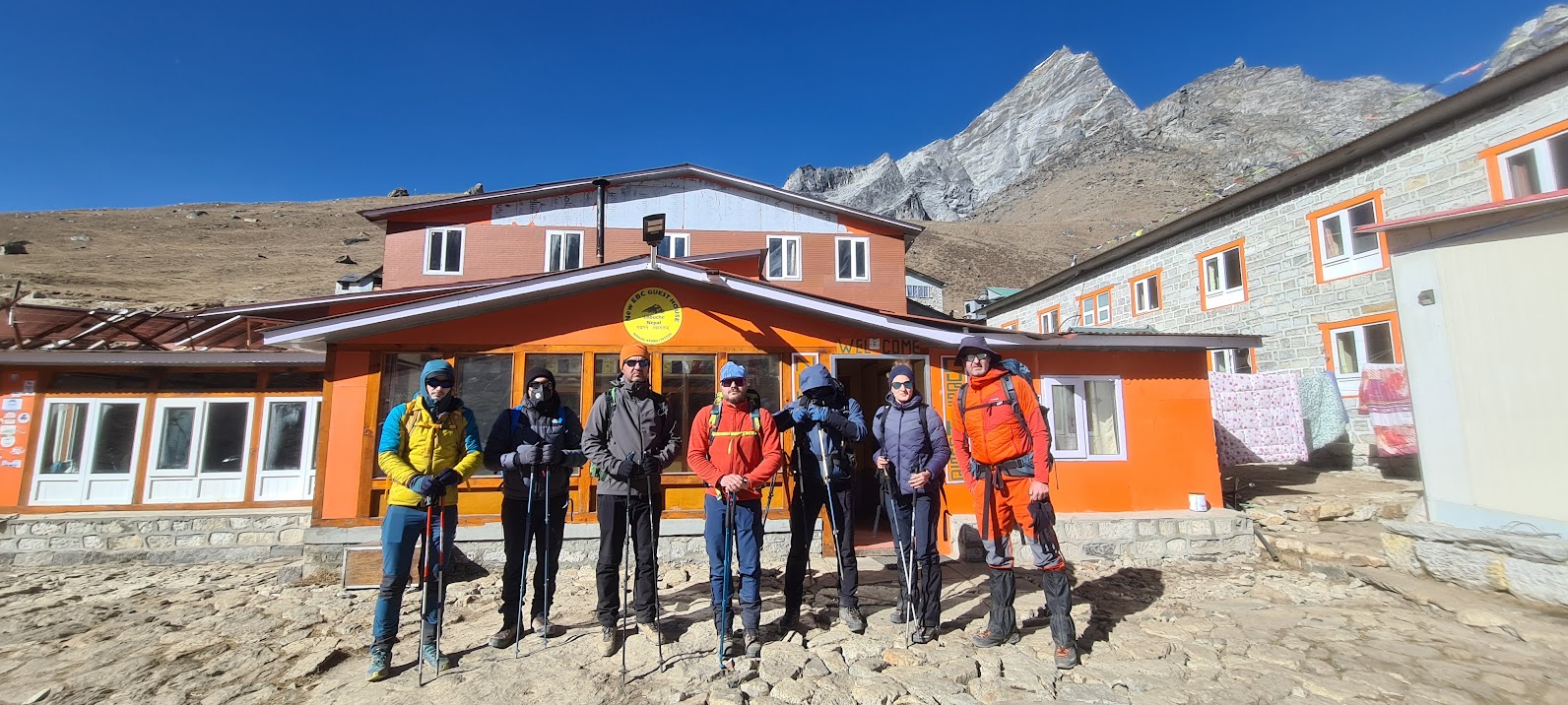
Accommodations on the Everest Base Camp trail are rather modest but fairly comfortable stints where trekkers can get themselves some much-needed rest and warmth. While trekkers are accustomed to the high-class accommodation of four-star hotel of Kathmandu, the lodging for this trek is primitive but warm and welcoming. Most overnight stays are at tea houses—small, locally-run lodges with wooden interiors and basic twin-sharing rooms. Rooms are typically very simply furnished with bedding and a blanket but, along with sleeping bags, are recommended for some extra insulation at the higher reaches like Dingboche or Gorak Shep. Bathrooms are frequently shared and more basic as you get higher along the climb.
Most tea houses come with electricity and hot waters, but these will come at some cost, especially above Namche Bazaar. Wi-Fi is found in selected locations, although slow and costly, with the intention of making trekkers stay away from technology and fully immerse themselves in the mountain environment. However, even under such conditions, the warm hospitality of the Sherpa hosts makes each night memorable. These tea houses are more than places to sleep: cultural touch-points that give some insight into Himalayan life and help meet trekkers after a long day on the trail.
Transportation Services During the Everest Base Camp Trek
The great adventure begins with quite possibly the world’s most thrilling flight: Kathmandu to Lukla. This brief 30-minute flight, with its panoramic vistas of the Himalayas, descends upon the high-altitude Lukla Airport, known for its dangerously narrow perch on a mountain ridge. The flights set the tone for the journey and are often a highlight in themselves. Once you touch down in Lukla, the only mode of transportation is walking, as there are no roads that extend farther than this. Such absence of roadways contributes to preserving all of that natural beauty and serenity. Private jeeps are commonly used for small groups, while larger groups might share mini bus or other according to group size.
As you gain altitude toward EBC, all your gears are carried either by porters or on yaks and dzopkyos (crossbreed of yak and cow). There are no vehicles along the way, making it all the more authentic. The trekkers walk down to Lukla for the return flight, or they are given the option to return by helicopter from designated spots in case of emergencies or for premium packages. Air travel plus trekking equals Adventurous and soul-immersing, maintaining the feeling of remote adventure from the very beginning to the very end.
Drinking water Service on Everest Base Camp Trek
The Everest Base Camp Trek is a breath-taking journey that takes you through a variety of landscapes, including terrace farming, forests, and base camps. It is important to note that in order to preserve the local flora and fauna, the use of plastic materials, including plastic water bottles, is strictly prohibited.
Visitors are encouraged to bring their own reusable water bottles, filled with water, to ensure that they have access to safe and clean drinking water throughout the trek. To guarantee the safety and hygiene of our guests, we strongly advise against drinking water directly from taps or streams. When your water bottle runs out, you can refill it at any of the available teahouses or lodges along the route.
However, please be aware that due to the high volume of visitors on the Everest Base Camp Trek, it may be necessary to purchase properly filtered and boiled water. We understand the importance of staying hydrated on this trek, but we ask that all visitors respect the environmental regulations in place to protect the local ecosystem. By bringing your own reusable water bottle and properly disposing of any waste, you can help us preserve the beauty of the Everest region for generations to come.
Travel insurance information while to a Everest Base Camp Trek
When embarking on a trek such as Everest Base Camp Trek, it is crucial to obtain travel insurance to minimize the risk of mishaps or to reduce their impact. Therefore, we strongly recommend that all trekkers obtain travel insurance before commencing their journey.
The insurance must cover essential medical check-ups, helicopter rescue in case of any medical emergencies or calamities during the trek, and other necessary expenses. We consider travel insurance as a compulsory requirement and recommend that trekkers present their insurance certificate to Graceful Adventure before starting the trek.
Please note that Graceful Adventure does not sell insurance policies, and it is the responsibility of the trekkers to obtain their insurance certificates from certified insurance companies. To assist trekkers from different regions, we recommend the following insurance companies:
For travellers from the USA and Canada:
- Online Global Health Insurance,
- Travelex,
- Insure My Trip.com (Online Insurance Aggregator)
- Mondial Assistance,
- Access America,
- HCC Medical Insurance Services,
- Good Neighbor Insurance (International Health),
- International Health,
- Insuremytrip dot com,
- MultiNational Underwriters
- TIC Travel Insurance Coordinators Ltd,
- Travel Assist, and TraveLite.
For travelers from England:
- Specialty Group (UK) Limited,
- First Assist Services Limited,
- Harrison Beaumont,
- Buy cheap travel insurance.
For travelers from Europe and Slovenia:
- Assistance CORIS.
For travelers from Australia and New Zealand:
- Cover More Travel Insurance
- CGU Insurance Limited.
For travelers from South Africa:
- Travel insurance Consultants Pty. Ltd.
Please note that these companies were recommended by previous travelers and are for recommendation purposes only.
Please note that these companies were recommended by previous travelers and are for recommendation purposes only. We encourage trekkers to conduct their own research and choose an insurance company that meets their specific needs.
In summary, obtaining travel insurance is crucial for treks such as Gokyo Lake Trek. It is a standard practice that helps to minimize the risk of mishaps and ensure that trekkers receive timely medical assistance if required.
Trekking permit of Everest Base Camp Trek
In Nepal, trekking is a popular activity that is permitted throughout the country for individuals or groups. However, certain areas, such as conservation areas, wildlife reserves, and the Himalayas, are restricted, and trekkers must obtain permits issued by the Nepalese government and tourism board. It’s important to note that permits can only be obtained through government but not through any trekking agencies and not by individuals directly.
For those planning to Everest Base Camp Trek, obtaining a Trekkers Information Management System (TIMS) card is mandatory. The Nepal Tourism Board in Kathmandu issues TIMS cards, which typically take 20-30 minutes to obtain. The process involves filling out a form and paying a fee of 30 USD.
Additionally, the trek will be through two different rural municipality. They are Khumbu Rural municipality and pashanglamu Municipality. To trek in this area one should take Khumbu rural municipality entry permit and Khumbu Passang lamu municipality entry permit which may cost 3000 NRP and 2000NRP respectively. A photograph is required for the application.
During the Everest Base Camp Trek we also have to enter to Sagarmatha National park. So, one should need the entry permit and local entry permit should also be taken from tourism board Nepal, which may cost 3000NRP according to the local rules.
To summarize, TIMS card, Sagarmatha National park entry permit, local area entry permit are necessary for trekking in Everest Base Camp. It’s crucial to keep in mind that the TIMS card can only be obtained from the Nepal Tourism Board in Kathmandu, while the permit can be obtained from Nepal Tourism Board. By obtaining these permits, trekkers can ensure a safe and enjoyable experience while also supporting the conservation efforts in the region.
Electricity and communication of Everest Base Camp Trek
Electricity and internet access will be available 24/7 in urban areas. However, during treks, there may be instances of power outages in some village areas. Even in tea houses or lodges where you choose to stay, there may be additional charges for utilizing electricity or internet services due to the busy route or rural location. Please note that during the trek, access to electricity or internet will not be available. Therefore, it is advised to charge your electronic devices in the tea houses or lodges where you will be lodging.
ATM and Currency Exchange Service on Everest Base Camp Trek
Nepal’s bustling urban hubs, namely Kathmandu and Pokhara, offer a plethora of convenient ATM and money exchange services that facilitate the acquisition of Nepalese currency for travelers. However, such amenities may not be readily available in rural areas, where only Nepalese currency is accepted, and modern banking infrastructure may be scarce.
To circumvent any potential inconveniences, it is strongly advised that travellers plan in advance and exchange foreign currency for Nepalese currency before embarking on a trek. This will ensure that adequate local currency is readily available to purchase essentials such as food, water, and other necessary supplies during the trek. Seeking guidance from local currency exchange services in Kathmandu can also help expedite the process and minimize any undue stress.
About The company to operate Everest Base Camp Trek
Graceful Adventure Travels Pvt. Ltd. is a highly reputable and renowned adventure travel company, registered and based in the beautiful country, Nepal. We specialize in offering exceptional trekking packages to guests from all over the world, who seek to explore the awe-inspiring Himalayas. At Graceful Adventure Travels, we are committed to excellence in all aspects of our work.
Our primary goal is to ensure that our guests have a safe and unforgettable adventure, which is why we have earned a reputation for providing an exceptional level of service. Our team is composed of experienced and hardworking guides, assistant guides, and porters who are passionate about ensuring that our guests have an enjoyable and unforgettable experience.
We take pride in offering a range of services and facilities that are designed to enhance the overall trekking experience, making it both fun and adventurous. We are dedicated to meeting the needs and expectations of our valued guests, and we go above and beyond to ensure that their journey is a success. From the moment they arrive in Nepal until the end of their trek, we spare no effort in providing personalized attention, exceptional service, and genuine care.
At Graceful Adventure Travels, we are committed to upholding the highest standards in the adventure travel industry. Our mission is to provide a safe, enjoyable, and unforgettable experience that creates memories that last a lifetime.
Tipping System of Everest Base Camp Trek
Tipping is a customary way of expressing gratitude for services rendered in Nepal. It is a discretionary practice, and trekkers may choose to tip individuals at their discretion based on their personal satisfaction with the services provided.
Tipping is typically offered on the final day of the trek, although trekkers may choose to tip hotel staff, lodge employees, or other individuals at any time during their trip. When deciding on the amount to tip, it is essential to consider the quality of the service provided, the duration of the service, and the level of personal satisfaction. While tipping is a common practice in Nepal, it is not obligatory, and trekkers should not feel pressured to tip if they are not satisfied with the services received. Additionally, if a trekker is unable to tip due to financial constraints, it is important to express gratitude verbally by saying Dhanyabad or Thank you.
Booking process of Everest Base Camp Trek
1. Package Selection: Start by visiting our company’s website www.gracefuladventure.com and select Everest Base Camp Trek package. You’ll find all the details, including the itinerary, inclusions, exclusions, and prices. If you have any questions, feel free to contact our customer support team, who will be happy to assist you.
2. Personal and Group Information: Once you have decided to book the package, fill out the booking form on our website with the necessary personal and group information. Please ensure that all details are accurate, as any mistakes or omissions may lead to issues during the trek.
3. Confirmation: Once you submit the booking form, our company representative will review your information and contact you within 24 hours to confirm your booking. We will send you our standard agreement, which outlines the terms and conditions of the booking. Please read the agreement carefully and ask us if you have any questions.
4. Advance Payment: To confirm your booking, we require a 20% advance payment of the total cost of the package. You can make the payment through our secure online payment gateway, which accepts all major credit and debit cards. Alternatively, we can send you a payment link or provide you with our bank details for a direct bank transfer.
5. Booking Confirmation: Once we receive your advance payment and signed agreement, we will confirm your booking and send you a receipt of payment. We will also provide you with a detailed itinerary, packing list, and other essential information to prepare you for the trek.
6. Pre-Trek Briefing: Before the trek starts, we will conduct a pre-trek briefing, either in person or online, to go over the itinerary, safety protocols, and other relevant information. This briefing is essential to ensure that you have a safe and enjoyable trekking experience.
We hope that this updated booking process meets your requirements and makes it easier for your customers to book our Everest Base Camp Trek package. If you have any further questions or suggestions, please let us know, and we’ll be happy to help.
Frequently Asked Questions
The likelihood of heavy snowfall is minimal during this season, and rainfall is rare, resulting in clear and stunning views of the snow-capped mountains. The temperature ranges from 10°C to 20°C, making it ideal for trekking. Additionally, the forests of Rhododendron are in bloom, painting the green forests red and adding to the colorful environment. Moreover, snowmelt has begun due to the rising temperature.
The likelihood of heavy snowfall is minimal during this season, and rainfall is rare, resulting in clear and stunning views of the snow-capped mountains. The temperature ranges from 10°C to 20°C, making it ideal for trekking. Additionally, the forests of Rhododendron are in bloom, painting the green forests red and adding to the colorful environment. Moreover, snowmelt has begun due to the rising temperature.
The likelihood of heavy snowfall is minimal during this season, and rainfall is rare, resulting in clear and stunning views of the snow-capped mountains. The temperature ranges from 10°C to 20°C, making it ideal for trekking. Additionally, the forests of Rhododendron are in bloom, painting the green forests red and adding to the colorful environment. Moreover, snowmelt has begun due to the rising temperature.
The trek is moderately difficult and requires good fitness, as it involves long walks at high altitudes.
While it’s possible to trek independently, many prefer hiring a guide or porter for navigation, safety, and support.
You need the Sagarmatha National Park Permit and a TIMS (Trekkers’ Information Management System) card.
Yes, altitude sickness is common. Acclimatization days and staying hydrated can help prevent it.
Essentials include warm clothing, trekking boots, a sleeping bag, first-aid kit, water purification tablets, and snacks.
Wi-Fi is available at most tea houses but is slow and may have additional charges.
Yes, insurance covering high-altitude trekking and emergency evacuation is strongly recommended.
Price Starts From
US$ 1755
-
1 person
US$ 1755
-
2 -
5 person
US$ 1575
-
6 over
9999
US$ 1495
US$ 1755
Need Help?
Ask to Travel Expert
Reviews


Similar Trips

12 Days
Trip DurationUS$ 3855
Per Person
Luxury Everest Trek
7 Days
Trip DurationUS$ 3755
Per Person
Gokyo Lake Trek
14 Days
Trip DurationUS$ 1795
Per Person-
Price starts
US$ 1795
✖
Talk To Expert

Mr. Padam Timilsina
Travel Expert
Custom vacations, perfectly planned to fit your wishes.
Request for Assistance ⮞