


Talk to Expert +9779856019412

Early bird offer for Everest base camp trek - 20% discount for 2026 & 2027.


Drive in Fly Out Tibet Tour Package from Kathmandu presents an exceptional expedition into the heart of Tibet, combining overland travel with air return. This tour is one best suited for a person looking for an exquisitely immersive experience, where all cultural and natural trade-offs of the Tibet hosts come to bear upon the return journey to the city of exit. It is therefore a complement with the road-based entry into Tibet but air-based exit for travelers.
Travelers will start from Kathmandu, driving first through mesmerizing landscapes of Nepal into Tibet via the border town, Kerung. They will enjoy breathtaking views of the Himalayas while crossing several high mountain passes leading to beautiful Tibetan villages. All through the journey, every opportunity arises to see and feel the whole Tibetan culture of the Tibetan plateau, derivatives of its own unique architecture and age-old monasteries therein, and hospitality of the locals.
The tour will escort participants to some of the most popular tourist attractions in Tibet- namely Shigatse, Gyantse, and the famous Everest Base Camp-from which glorious views of Mount Everest and other soaring peaks can be appreciated. In Lhasa, the traveler will encounter the spiritual establishments: Potala Palace, Jokhang Temple, and Norbulingka; thus getting iconic exposure to the history, culture, and traditions of Tibet.
This final touch after a glorious overland tour of Tibet indeed makes a pleasant ending, returning by the breathtaking flight from Lhasa to Kathmandu, giving travelers a chance to enjoy sweeping views of the Himalayas, including the great Everest.
Graceful Adventure Travel provides the drive in fly Out tibet tour package will suit anyone who wants a fair amount of adventure along with comfortable road trips and air travel. This is the best choice for anyone with limited time and who wishes to get a taste of the scenery, culture, and heritage of Tibet. Graceful Adventure Travel assures that the trip is highly organized and safe, with qualified guides, comfortable accommodations, and great transportation arrangements. Be it the overland drive through the Tibetan plateau or the awe-inducing sites in Lhasa, this tour is a once-in-a-lifetime vacuum-crammed experience that perfectly epitomizes Tibet in a brief but holistic trip.
| Season | Day Time Temperature | Night Time Temperature |
| Spring (April-May) | 10°C to 20°C | -5°C to 5°C |
| Summer (June-August) | 15°C to 25°C | 5°C to 12°C |
| Autumn (September-November) | 12°C to 22°C | 0°C to 8°C |
| Winter (December-February) | -5°C to 10°C | -10°C to -5°C |
| Tour Name | Drive in Fly Out Tibet Tour |
| Maximum Elevation | 5,200 meters (Tibet Plateau) |
| Duration | 8 days (including sightseeing and drive) |
| Total Distance | Approx. 500-600 km (driving distance from Kathmandu to Tibet, plus local sightseeing) |
| Difficulty Level | Moderate |
| Best Time to Visit | April-May, September-November |
| Accommodation | 3* Hotels (or similar) with breakfast (BB) |
| Group Size | 1-12 people (ideal for guided group travel) |
| Day | Activity |
| 1 | Drive from Kathmandu – Gyirong Border |
| 2 | Drive from Gyirong – Tingri / Lhatse |
| 3 | Drive from Tingri – Shigatse / Xigatse |
| 4 | Drive from Shigatse to Gyantse |
| 5 | Drive from Gyantse to Lhasa |
| 6 | Full-day Sightseeing Tour in Lhasa |
| 7 | Full-day Sightseeing Tour in Lhasa |
| 8 | Fly from Lhasa to Kathmandu |
The journey begins with an early morning drive from Kathmandu towards the Nepal-Tibet border at Gyirong. The road passes through scenic landscapes, lush green hills, and small villages. As the drive continues, the altitude gradually increases, making acclimatization an important aspect. After crossing the Nepalese side, immigration formalities are completed at the border. Gyirong, a small town in Tibet, welcomes travelers with its fresh mountain air and stunning surroundings. The night is spent at a guesthouse or hotel in Gyirong, allowing time for rest before the journey further into Tibet.
Activity: Drive to Gyirong Border
Meal: BB
Accomodation: 3* hotel/similar
Leaving Gyirong behind, the drive heads deeper into Tibet towards Tingri or Lhatse, crossing high-altitude passes with breathtaking views. The route passes through rugged terrains and barren landscapes, giving a true sense of the Tibetan Plateau. Travelers may start feeling the effects of altitude as they ascend further. The journey includes stops at viewpoints and small settlements where Tibetan culture can be observed. Reaching Tingri or Lhatse, accommodation is arranged for the night, allowing rest before the next leg of the trip. The cold and dry climate here is noticeably different from the lower altitude regions.
Activity: Drive to Tingri / Lhatse
Meal: BB
Accomodation: 3* hotel/similar
Day 3 will see the drive from Tingri to Shigatse, heading along the historic Tibetan highway, which intersects vast plains and high-up passes. On the way, travelers can witness sets of Tibetan-style villages and ancient monasteries. Tashilhunpo Monastery, which is greatly recognized as the seat of the Panchen Lama, is one of the highlights of Shigatse. In this city, modern amenities are available as opposed to the previous stops making it a convenient stop for lodging. Hydration and a slow pace are vital while in high altitude. Travelers will spend the night in a hotel after exploring local markets and experiencing the warm hospitality of Tibetan culture.
Activity: Drive to Shigatse / Xigatse
Meal: BB
Accomodation: 3* hotel/similar
Day 4 will see the drive unfold above some of the most stunning landscapes in Tibet within a relatively short distance from Shigatse to Gyantse. Driving through traditional farmlands, the horizon lines are meet by barley fields. Gyantse is an old town famous for its historic monasteries and fortifications. The Kumbum Stupa in the Pelkor Chode Monastery is the town’s key attraction demonstrating spectacular examples of Buddhist artwork. The atmotphere of the town contrasts sharply with larger Tibetan cities; it is more laid back. Overnight at Gyantse allows exploration of the old streets and local Tibetan culture.
Activity: Drive to Gyantse
Meal: BB
Accomodation: 3* hotel/similar
The journey from Gyantse to Lhasa takes travelers through stunning mountain scenery, high passes, and crystal-clear lakes. One of the most beautiful stops along the way is Yamdrok Lake, a turquoise glacial lake surrounded by snow-capped peaks. The route also crosses the Karo La Pass, where towering glaciers can be seen up close. As the drive continues, the city of Lhasa gradually comes into view, marking the final destination of the road journey. Lhasa, the capital of Tibet, is a cultural and spiritual hub, where travelers can experience the essence of Tibetan Buddhism.
Activity: Drive to Lhasa
Meal: BB
Accomodation: 3* hotel/similar
The first day of sightseeing in Lhasa includes a visit to the Potala Palace, the former residence of the Dalai Lama. This iconic structure, built on a hill, offers panoramic views of the city. The tour continues to Jokhang Temple, the most sacred temple in Tibet, where pilgrims from across the region come to pray. Exploring the bustling Barkhor Street, travelers get a glimpse into Tibetan daily life and can shop for traditional souvenirs. The day is filled with cultural and historical experiences, providing insight into Tibetan religious practices. The evening is spent relaxing and preparing for the next day’s tour.
Activity: Sightseeing Lhasa
Meal: BB
Accomodation: 3* hotel/similar
The second day of sightseeing covers some of Lhasa’s other important landmarks. A visit to Drepung Monastery, one of the largest monasteries in Tibet, provides an understanding of monastic life. The tour then moves to Sera Monastery, where visitors can witness the famous monk debates, a unique aspect of Tibetan Buddhist learning. The day includes exploring local markets, sampling Tibetan cuisine, and enjoying the serene atmosphere of the city. Lhasa’s rich history and deep-rooted spirituality make every moment of the tour special. As the final night in Tibet, travelers can reflect on their journey before departing the next day.
Activity: Explore Lhasa
Meal: BB
Accomodation: 3* hotel/similar
If our standard itinerary doesn't fully meet your needs, we are happy to tailor it to your specific preferences and requirements.
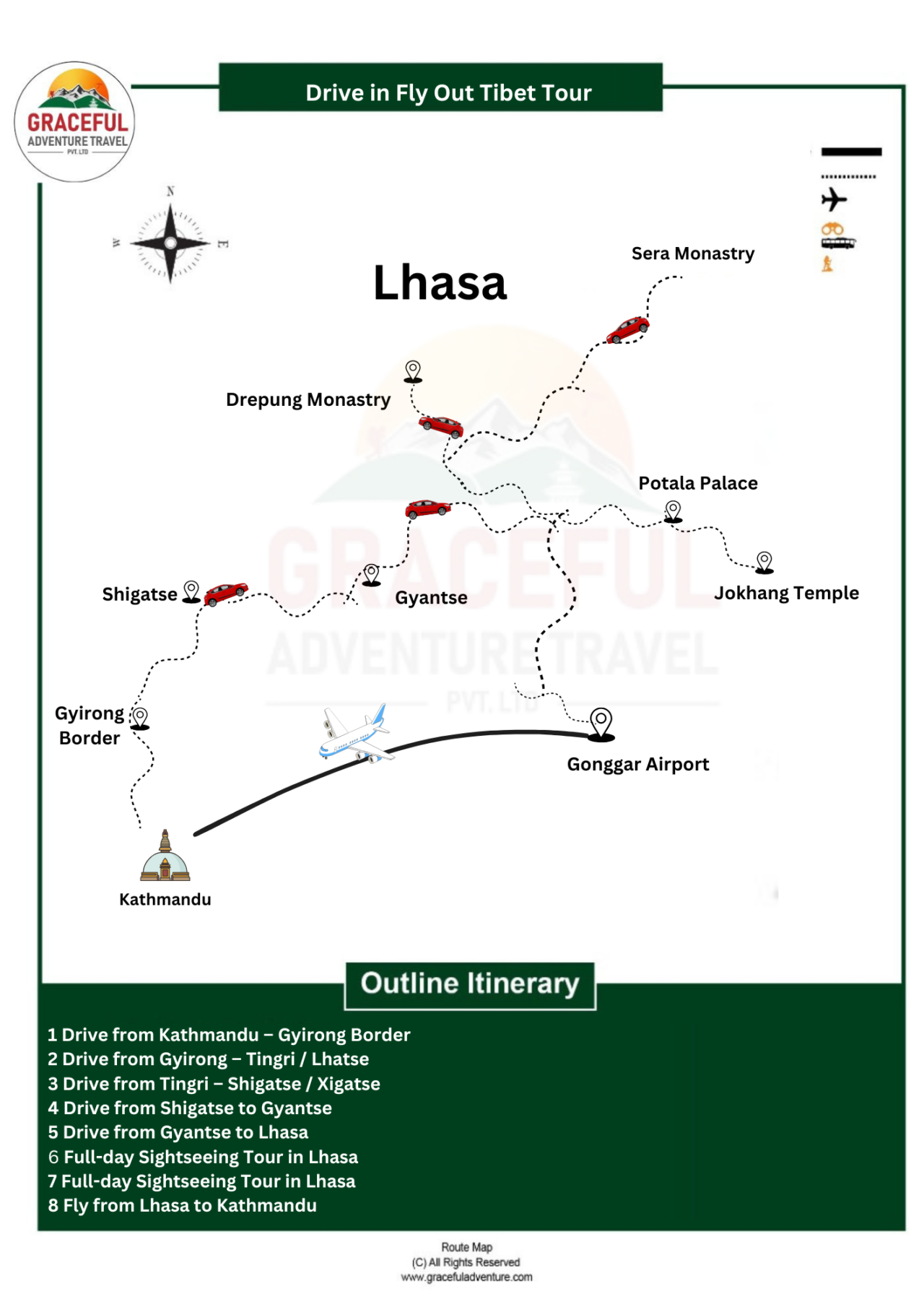
Every detail of the tour stands for a characteristic journey in Tibet with cultural exploration with scenic drives along with amazing views of the Himalayas. Tourists get to see the spiritual and natural wonders of Tibet, from the monasteries down to the breathtaking Everest Base Camp. The vistas bring a unique opportunity to see Tibetan life, revered sites, and some of the world’s best scenery.
Potala Palace
The Potala Palace is undoubtedly the most eminent monument in Lhasa, a UNESCO World Heritage site, and the ex-winter residence of the Dalai Lama. It enjoys stunning views over Lhasa from its hilltop perch. It is famous for its grand architecture, gilded roofs, sacred chapels, and ancient murals telling the story of Tibet’s rich Buddhist history and culture.
Jokhang Temple
Commonly referred to as the spiritual nucleus of Tibet, Jokhang Temple nurtures the Jowo Shakyamuni statue. Pilgrims from all corners of Tibet flock to perform kora, or circumambulation, around the temple, gluing a spiritually charged atmosphere on its edifice. The architectural blend of Nepalese, Indian, and Tibetan styles is significant in itself from historical and cultural perspectives.
Barkhor Street
It is a market place located around Jokhang Temple, which is also part of the pilgrimage route for both pilgrims and tourists. It is lined with stalls that sell various traditional Tibetan goods, including prayer items and some souvenirs, providing a useful glimpse into the mundane life of Tibetans. Visitors can see some spiritual practices of the locals doing kora round the temple.
Ganden Monastery
One of Tibet’s oldest and most important monasteries, Ganden Monastery is famous for the Maitreya Buddha statue. The monastery is located in the Tibetan high plateau and serves as a serene remembrance with an exquisite view of the surrounding mountain scenery. One would definitely experience Tibetan Buddhist rituals and history here.
Everest Base Camp
Everest Base Camp is an unbeatable memory that garners attention because of the immediate glimpses before the eyes of Mount Everest. Rising at 8,848 meters above sea level, Everest stands highest on the planet, and the base camp gives a good view of its grandeur. This is a rarely available opportunity of witnessing the grand Himalayas.
Shigatse
As the second-largest city in Tibet, Shigatse is of great cultural and spiritual importance, being the home of the Tashilhunpo Monastery that contains the tombs of many past Panchen Lamas. It interweaves tradition and modernity in such a unique manner that it gives the visitor a glimpse into Tibetan life.
Rongbuk Monastery
Rongbuk Monastery lies nearby Everest Base Camp. Other than being the highest monastery on earth, it has the peace of spirit to influence its contemplation and the finest views of an enchanting Everest. The monks here practice Tibetan Buddhism in a high-altitude setting.
The Drive in Fly Out Tibet Tour Package from Kathmandu incorporates an adventurous roadway from Kathmandu that leads to the border of Tibet. After immigration formalities are considerable, a journey continues further through scenic opportunities of Tibet; this gives an immense view of the Himalayan ranges. Arriving in Lhasa, tourists shall be visiting such prominent sites as Potala Palace, Jokhang Temple, and Barkhor Street. Acclimatization and cultural exploration shall take place. Visit the Ganden Monastery and Sera Monastery, pilgrims may acquire further insights into Tibetan Buddhism and monastic life. Day three allows one to visit Norbulingka, summer palace of Dalai Lama and the Tibetan Museum. After concluding the tour with a visit to Everest Base Camp, travelers are flown back to Kathmandu, leaving with wonderful memories of Tibet’s grand culture and beauty.
But if any seasons are recommended to embark upon the Drive in Fly Out Tibet Tour Package, spring (April-June) or autumn (September-November) are the best. The weather is typically good for road travel and sightseeing, which enhances the experience of visiting the spiritual and natural attractions of Tibet with clear skies and pleasant temperatures.
Spring Season:
The spring season from April to June provides a great period to visit Tibet because the weather becomes favorable with moderate temperatures and blooming flowers. Clear skies and refreshing air support this splendid period to visit Tibet’s sacred sites and soak in the beauty of the landscapes.
Autumn Season:
Autumn, from September through November, can be yet another time for a tour; clear skies, cool weather, and pleasant views set the tempo. At such times, the golden tinge of the Tibetan grasslands and peaceful lakes create a completely meditative ambiance suitable for a spiritual and soul-searching journey through Tibet.
Tibetan food is a unique blend of Tibetan, Chinese, and Nepalese influences. While in Tibet, guests may enjoy local food such as tsampa, thukpa, or noodles with soup, momos, and butter tea, which is a must in Tibetan culture. The food varies from region to region, and in the remote areas, very simple food is offered-such as rice, vegetables, and, of course, some soup. It is very important to carry some extra snacks, especially for high-altitude travels, where menus are usually limited.
For travelers who prefer familiar tastes, larger cities like Lhasa and Shigatse have restaurants that serve a variety of Chinese, Nepalese, and even Western dishes. Breakfast in hotels typically includes bread, eggs, and tea, while lunch and dinner offer a mix of stir-fried vegetables, rice, and meat options. In remote areas, food choices are more limited, with simple yet hearty meals designed to provide warmth and energy in high-altitude conditions. Carrying dry snacks like nuts, protein bars, and instant noodles can be helpful, especially during long drives or when adjusting to the change in diet.
Accommodation throughout the Drive in Fly Out Tibet Tour Package is made pleasant with mediocre hotels in Lhasa, offering hot showers, Wi-Fi, and comfy rooms. Accommodation near Everest Base Camp or in relatively remote places like Lake Mansarovar becomes simpler. In guesthouses, dormitory-style rooms, washrooms, and very basic facilities are what you could expect. Provide warm clothes for such rustic accommodation.
In Lhasa and other main cities, comfortable accommodations in three-star hotels with modern heating and bathroom facilities are available to travelers, while other lodgings turn more basic as the journey advances to altitudes and other remote areas. In localities like Tingri or near Everest Base Camp, guesthouses offer simple dormitory-type rooms with very basic facilities: there may not be hot water on some days and even electricity may be irregular. Such rugged atmospheres call for careful packing of warm clothing and personal supplies for a comfortable stay.
Beginning a trip to such a point, traveling from Kathmandu to Tibet would have spectacular panorama views of the Himalayas through the overland drive. Thereafter, they will continue travel on well-maintained-street roads at pleasant speeds by comfortable vehicles, whether 4WD or minibus, used for intra-city travel within Tibet etc. Depending on the number of people traveling, the choice of vehicle would vary, ensuring safety and comfort. Before going back to Kathmandu by flight, the travelers would finish sightseeing. An unforgettable journey will have come to an end thus.
The overland journey from Kathmandu to Tibet traverses high-altitude passes with glorious views of snow-capped mountains and deep valleys adorned with pristine water bodies. The sturdy vehicles are designed and built to withstand rough terrain, thus facilitating a smooth and safe ride. In urban areas like Lhasa and Shigatse, well-paved roads can be found but expect bumpy rides in some stretches in a few irritating remote corners. The reliability of transportation-whether it be a 4WD vehicle or a minibus-will be based on safety, comfort, and making sure that whatever travels across the Tibetan Plateau will stay well in memory.
For areas like Tibet which require exclusive features like the Drive in Fly Out Tibet Tour Package, travel insurance is indicated especially because of the severe altitude and remote location-induced risks such as altitude sickness, accidents, and medical emergencies. The wide range of services usually included with most policies involves emergency medical treatment, evacuation, and hospitalization, especially in areas where access to medical facilities is limited, and that gives peace of mind to travelers as they know that they are covered against any eventualities during their travel in Tibet.
Coverages of Importance Under Travel Insurance
1. Emergency Medical Treatment
Another factor taken into consideration for traveling to high places like during the Drive in Fly Out Tibet Tour is that altitude sickness, dehydration, and so on are more likely to occur during travel. Travel insurance will handle all the emergencies when it comes to emergency medical treatment, which includes issues arising because of altitude sickness or injury. Coverage like these will guarantee that medical attention is accessed whenever there is necessary no matter how remote is the location.
2. Emergency Evacuation
Emergency evacuation coverage is all-important and should be in place in the case of a severe medical emergency, especially from areas at high altitudes, such as Lhasa or Everest Base Camp. This coverage provides for heli-evacuation or other such means to the nearest medical facility when one is in need of urgent medical attention; such may prove to be lifesaving in such remote, high-altitude areas, where immediate medical attention may not be available.
3. Altitude Sickness Treatment
Such areas as included in the Drive in Fly Out Tibet Tour mean that the common risks that one will run while traveling in such areas include altitude sickness (AMS, HAPE, HACE). Travel insurance should be covering altitude sickness treatment, consisting of oxygen therapy, consultations, and if necessary, evacuation to a lower altitude. This ensures that you are well-cared for and can continue your journey safely if altitude sickness occurs.
4. Hospitalization Coverage
However, hospitalization is sometimes inevitable due to bad health or injury. The hospitalization expenses such as room charges, surgery, and any other treatment should be in the purview of your travel insurance. The budget is taken care of so that you may concentrate on healing without thinking of the finances for treatment, whether it is in Tibet or in a nearby center.
5. Outpatient Treatment
Outpatient treatment should ideally cover a few minor illnesses and/or injuries-the headache, the sprained ankle, or the fever within your travel insurance. This covers you in terms of medical consultations and medications without the need for hospitalization. Such makes sure that even minor health issues are care managed during your journey.
The Drive in Fly Out Tibet Tour Package by Graceful Adventure Travels-a reliable and reputed tour operator-is here for you. Graceful Adventure Travels offer an exquisite, hassle-free, and safe travel experience by managing with travel permits, accommodation, as well as transportation. The guides are experienced to deal with unique challenges due to high-altitude travel, so the safety and comfort of every participant take precedence at all times during the journey. From the cultural wonders of Lhasa to the vast scenics of Tibet, Graceful Adventure Travels will make your tour smooth and memorable. It believes safety and reliability along with customer satisfaction make the primary values for this tour operator.
This indicates that you will be driving into Tibet from Kathmandu through land and after the tour of picturesque and cultural highlights of Tibet, you will take a flight back to Kathmandu.
It mostly runs for approximately 7 to 9 days depending solely on itineraries and travelers’ preferences.
The travel agency will assist you in obtaining the necessary Tibet Travel Permit and whatever other permits are required for this tour. The permits are absolutely important to get entered into Tibet.
The drive from Kathmandu to Tibet depending upon road conditions would take about 6-7 hours. One will enjoy the beautiful scenic views through mountain scenery witnessing views of the famous Friendship Bridge.
Tibet is a safe travel destination. However, being a high-altitude destination, travelers are advised to prepare for altitude sickness. Bottled oxygen will be available in high-altitude areas, and acclimatization time has been included for your safety.
The altitude sickness risk is real primarily because it is a high-altitude destination. However, your tour includes acclimatization time and bottled oxygen to try to circumvent any altitude troubles. The best things to do are go slow, drink lots of water, and not exert yourself too much.
The best time would be during spring (mid-April to June) and autumn (September to November), the weather is generally clear and mild.
Yes, a Chinese visa is essential for entering Tibet. The travel agency will assist you in the process of applying for a Chinese visa.
Breakfast is included throughout the tour, but lunch and dinner are typically at your own expense, except for special meals mentioned in the itinerary.
Yes, some flexibility is possible, and you can discuss with the tour operator to modify the itinerary according to your interests, time, and budget.


