Registration No.:
137081/072/073


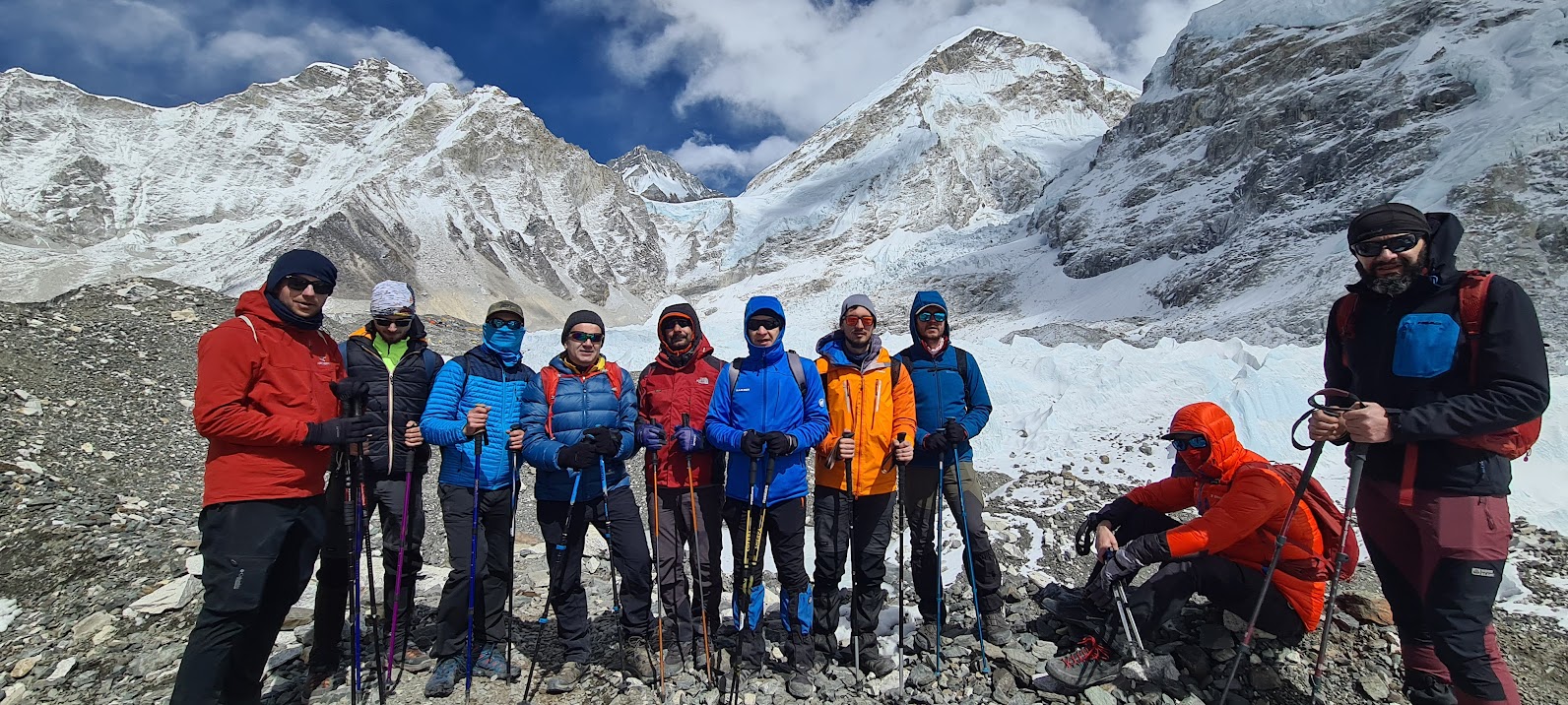
Everest Base Camp Gokyo Lake Trek via Chola Pass


Trip Difficulty
Difficult

Max. Altitude
5,483m./17,989ft.

Meal
kathmandu - BB plan & Trekking - BLD

Accommodation
4* hotel in Kathmandu & Teahouse/Tent on Trekking

Trip Duration
17 Days

Group Size
1-12 People
Price Starts From
US$ 2195
-
1 person
US$ 2195
-
2 -
5 person
US$ 1975
-
6 over
9999
US$ 1865
US$ 2195

Need Help?
Ask to Travel Expert
Trip Highlights
- Your greatest adventure has now been defined: walk through the greatest terrains of the Everest region and be amazed by its gigantic peaks, deep valleys, and fields of glowing light in the air.
- Savor Kathmandu’s sizzling culture, where sacred temples such as Swayambhunath and Pashupatinath showcase the spiritual heart of Nepal when turning one’s attention to the Himalayas.
- And the flight goes directly to those mountain lands while each step beckons into a world full of snow-capped peaks and lost little villages.
- The trek is both relaxing and exciting; the soothing beauty of Namche Bazaar and Khumjung is to stay in memory as you go up the mountain.
- Cross that sacred Cho La Pass and let your eyes feast on the mind-dazzling, panoramic bird’s-eye view, which speaks volumes for the heart-stopping wildness and beauty that nature has crafted with regard to the high Himalayas; A view that renders everyone speechless through the grandeur of nature.
- Stand in Everest Base Camp; feeling the surreal presence of the tallest mountain is an experience one will enjoy in a lifetime by just absorbing the lakes and icefalls that make the people’s experience all the more exciting.
- The trek of Kala Patthar is meant to plunge you into the embrace of Everest; this is a golden moment when you would be in a great a position to admire the mighty mountain laughing at you in a golden hue during sunrise.
- The descent takes you through quiet villages such as Pheriche and Lobuche, while the high-altitude vistas continue their melodious refrain-so nature offers an antidote to fatigue, a calming retreat into its embrace. That seals the epic tale of returning to Lukla. But the memory – soaring peaks, tranquil lakes, and the very sweet heart of the people – remains forever.
- Flight to Kathmandu! And that journey will take place not just with photos but with a bond built with the Himalayas, having stepped on that very path of the legends.
Introduction of Everest Base Camp Gokyo Lake Trek via Chola Pass
Everest Base camp Gokyo Lake Trek is one of the most stunning and exciting treks in the Everest region. This trek features glacial lakes, Himalayan scenery, Sherpa culture, and high-altitude solo wilderness. Everest Base Camp Trek via Gokyo Chola Pass Trek provides a less traveled, more rewarding alternative to the conventional base camp trail for serious travelers.
With a flight to Lukla, the trail meanders through picturesque Sherpa villages and forests to Namche Bazaar. Namche Bazaar, the capital of the Khumbu, is a bustling mountain town with a great view of Thamserku and Kongde Ri. It is also a great place to acclimatize and be exposed to rich Sherpa culture, shops, and the mountains’ hospitality.
Along with Namche, the trek takes the route away from the road and into peaceful Gokyo Valley. Everest Gokyo Lake Trek takes one beyond rhododendron trees and yak graze, gradually showing one the spectacular Gokyo Lakes. The glacial high-altitude lakes are sacred grounds to both Hindus and Buddhists alike and present unimaginable reflections of adjacent peaks such as Cho Oyu and Gyachung Kang.
Among the most prominent is Gokyo Viewpoint, or Gokyo Ri, at 5,357 meters. The ascent to the summit is steep and awe-inspiring, offering one of Nepal’s best panaromic views. Four of the world’s highest mountains—Everest, Lhotse, Makalu, and Cho Oyu—are seen from the summit, as is the massive Ngozumpa Glacier below.
After visiting Gokyo, the trek passes through Cho La Pass at high altitude. Chola Pass Trekking is an adrenaline-fueled section of the trail between Gokyo Valley and conventional Everest Base Camp trail. Steep and icy is the actual pass, demanding patience and endurance, but glacial and mountain scenery around it is simply breathtaking.
After Cho La Pass, the path leads back to the main Everest Base Camp path near Lobuche. From here, the path goes on to Gorak Shep and then on to Everest Base Camp proper. At Everest Base Camp, in the shadow of the towering icefalls of the Khumbu Glacier, is a once-in-a-lifetime experience for most hikers.
One of the legendary views of this trek is that of the Kalapathar Viewpoint, at an altitude of 5,545 meters. The view point is the place to capture close sunrise photos of Mount Everest. Early in the morning on the summit, the whole range will be a golden hue. Kalapathar also offers the best views of Everest, Pumori, Nuptse, and Lingtren.
The Gokyo Chola Pass Trek Everest Base Camp Trek does not only involve high-altitude peaks, but also a lifestyle of living Himalayan style. Phortse, Machhermo, and Pangboche Sherpa villages provide us an insight into Sherpa people, Buddhism, and rural way of life. Monasteries, prayer wheels, and mani stones are seen throughout the trek, adding the spiritual aspect of the physical venture.
This trek is physically challenging especially with high passes and far-off places. But with acclimatization and proper care from experienced guides, the Everest Gokyo Lake Trek is accessible to anyone with good health and determination. Graceful Adventure Travel provides a reasonable pace itinerary and full supervision to ensure the trek is safe and enjoyable.
Choosing Graceful Adventure Travel means trekking with a locally owned operator who knows the mountains, the locals, and the needs of the travelers. From the customized service to professional guides and logistics support, we offer a hassle-free and unforgettable Nepal trek experience. We look after all the arrangements from your arrival in Kathmandu through flying out.”.
Briefly, Everest base camp Gokyo Lake Trek via Cho La Pass is the perfect mix of adventure, splendor, and ethnic variation. With scenery fit for a world-class trip like Gokyo Ri, Kalapathar, and Everest Base Camp, the trek offers something more than a destination—something rather close to an awe-inspiring Himalayan adventure. For serious lovers of the mountains, the trek is one worth not missing.
Trek Facts
| Tour Name | Everest Base Camp Gokyo Lake Trek via Chola Pass |
| Maximum Elevation | 5,483 meters (Gokyo Ri) |
| Duration | 17 Days |
| Total Distance | Approx. 130–140 km (trekking route) |
| Difficulty Level | Moderate to Challenging (requires good fitness) |
| Best Time to Visit | March–May, September–November |
| Accommodation | 4* hotel in Kathmandu, Teahouses/Lodges on the trail |
| Group Size | 1–12 people (ideal for guided group travel) |
Trek Temperature
| Season | Kathmandu (1,350m) | Namche Bazaar (3,440m) | Gokyo Ri (5,483m) | Gorak Shep / EBC (5,165m) |
| Spring (Mar–May) | Day: 22–28°C
Night: 10–14°C |
Day: 6–12°C
Night: -2 to 2°C |
Day: 0–8°C
Night: -8 to -12°C |
Day: 0–6°C
Night: -8 to -15°C |
| Summer (Jun–Aug) | Day: 26–32°C
Night: 18–22°C |
Day: 10–16°C
Night: 5–10°C |
Day: 4–10°C
Night: -2 to -8°C |
Day: 4–10°C
Night: -5 to -10°C |
| Autumn (Sep–Nov) | Day: 20–28°C
Night: 10–14°C |
Day: 4–12°C
Night: -4 to 2°C |
Day: -2–6°C
Night: -10 to -15°C |
Day: -2–5°C
Night: -10 to -18°C |
| Winter (Dec–Feb) | Day: 12–20°C
Night: 2–6°C |
Day: -2–6°C
Night: -6 to -2°C |
Day: -10–0°C
Night: -15 to -20°C |
Day: -10–0°C
Night: -18 to -25°C |
Outline Itinerary
| Day | Trekking Trail / Activity | Distance (approx.) | Time (hrs) | Altitude (m) |
| 1 | Arrival in Kathmandu. Morning breakfast & sightseeing around the city. | – | – | 1,350 m |
| 2 | Morning Breakfast then Kathmandu City Tour Sightseeing | – | – | 1350m |
| 3 | Early morning flight to Lukla, then trek to Phakding. | ~6.2 km | 3 – 4 hrs | 2,610 m |
| 4 | Trek from Phakding to Namche Bazaar. | ~10.2 km | 6 hrs | 3,440 m |
| 5 | Acclimatization day: Hike to Khumjung and return. | ~3.5 km (round trip) | 3 – 4 hrs | 3,800 m |
| 6 | Trek from Khumjung to Phortse Thanga. | ~10 km | 5 – 6 hrs | 3,680 m |
| 7 | Trek from Phortse Thanga to Machherma. | ~10 km | 5 – 6 hrs | 4,470 m |
| 8 | Trek from Machherma to Gokyo. | ~9 km | 6 – 7 hrs | 4,790 m |
| 9 | Morning hike to Gokyo Ri and return to Gokyo. | ~4.2 km (round trip) | 5 – 6 hrs | 5,483 m |
| 10 | Trek from Gokyo and cross Cho La Pass. | ~6 km | 4 – 5 hrs | 4,500 m |
| 11 | Trek to Dzongla after Cho La Pass. | ~10 km | 6 – 7 hrs | 4,710 m |
| 12 | Trek from Dzongla to Lobuche. | ~12 km | 4 – 5 hrs | 4,910 m |
| 13 | Trek to Everest Base Camp and return to Gorak Shep. | ~7.5 km | 6 – 7 hrs | 5,365 m |
| 14 | Hike to Kala Patthar, then descend to Pheriche. | ~9 km | 7 hrs | 5,455 m |
| 15 | Trek from Pheriche to Namche Bazaar. | ~14 km | 6 – 7 hrs | 3,440 m |
| 16 | Trek from Namche Bazaar to Lukla. | ~17.7 km | 5 – 6 hrs | 2,804 m |
| 17 | Morning flight from Lukla to Kathmandu. | – | 30 min flight | 1,350 m |
| 18 | Final departure from Kathmandu. | – | – | – |
Everest Base Camp Gokyo Lake Trek via Chola Pass Detail Itinerary
1
Day 1: Arrival in Kathmandu (1350 Meters).
Your trek representative will receive you at Tribhuvan International Airport in Kathmandu and take you to your hotel. All day is for relaxing and re-energizing after your long flight after checking into your hotel. If you feel like it, you may stroll around the lively streets of Thamel. Popular among tourists for its shops, restaurants, and trekking equipment, this area is the main scene of tourist activities. The day is to grasp some cash in local culture while mentally and physically preparing for the trek ahead. Time permitting, attend a pre-trek briefing.
Kathmandu, the capital city of the Kathmandu valley, is rich in history and ancient temples, and it has been known to be quite hospitable. Visitors can take advantage of their time to visit more attractions such as Swayambhunath, the Monkey Temple; Pashupatinath Temple; and the Kathmandu Durbar Square.The altitude of 1350 meters is comforting enough to allow for gradual acclimatization in this environment. This day marks the beginning of an unforgettable journey across the Himalayas.
Activity: Arrive in Kathmandu
Meal: Welcome Meal
Accomodation: 4* hotel
2
Day 2: Full day - Kathmandu City Tour
Kathmandu, the capital of Nepal, is an incredibly vibrant and culturally rich destination that stands in perfect juxtaposition to ancient temples, historical monuments, and the modern lifestyle. The city tour really offers an uncommon chance to explore some of the essential landmarks of Nepal, including UNESCO World Heritage Sites like Swayambhunath (Monkey Temple), Pashupatinath, and Boudhanath Stupa. To say that Kathmandu is a city hardly captures its essence; it is a living museum where one can immerse oneself in deep-rooted traditions embodying Hinduism and Buddhism, witness local artisans at work, and visit colorful markets.
The Kathmandu city tour would also cover the Durbar Square, the former royal palace complex, depicting very finely carved architecture and statues, telling the story of kings and queens of Nepal. The streets of Kathmandu are filled with temples, stupas, and monasteries almost woven into the fabric of everyday life for people today. This tour of Kathmandu is an unforgettable cultural experience all itself, walking through narrow alleyways and ancient sacred sites before the adventure continues in the mountains.
3
Day 3: Drive to airport next day and flight to Lukla & Hike to Phakding (2610 M.) – 3/4 hrs walk.
Early in the morning, you will be transferred to the airport’s domestic terminal to board a scenic flight for Lukla. The flight takes about 30 minutes and rewards you with superb aerial views of the Himalayan range. Once you land at Tenzing-Hillary Airport in Lukla (2840m), the trekking begins. After the introduction to your porters and guide, your hiking will begin toward Phakding, a relatively small village at an altitude of 2610 meters.
The trek from Lukla to Phakding lasts from 3 to 4 hours along the Dudh Koshi River, across pine forests and small Sherpa villages. Along the way, there will be prayer wheels, mani stones, and fluttering prayer flags. The trail this day is quite gentle, perfect for allowing bodies to acclimatize to the change in elevation. Overnight at a lovely teahouse with typical Himalayan hospitality at Phakding.
Activity: Fly to Lukla & hike to Phakding
Meal: Breakfast, Lunch & Dinner
Accomodation: Teahouse/lodge
4
Day 4: Trek from Phadking to Namche Bazar (3440 M.) – 6 hours walk.
After breakfast in Phakding, continue north along the Dudh Koshi River, crossing a number of suspension bridges from which colorful prayer flags hang. The path climbs upwards gradually through the beautiful pine forests along the small settlements such as Monjo, where you’ll enter the Sagarmatha National Park. Here, your permits will be checked before continuing on to Jorsalle then the steep climb to Namche Bazaar.
Generally, this portion of the trek usually takes about 6 hours and is moderately difficult due to the final ascent. Namche Bazaar, the gateway to Everest region, is situated in an amphitheater and affords great views of the mountains including from a distance of Everest on a clear day. This buzzing town is host to internet cafes, shops, bakeries, and is a cosmopolitan hub for trekkers and Sherpas alike. Overnight stay at a local lodge.
Activity: Trek to Namche Bazaar
Meal: Breakfast, Lunch & Dinner
Accomodation: Teahouse/lodge
5
Day 5: Acclimatization day at Namche Bazar. Day hike to Khumjung (3800 M.) – 3/4 hours.
To allow your body to adjust to the altitude, today is a sort of maintenance day for acclimatization. Today, we propose a short hike to the village of Khumjung (3800 meters) with an expected time of about 3 to 4 hours for a round trip. It offers breathtaking views of Everest, Lhotse, Ama Dablam, and other peaks, plus an introduction to Sherpa culture.
Khumjung is known for its Khumjung Monastery, where a Yeti scalp is allegedly placed. You may also visit the Hillary School, founded by Sir Edmund Hillary. After exploring the village and enjoying the mountain scenery, you’ll return to Namche for lunch and rest. This day will prove crucial for acclimatizing your body against altitude sickness and carrying on with the scenery at the altitudes above.
Activity: Rest day at Namche Bazaar & hike to Khumjung
Meal: Breakfast, Lunch & Dinner
Accomodation: Teahouse/lodge
6
Day 6: Trek from Khumjung to Phorste Thanga (3680 M.) – 5/6 hrs walk.
From Khumjung, the cats have a rough uphill scramble before dropping downhill through rhododendrons and yak pastures. The trek to Phortse Thanga does take 5 or 6 hours and, on the whole, is a moderate day, with a number of ups and downs. The trail veers off the main EBC one to give some solitude from the throngs.
With increasing altitude, the vegetation undergoes change giving way to grand scenic views. In this area, you might often see wildlife like musk deer and Himalayan monals (Danphe). Phortse Thanga is a tranquil village by the Dudh Koshi River, ensconced within alpine flora. You’ll spend the night here in a local teahouse.
Activity: Trek to Phorste Thanga
Meal: Breakfast, Lunch & Dinner
Accomodation: Teahouse/lodge
7
Day 7: Trek from Phorste Thanga to Machherma (4470 M.) – 5/6 hrs walk.
After breakfast is another uphill trail that climbs gradually through forests and alpine meadows to the edge of a small village called Dole. Up until Machherma at 4470 meters, the trekking now goes upward, crossing hamlets and grazing areas. In good, reasonable weather, this typically takes about 5 hours or so to 6.
With views of Cho Oyu and other peaks, Machherma is reported to house the area where Yeti sightings were once reported. A small altitude sickness clinic serves as an ever-abiding reminder of the importance of having proper acclimatization, though most tourists ignore it. Tonight you will stay here, giving your body time to rest and recover from the long trek while adjusting to the altitude.
Activity: Trek to Machherma
Meal: Breakfast, Lunch & Dinner
Accomodation: Teahouse/lodge
8
Day 8: Trek from Machherma to Gokyo (4790 M.) – 6/7 hrs walk.
The trail in a gradual ascent today, leading through highly scenic landscapes surrounded by high peaks in all directions on the banks of the Dudh Koshi River valley. After walking past several stunning lakes, the trail reaches the third and largest lake, Dudh Pokhari, where the village of Gokyo is situated. The walk here takes about 6-7 hours.
Built at 4790 meters above sea level, Gokyo is one of the most beautiful places in the Khumbu region. The turquoise glacial lake provides stunning views of Cho Oyu and other mountains. This will be an alternative less crowded than Everest Base Camp, which has very diverse sceneries. You will overnight at a local lodge.
Activity: Trek to Gokyo
Meal: Breakfast, Lunch & Dinner
Accomodation: Teahouse/lodge
9
Day 9: Trek from Gokyo to Gokyo Ri and then back to Gokyo (5483 meters) – 5/6 hrs walk.
You will wake and walk to the summit for an early morning sightseeing of Gokyo Ri (5483 meters), taking a steep climb through 2-3 hours with some effort and the most scenic panoramic views of the Himalayan range including Everest, Lhotse, Makalu, Cho Oyu, and the vast Ngozumpa Glacier.
Enjoy the sunrise, take some beautiful shots, and then you’ll be heading back down to Gokyo for an early breakfast and rest. The whole journey took approximately 5-6 hours, combining the climb and the return. Leisurely spend the rest of the day relaxing at the lake, taking short walks, or preparing for the next step in the trek.
Activity: Trek to Gokyo Ri & back to Gokyo
Meal: Breakfast, Lunch & Dinner
Accomodation: Teahouse/lodge
10
Day 10: Trek from Gokyo to Cross Cho La Pass (4500 M.) – 4/5 hrs walk.
This is one of the most adventurous, challenging, and harder days of the trek. You will start early and ascend toward the Cho La Pass, which is 4500 meters high. The trail possibly has icy paths, scattered boulders, and steep parts depending on the weather situation. The climb will take about 4 to 5 hours.
The pass gives a fantastic view and the achievement-feeling sweet time spent there. Careful descent will be initiated after crossing the pass. This area can be slippery terrain and requires good footwear and concentration. Depending on conditions and timing, you may camp or stay in a nearby teahouse for the night.
Activity: Trek to Cross Cho La Pass
Meal: Breakfast, Lunch & Dinner
Accomodation: Teahouse/lodge
11
Day 11: Trek from Cross Cho La pass to Dzongla (4710 M.) – 6/7 hrs walk.
After crossing Cho La, you will get to descend on glacial terrain and then follow a trail that becomes a bit more stable on the way to Dzongla. The trek spans 6-7 hours and takes up close views of Cholatse and other dramatic peaks.
Dzongla is a quaint small, picturesque town that happens to be located on a high ridge. Great for relaxing before recovering crossing that landmark strenuous hike. Stark but lovely scenery everywhere around, the backdrop being snowy mountains. Overnight in a teahouse with warm meals and spectacular surroundings.
Activity: Trek to Dzongla
Meal: Breakfast, Lunch & Dinner
Accomodation: Teahouse/lodge
12
Day 12: Trek from Dzobgla to Lobuche (4910 M.) – 4/5 hrs walk.
The trek from Dzongla to Lobuche is relatively easier compared to the past few days. It takes around 4-5 hours and has awesome scenery to enjoy gradually ascending. A long lateral moraine of Khumbu Glacier will have small streams crossing and rugged terrain.
Lobuche is a frequented village by trekkers going to Everest Base Camp. It is a cold, windy village but has the available teahouses. It’s here that you will start noticing more the thin air, hence the need for rest and hydration. Nuptse and other peaks create a spectacular view from here.
Activity: Trek to Lobuche
Meal: Breakfast, Lunch & Dinner
Accomodation: Teahouse/lodge
13
Day 13: Trek from Lonbuche to Everest Base Camp then back to Gorak Shep (5365 M.) – 6/7 hrs walk.
The trek from Lobuche to Everest Base Camp then back to Gorak Shep (5,365 m) is called Day 12 – a walking event of 6 or 7 hours. This is a prime day in all sense as you first trek toward Gorak Shep-small hut beside frozen lakebed. After a short rest with baggage deposit, you will move on to Everest Base Camp (EBC) at 5,364 meters. Round trip generally takes about 6 to 7 hours.
You are at the bottom of the world’s highest mountain, EBC. There are prayer flags, ice formations, and inspiring Khumbu Icefall. After a photo shoot and soaking in the achievement, back to Gorak Shep for overnight with an overnight stay.
Activity: Trek to Everest Base Camp & back to Gorakshep
Meal: Breakfast, Lunch & Dinner
Accomodation: Teahouse/lodge
14
Day 14: Hike up to Kalapattar early in the morning then trek down to Periche (5455 M.) – 7 hrs walk.
You will start climbing up to early Kala Patthar, maybe the best destination for Mount Everest. It is about a 2 hour trek to the top, with overwhelmingly beautiful sunrise light over Everest and other peaks. This is the highest point of the trek at 5550 m.
After having had the scenery and photos, you go down to Gorak Shep for breakfast before heading off to the longest descent down to Pheriche. Most downhill does not take more than 7 hours for the whole trip that day. Pheriche is a windy village with better oxygen levels and good facilities.
Activity: Trek to Kalapathar & back to Periche
Meal: Breakfast, Lunch & Dinner
Accomodation: Teahouse/lodge
15
Day 15: Trek to Namche Bazaar from Perichhe (3440 meters) – 6/7 hrs walk.
The whole walk retraces the route down the valley today through Pangboche and Tengboche, with its famous monastery. The majority of downhill trail requires pretty simple hiking, but there are some places that are still steep where extra effort is required. It would take them about 6 to 7 hours to reach Namche.
Again, if Namche Bazaar is in your list of places to be, you can have good food, Wi-Fi, as well as do some shopping. The best part is celebrating all your accomplishments with your fellow trekkers and guide. Relax in the lodge, enjoying the cozy and lively atmosphere of this major Sherpa town.
Activity: Trek to Namche Bazaar
Meal: Breakfast, Lunch & Dinner
Accomodation: Teahouse/lodge
16
Day 16: Trek from Namche Bazaar to Lukla (2804 meters) – 5/6 hrs walk.
On the last day of trekking, you’ll descend through familiar villages and forests back to the famous Lukla town. This trek takes around 5 to 6 hours and ends with strong sense of satisfaction. You’ll take the same suspension bridges and pass by prayer flags and walls of stone.
It is time of parting with porters in Lukla, ready for an evening spent in the mountains. Celebrate the ending of your trek with a group dinner or quiet reflection. Spend the night in a comfortable teahouse or lodge in Lukla.
Activity: Trek to Lukla
Meal: Breakfast, Lunch & Dinner
Accomodation: Teahouse/lodge
17
Day 17: Flight from Lukla back to Kathmandu in the morning.
You will fly back to Kathmandu on an early morning flight from Lukla, and you would certainly prefer the last aerial glimpse of these magnificent mountains. The 30-minute flight will bring you back to the cravings of the city.
Though open above all places, the rest of the day will find itself at the hotel for relaxation. The other activities have to deal with shopping or exploring more of the city’s rich culture and cuisine. Some people also prefer spa sessions or looking out for souvenirs after the tiring trek.
Activity: Fly back to Kathmandu
Meal: BB
Accomodation: 4* hotel
18
Day 18: Final Departure
You will be transferred to the international airport after breakfast for your onward journey. Thus ends your trekking adventure with a heart full of memories and a camera full of pictures.
It has proved to be a much-deeper relationship with you about the mountains; a new band of friends and a desire to return because most trekkers experience that. Both home and continuing on to other destinations are marked with footprints in memory, but this journey stays etched in the highlight of one’s life.
Activity: Fly back home
If our standard itinerary doesn't fully meet your needs, we are happy to tailor it to your specific preferences and requirements.
Includes and Excludes
What’s Included?
- Accommodation: With the exception of four-star hotels provided in Kathmandu, guesthouses and teahouses specified in the itinerary will be used for overnight stays during trekking.
- Meals: Meals will be breakfast, lunch, and dinner (BLD) during trekking days and bed and breakfast (BB) in Kathmandu.
- Transport: All means of transport within Nepal that will include a private vehicle for all transfers, sightseeing, and excursions.
- Trekking Guides and Porters: Licensed, professional, and English-speaking trekking guides and porters.
- Permits: All necessary trekking permits will be provided, including the National Park entry permits and TIMS (Trekkers’ Information Management System).
- Airport Transfer: Airport transfer in Kathmandu to other places as per the itinerary and vice-versa.
- Domestic Flight: – Flight to Lukla and return flight from Lukla to Kathmandu.
- Trekking Permits: All necessary permits, including local trek taxes.
What is not Included?
- The Nepal visa fee and international flight tickets to/from Nepal.
- Meals (including lunch or dinner) while in Kathmandu on days not specified in the itinerary.
- Beverages-alcoholic and non-alcoholic, snacks, and all personal expenses.
- Personal expenses: laundry, souvenirs, and any other additional activities not included in the itinerary.
- Tips to guides, porters, staff, and drivers for services rendered.
- Travel insurance for trekking, which is above all compulsory for every trekker.
- Any such incidental expenditure occurs due to unanticipated delays by the changes of weather, political instability or natural calamities.
Everest Base Camp Gokyo Lake Trek via Chola Pass - Trip Information
Major Attraction of Everest Base Camp Gokyo Lake Trek via Chola Pass
The Everest Base Camp Gokyo Lake Trek via Chola Pass is one of the most exhilarating treks in the world, combining the breathtaking beauty of the Everest region with the serene Gokyo lakes. To add on trekking exhilaration, the Chola Pass Gokyo Lake takes the trekking delight to another level, passing through breathtaking beautifying sceneries in the Everest region and the tranquil scenic Gokyo lakes. Trekkers would have a chance to face raging nature in the Himalayas, where they traverse some of the most difficult high passes and go limited to a few popular destinations in Nepal. The journey would thus be a daily adventure through manifold landscapes featuring compelling views, culture, and hospitality, from the bustling Kathmandu Valley to the snow-clad peaks of Everest. Hence, it is an impression that this journey leaves in the hearts of the keen adventurer and those seeking quietness in Namche Bazaar, Gokyo, Kala Patthar, and Everest Base Camp.
Kathmandu – The Capital City of Nepal:
Kathmandu is, after all the capital of Nepal, a very lively and vibrant city-teeming with culture and history that is mostly echoed in the thousands of age-old temples, stupas, and palaces. Before you embark on the Everest Base Camp Gokyo Lake trek, try to soak up as much of this ancient heritage before you get to trekking. Visit the major ones like UNESCO’s Swayambhunath (Monkey Temple) and Pashupatinath to observe transcendent practices that have remained etched for centuries. The city’s lively streets, tumbling markets, and bright colors offer a fantastic starting point for your Himal adventure.
Kathmandu also opens its arms as a doorway for trekkers, being the office for different trekking permits and equipments and travel agencies in the city. Apart from the rich archaeological history, Kathmandu offers much of the old and new, where traditions of ancient rituals take place alongside the newer city life. Visit Kathmandu Durbar Square, whose architectural beauty, teamed with intricate carvings, reflects the rich cultural artistic heritage of Nepal and offers a wonderful prelude to your trek in Himalayas.

Namche Bazaar – The Gateway to Everest.
At 3440 meters, it is a lively Sherpa town and the main trade town in the Everest region. Niche uhas marvelous markets and spectacular views, at the same time offering trekkers a right form of culture and convenience in their surroundings. Winding up to Namche-Monastery will make the experience in mounting up towards higher altitude much more gradual and let the body acclimatize properly. Showering a delicate touch from the skeletons of snow-capped peaks and their surrounding forests, it would be a cozy resting place for joggers looking out for some adventure.
Not only is Namche Bazaar a financial powerhouse, but it also stands as a center of culture that provides a glimpse into Sherpa culture and life. It is also associated with magnificent surrounding views of Everest peaks, Mount Everest included, making this town an excellent launch pad for day hikes to the areas around. Immersion in culture, beautiful scenery, and passive uniqueness combine to make Namche a significant portion of the trek to Everest Base Camp.
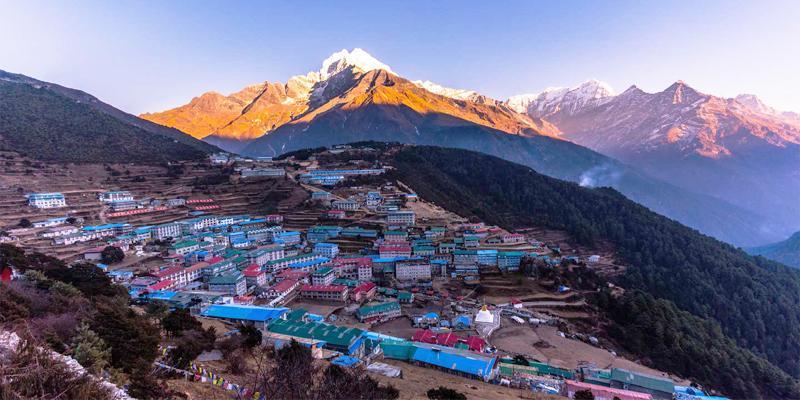
Gokyo – A Hidden Jewel of the Everest Region
At an altitude of 4,790 meters, Gokyo is a tranquil settlement surrounding the Gokyo Lakes with some of the finest views within the Everest region. Trekking in Gokyo is an entirely different experience compared to the busy Everest Base Camp as this area allows for tranquility and for immersing in other natural wonders of the Himalaya. The Gokyo Lakes, a series of five glacial lakes, are clearly On behalf of their brilliant turquoise color, these lakes have snow-capped peaks for a stunning view. Gokyo presents an opportunity to get away from the crowd and contemplate the Himalayas in their zen tranquility.
One of Gokyo’s key highlights is the climb to Gokyo Ri, a viewpoint from which panoramic views of Everest, Makalu, Cho Oyu, and other peaks can be enjoyed. The breathtaking views from this rarely-visited spot, along with the quiet surroundings, make Gokyo one of the most remembered places on the trek. Whether you want to spend time with nature or just by yourself, Gokyo is that hidden treasure that provides a rare viewpoint in the Everest region.
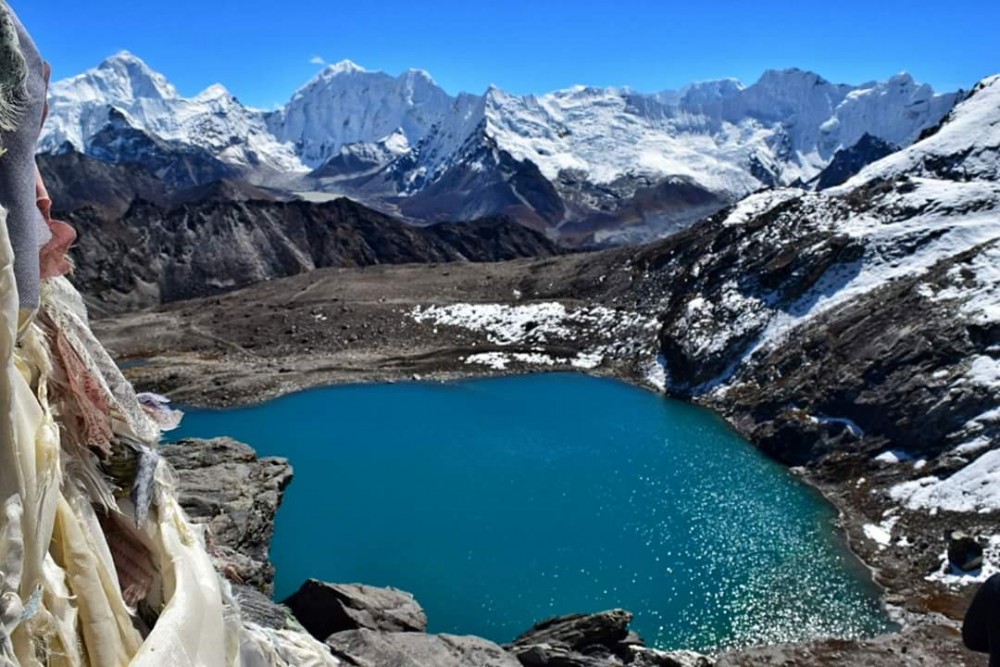
Crossing Cho La Pass – the Height of Thrilling High-altitude Adventure
Cho La pass at an altitude of 5420 m is one of the most thrilling and demanding parts of the Everest Base Camp Gokyo Lake trek. This extremely high-altitude pass connects the Gokyo Valley with Everest Base Camp area, giving its trekking an utmost rewarding sense of adventure. The trek across Cho La is simply not meant for meek-hearted souls; it travels on snow-covered trails, steep long ascents; the reward cruddling across this pass is breathtakingly grandiose views of mountains and valleys surrounding.
Crossing the Cho La Pass is one of the most sought- after highlights of the trekking experience simply because one will be able to witness the most unrivalled breathtaking beauty of the Himalayas at close quarters. The trekkers would come to the most astounding vistas of Mount Everest, Cho Oyu, and many such majestic peaks from here. The remoteness of the terrain and highly unpredictable factors of the weather add all the more thrill and challenge to the trek, rendering it unforgettable and rewarding. For many trekkers, the heart of their Himalayan traverse would represent Cho La Pass, as it’s an important milestone towards their Everest Base Camp and Gokyo Lake trek.
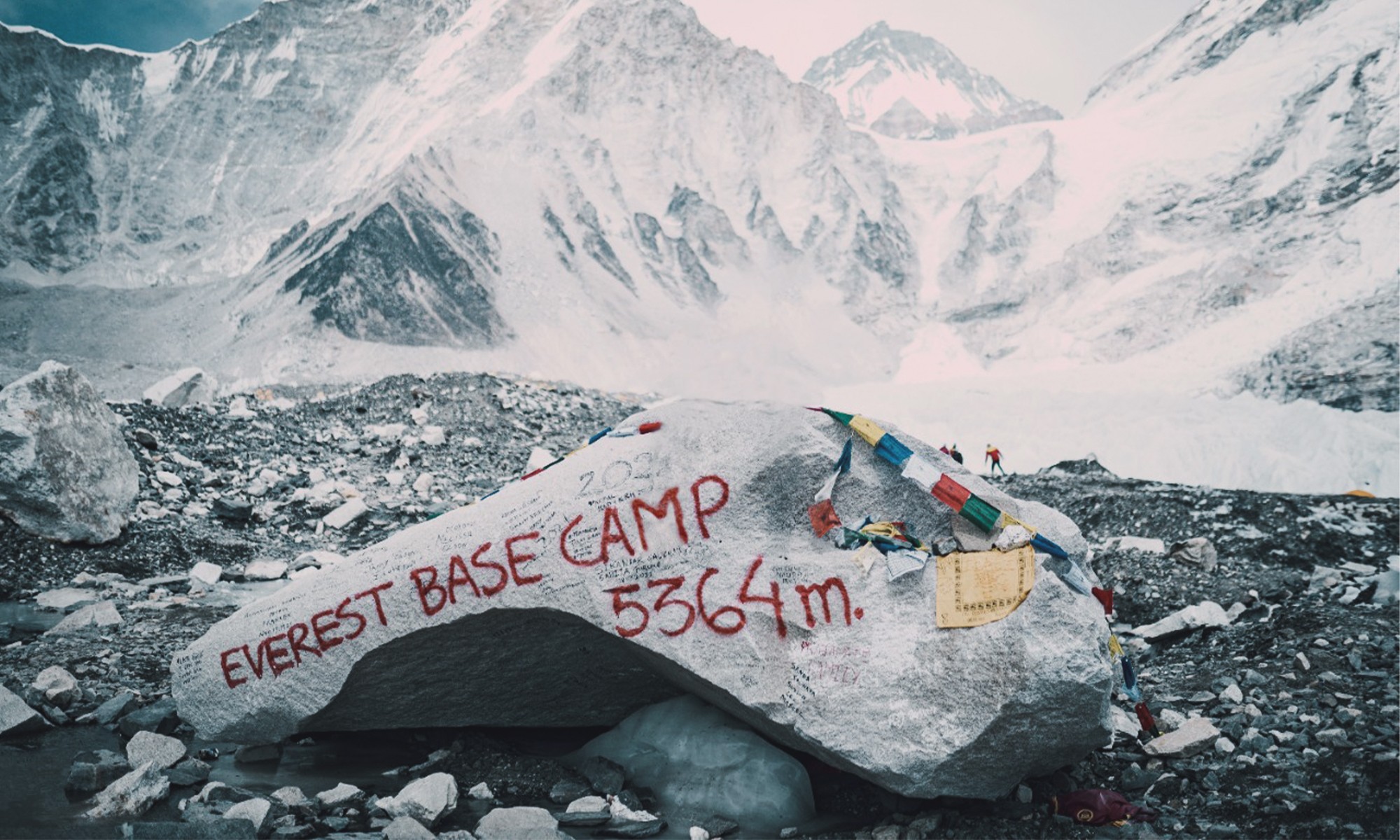
Ultimate destination: Base Camp of Everest
At an altitude of 5,365 meters, the Everest Base Camp is the last point of ultimate destiny in the brave trekker’s efforts in the direction of mountaineering. This fantastic base camp located at the base of Mount Everest offers an up-close personal insight into the world’s tallest peak with all surrounding glaciers and icefalls. The trek to Everest Base Camp is more than just physical; it is also spiritual, through beautiful picturesque villages and thick forests, and into rough lands, as trekkers acclimatiz to the high-altitude terrain.
For many, reaching Everest Base Camp is a huge achievement, with views that wouldn’t require much imagination to guess where they led, the first step into that magnificent vista that promises hints of adventure and determination before heading down this once-in-a-lifetime trek. The Base Camp itself might be teeming with crowds, but out of its doors, the landscape is mesmerizingly dramatic. Ice-blue glaciers to plunging rocky spires, it is a land of unforgettable accomplishments, standing at the foot of Everest, in the life of any trekker.
Kala Patthar – The Highest Viewpoint of the Everest Trek
Kala Patthar, 5,545 meters, is one of the most iconic landmarks of the Everest Base Camp Trek. Famous for stunning panoramic views of Mount Everest, the top of Kala Patthar boasts some of the best vistas of the highest mountain on Earth. The trek to Kala Patthar is a tough yet rewarding experience; early in the morning, trekkers start to ascend so as to be on top of the world when the first rays of sunlight cascade over the surrounding peaks. From here, Everest, Lhotse, and several others can be seen, which surely ranks as one of the highlights on the trek.
For the entire journey, the hike to Kala Patthar is a good opportunity to taste the high-altitude atmosphere of the Everest region, while also enjoying one of the most sight-stopping views on this planet. The summit view is often described as life-changing; the majestic snow-capped peaks of the Himalayas stretch in every direction. Thus, for many trekkers, the last steps to Kala Patthar are the crowning glory of their entire Everest journey, bringing with it not just a feeling of success, but also a deep appreciation of nature’s splendor.
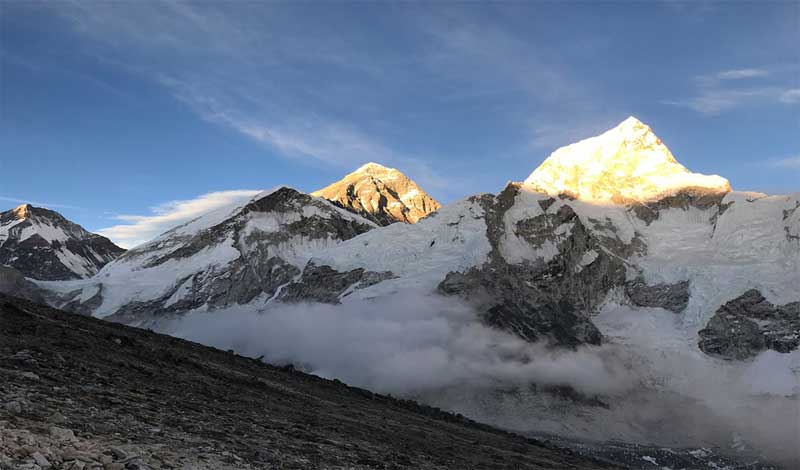
Best Season of Everest Base Camp Gokyo Lake Trek via Chola Pass
The best season to undertake the Everest Base Camp Gokyo Lake Trek via Cho La Pass is in the spring (March to May) and in autumn (September to November). These seasons are known for very favorable weather conditions, with clear skies and moderate temperatures, which would allow trekkers to fully enjoy the breathtaking views of the Himalayas. Springs and autumn are the prime trekking seasons in Nepal since the days are warm and the nights cooler, which gives trekking an enjoyable experience, not to mention a relatively safe one.
Spring (March – May)
Spring is one of the most popular trekking seasons in Nepal, and not without reason. Since it is moderately cool, daytime temperatures in Kathmandu estimate from 22-28 degrees Celsius, cooling down at higher altitudes, and it is also generally viewed as conducive to clear assessment of the other peaks during the time, including Mount Everest, Lhotse, and Cho Oyu. In addition, wildflowers bloom during springtime, further adding to the beauty of the lush greenery and scenery that the trek provides. In fact, one can argue that combination of favorable weather along with spectacular scenery makes spring most perfect for trekkers to visit Everest Base Camp Gokyo Lake trek.
Summer (June – August)
This is generally not advisable for trekking in the Everest region. The seasonal rains and clouds make the trails slippery, particularly dangerous for landslides, and very poor visibility. Trekking in the summer is also very difficult due to subtropical humid heat at lower altitudes. Though rain at higher altitudes is relatively low, the muddy and sloppy tracks of the Everest Base Camp and Gokyo Lake make the trek uncomfortable at this time of year. Trekking during this season can provide an experience for people looking for solitude and emptiness while trekking.
Autumn (September – November)
A second peak trekking season in the Everest region is offered in the autumn. It has essentially the same weather as spring. The weather is bright and crisp, with daily highs ranging from 20-28 degrees in Kathmandu, where temperatures cool at higher altitudes, making it perfect trekking weather. The skies are generally clear, providing trekkers with unparalleled visibility of the Himalayan peaks, and the trails are well-maintained after the monsoon season. Conditions in autumn are also more favorable for solitude than those in the spring, since there are fewer trekkers. All of these factors make the autumn well worth the while for this trip-the weather, beauty, vistas, and vibrant scenery around it.
Winter (December – February)
Although winter lasts from December to February, it is the most difficult season for trekking in the Everest region, especially for those who have very little or no experience in the high-altitude trekkers’ life. The temperature sometimes falls from 12°C–20°C in Kathmandu into negative. Among the high-altitude sites, it can reach as low as -10°C or even lower. Heavy snow is evident, especially close to Cho La Pass and B. C. in Everest. However, the striking views of the mountains coupled with the less traffic around make the trekker comfortable, provided he is ready to accept the harsh environments and shorter trekking hours. Although it is recommended for experienced trekkers, winter trekking requires serious planning, warm clothing, and experience for trekking in cold areas.
Food Services on the Everest Base Camp Gokyo Lake Trek via Cho La Pass
The Everest Base Camp Gokyo Lake Trek via Cho La Pass offers trekkers an authentic culinary experience that links them with the peculiar cultural essence of Nepal. Food on the trail is simple and nutritious to sustain trekkers when engaged in the grueling labor of traveling over the rugged terrains of the Himalayas. Such local tea houses serve different types of food prepared using locally available fresh ingredients, including vegetables, grains, and dairy products. The typical trekking diet includes dal bhat (rice and lentils), momos (dumplings), and gundruk (fermented leafy greens), providing energy as well as nutrients for the treks which are physically demanding.
The trekking food along the Everest Base Camp Gokyo Lake Trek is influenced to an extent by Tibetan and Sherpa culture. While local specialties like yak cheese, buckwheat pancakes, and seasonal vegetables are variable in their availability depending on the exact place and season, food offered on the trek could appear simple in comparison to urban culinary culture but with such quality and freshness of ingredients, the meals become an essential part of the trekking experience. This food offers trekkers an opportunity to connect with the local culture provided it informs trekkers about the eating habits of the Sherpa and Tibetan communities who have settled in these remote mountain expanses.
Accomodation services for the Everest Base Camp Gokyo Lake Trek via Cho La Pass
Accommodation along the Everest Base Camp Gokyo Lake Trek via Cho La Pass mainly consists of a few simple yet cozy tea houses and lodges. While trekkers are accustomed to the high-class accommodation of four-star hotels of Kathmandu, the lodging for this trek is primitive but warm and welcoming. The tea houses open their doors to a warm and pleasant welcome, providing the trekkers with a rest and recovery spot after a long day of walking. Rooms generally come equipped with a bed and share a common washroom, with some tea houses at lower altitudes offering attached ones.
Accommodation at higher altitudes is more basic, with decreasing amenities offered for the same. Nevertheless, the famous Sherpa hospitality of the families running them compensates for every bit of inconvenience posed by the facilities. Most places have electricity running through them, but outages are quite common, so more remote locations might use solar power instead. Trekking personnel are recommended to bring their sleeping bags as extra warmth is warranted during the cold months. Despite the rudimentary lodging, Sherpa hospitality and breathtaking mountain views provide an important part of the trekking adventure.
Transportation Services for the Everest Base Camp Gokyo Lake Trek via Cho La Pass
Transportation at the Everest Base Camp Gokyo Lake Trek via Cho La Pass starts with driving from Kathmandu to Lukla, the actual entrance to the Everest region, and a rather scenic one. Usually private jeep for smaller groups is used, while larger groups normally share a mixed transport, such as minibus, to minimize costs. The drive turns to be not less than a thrilling adventure, as it passes through narrow roads enmeshed with lush valleys and mountain scenery. Then the roads become bumpy with rough patches anywhere; hence the timing to get into Lukla may take several hours, depending upon different conditions of the road and weather. Upon arrival at Lukla, trekkers simply enter their trekking journey, while porters or yaks carry heavier loads and do most of the work.
Now that the trek starts, transportation would be restricted to traveling on foot through the rugged mountain terrain. There shall be no other means of faster travel, as trekking would be the only mode-used particularly in the very remote areas that are not accessible to any vehicles. In keeping with old-fashioned mule paths and trail routes, this trek allows ecstatic trekkers to soak up all nature offers within the Himalaya settings. Arriving back in Lukla, trekkers can retrace their path back before boarding a flight in the direction of Kathmandu. This well-organized arrangement, from Kathmandu to Lukla and back, assures that there are no hassles along the way.
As a Tour Operator for Everest Base Camp Gokyo Lake Trek via Cho La Pass
It provides well-organized and planned treks for Everest Base Camp Gokyo Lake Trek via Cho La Pass. All that is required to make a successful and memorable trek is provided. Facilities provided by the whole package include permits, accommodation, meals, and experienced guide services, for smooth trekking from start to finish. Throughout the trek, these guides will share their valuable knowledge of the region’s history, culture, flora, and fauna with the participants.
Graceful Adventure Travel maintains its focus on safety, comfort, and satisfaction of its customers. Every trip is designed with competent guides that are well-experienced and dedicated to making sure trekkers have a safe and enjoyable experience. A trek is not only about getting to Everest Base Camp or Gokyo Lake; it’s about while being taken in by every stretch of the beautiful landscapes with their engaging local cultures and the tranquillity of the Himalayas. Made-to-the-point planning will put forth the best guides and support from their respective teams, making every adventure stress-free and enjoyable for traveler’s. This trek goes beyond the destination; it allows the trekkers to experience the breathtaking beauty and culture of Everest!
Frequently Asked Questions
In fact, the best time for this trek would be spring (from March to May) or autumn (from September to November), as these months are characterized by clear skies and pleasant temperatures with good weather for the rest of the months. The trails during that time become cut off from the effects of rain or temporary snowfall, making it the best time to travel safely without much threat from inclement weather.
This trek is classified moderate to difficult. The high altitude, steep ascents, and rugged terrain make it difficult even for experienced trekkers. There are high passes like the Cho La, 5,420 meters, that have to be crossed. A trekker should physically prepare and acclimatize before going on a trek to ensure safety and success.
Yes, there are several permits a trekker will need if going for this trek, i.e., Sagarmatha National Park entry permit and TIMS (Trekkers’ Information Management System) card. The trekking agency that helps in setting up the trip will also assist in obtaining these permits for you.
Trek from 16 to 18 days to do this trek, depending on the speed, and the timing for acclimatization. This includes the distance traveled between Kathmandu and Lukla, then the trek to Everest Base Camp through Gokyo Lake, and the return trek through the Cho La Pass.
Mostly, the accommodation is in teahouses and guesthouses along the trek. Although, the standard of facilities varies at teahouses. But mostly, teahouses provide quite basic rooms with shared bathrooms. Teahouses at higher altitudes will be even more basic, with, at some places, electricity through solar energy. It is suggested to carry sleeping bags for added warmth while trekking.
With the right precautions taken, trekking in the Everest region is safe for the most part. Most hazards are related to altitude sickness, which can develop when a trekker is at higher altitude. Safe trekking involves acclimatizing properly, drinking plenty of water, and knowing the signs of altitude sickness.
The essentials for packing include warm clothing, a good trekking jacket, trekking boots, a sleeping bag, water bottles, sunscreen, sunglasses, a hat, and a first aid kit. Trekking poles and personal hygiene items are also necessary. Don’t leave the camera behind, to capture those unforgettable views. Detailed packing list will be provided by your trekking agency.
It is a trek for moderately fit and experienced trekkers. However, beginners wouldn’t find the terrain easy. It is therefore strongly recommended to be
Tips to guides, porters, staff, and drivers for services rendered.
Travel insurance for trekking, which is above all compulsory for every trekker.
Any such incidental expenditure occurs due to unanticipated delays by the changes of weather, political instability or natural calamities.The trek from Lobuche to Everest Base Camp then back to Gorak Shep (5,365 m) is called Day 12 – a walking event of 6 or 7 hours. This is a prime day in all sense as you first trek toward Gorak Shep-small hut beside frozen lakebed. After a short rest with baggage deposit, you will move on to Everest Base Camp (EBC) at 5,364 meters. Round trip generally takes about 6 to 7 hours. You are at the bottom of the world’s highest mountain, EBC. There are prayer flags, ice formations, and inspiring Khumbu Icefall. After a photo shoot and soaking in the achievement, back to Gorak Shep for overnight with an overnight stay.
Having a guide and a porter is not compulsory, but I strongly advise it for your safety and comfort. The guide will navigate the trail and share interesting facts about the local culture, if something goes wrong they can help. The porter will carry your heavier gear so you can enjoy the trek without being burdened by a heavy backpack. Most trekking agencies offer packages with both a guide and porter.
The trek offers plenty of opportunities for the trekker to experience the rich local culture of the Sherpa people and the greater Everest region. You will pass through Sherpa villages, where you can visit Buddhist monasteries, observe local custom, and mingle with the friendly locals! Cultural attraction highlights include Tengboche Monastery and the Gokyo village. These experiences are part of the trek that put the icing on the cake for insight into how these mountain communities live.
Price Starts From
US$ 2195
-
1 person
US$ 2195
-
2 -
5 person
US$ 1975
-
6 over
9999
US$ 1865
US$ 2195
Need Help?
Ask to Travel Expert
Reviews


-
Price starts
US$ 2195
✖
Talk To Expert

Mr. Padam Timilsina
Travel Expert
Custom vacations, perfectly planned to fit your wishes.
Request for Assistance ⮞