Registration No.:
137081/072/073


Everest View Trek with Newari and Sherpa Culture Tour


Trip Difficulty
Difficult

Max. Altitude
3,880m./12,730ft.

Meal
BB & BLD

Accommodation
4 star hotel/Lodges/Guesthouse

Trip Duration
13 Days

Group Size
2-12 People

Trip Highlights
- Discover Kathmandu’s Culture – See Pashupatinath Temple, Boudhanath Stupa, and Bhaktapur Durbar Square; observe Hindu and Buddhist rituals, ancient architecture, and traditional arts.
- Flight over the Himalayas to Lukla – Fly over Everest, Lhotse, and Nuptse; observe Himalayan landscape and glaciers.
- Trek Along the Dudh Koshi River – Trek along Sherpa towns, suspension bridges, prayer flags, and pine forest; observe local life and mountain biology.
- Walk bazaars and museums – Visit Namche Bazaar; observe Sherpa lifestyle, crafts, and village existence at high altitudes.
- Hike to Everest Viewpoint – Hike to look at Everest, Lhotse, and Ama Dablam close up; observe glaciers, mountain climate, and high-altitude flora and fauna.
- Visit Tengboche Monastery – See the famous monastery; observe Buddhist rituals, prayer walls, and rhododendron forests; learn about local religion and arts.
- High Altitude Life in Dingboche – View the glaciers, streams, and mountain farming; observe how humans and animals cope in the mountain.
- Lobuche & Mountaineering Heritage – Observe climbers’ memorials; study Everest expeditions and Sherpa culture.
- Hands-On Learning on the Trek – Photography, sketching, and journaling involve students in culture, nature, and environmental awareness.
- Back to Kathmandu – Sightseeing, museums and farewell dinner; reflection of Nepalese culture, Sherpa way of life, and Himalayan experience.
Introduction of Everest View Trek with Newari and Sherpa Culture Tour
Everest View Trek with Newari and Sherpa Culture Tour is a unique combination of luxury, adventure, and learning experience that is ideal for students, tourists, and educational groups looking for a high-end Himalayan experience. This highly organized tour combines the cultural heritage of Kathmandu and the elegance of the Everest region in an opportunity for participants to experience Nepalese culture, Sherpa culture, and the grandeur of the Himalayas in style and comfort. Combining intellectual stimulation and physical exploration with none of the luxury or comfort compromised, the tour is designed for individuals who wish to see the highest peaks in the world while discovering local cultures, history, and ecology.
The tour starts off in Kathmandu, where the guests are warmly received by experienced Graceful Adventure Travel guides and taken to a luxury 4-star hotel. The Kathmandu culture tour introduces students to UNESCO World Heritage Sites such as Pashupatinath Temple, Boudhanath Stupa, and Patan Durbar Square, where students become familiar with Newari heritage, Hindu and Buddhist rituals, and medieval architecture. The hands-on workshops introduce students to a firsthand experience of witnessing and participating in traditional arts, stone carving, and painting, bridging observation with hands-on experience. This initial exposure familiarizes participants with learning and cultural immersion on the Everest region trek, sightseeing with instructor supervision.
Some sightseeing in Kathmandu precedes the group taking a thrilling flight to Lukla, renowned for some of the most thrilling in-flight scenery of the Himalayas, including Everest, Lhotse, and Ama Dablam. As the trek begins after arrival along the Dudh Koshi River to Phakding, students see Sherpa villages, prayer flags, and terraced cultivated fields and learn high-altitude village society, environmental adaptation, and local agriculture. River systems, Himalayan ecology, and specific flora and fauna of the region are given an overview en route by the guides. Activities involve photography, journaling, and sketching, marrying adventure with systematic observation and encouraging a experiential learning of Himalayan geography and culture.
The trek ascends to Namche Bazaar (3,440 m), the economic and cultural hub of Sherpa civilization. Students record local markets, mini-museums, and vista points and observe Sherpa commerce, handicrafts, and traditional architecture. Optional hikes provide spectacular vistas of Everest and other summits, supporting geography, mountaineering history, and environmental science education. Encounters with local villagers create experiential learning contact with community, sustainable development, and cultural heritage, making Namche a hub node for experiential learning. Evening journaling and discussion sessions infuse cultural awareness, environmental awareness, and adaptive practices employed by high-altitude communities.
One of the trek’s main attractions is a visit to Tengboche Monastery (3,867 m), which perches on top of the valley with magnificent views of Everest, Ama Dablam, and Lhotse. The students experience everyday monastic life, prayer ceremonies, and Buddhist teachings and gain insight into religious philosophy, religious art, and sacred architecture. Scenic backdrop is provided as avenues for glacial geology observation, mountain vegetation and wildlife, and high-altitude adaptation processes, while experiential learning exercises like mandala drawing and photography bridge spiritual observation with the acquisition of academic knowledge. This section of the itinerary combines trekking, culture contact, and nature education and focuses on Sherpa culture-religion-nature interface.
The trek takes the typical Everest Base Camp route through Dingboche, Lobuche, and Gorak Shep, where students learn by doing such things as mapping trails, taking field notes on vegetation and wildlife, and documenting environmental and cultural factors. Guides provide informative background information on climbing history, Sherpa summits, and Himalayan geography that allows students to connect adventure to knowledge. The ascent emphasizes group work, dedication, and learning through experience, giving a detailed picture of the natural and cultural landscape of the Everest region.
The students also visit the Everest View Point, which is a close-up sight of Mount Everest, Nuptse, and other high points. Field observation, photography, and ecological studies are carried out here by students, integrating geography, ecology, and cultural practice education. Coming down through villages such as Pheriche and Lobuche, students are exposed to sustainable community practice, farming and adaptations at high altitudes, again embedding resilience concepts, environmental protection, and cultural continuation.
Graceful Adventure Travel, the tour company, specializes in upscale, cultural, and educational Himalayan treks with a safe, expertly managed, and experiential experience. English-speaking guides provide daily commentary into Newari and Sherpa culture, mountain ecosystem, and history every day, while support staff and porters manage trek logistics. This expert management allows participants to focus on learning, discovery, and adventure, making Everest View Trek with Newari and Sherpa Culture Tour an authentic holistic learning experience.
All entry permits, trekking charges, and visas are organized by Graceful Adventure Travel. Students are recommended for Nepal visa on arrival, Sagarmatha National Park Entry Permit, and Trekkers’ Information Management System (TIMS) card to both follow the law as well as assist in the protection of the environment. Charges for visiting Kathmandu sites of heritage are also included to assist in the cultural conservation program.
Trek/Tour Temperature
| Season | Kathmandu (1,350m) | Lukla (2,860m) | Namche Bazaar (3,440m) | Dingboche (4,410m) | Lobuche (4,940m) |
| Spring (Mar–May) | Day: 22–28°C
Night: 10–14°C |
Day: 10–15°C
Night: 2–6°C |
Day: 8–12°C
Night: 0–4°C |
Day: 4–8°C
Night: -4–0°C |
Day: 2–6°C
Night: -6 to -2°C |
| Summer (Jun–Aug) | Day: 26–32°C
Night: 18–22°C |
Day: 12–18°C
Night: 6–10°C |
Day: 10–14°C
Night: 4–8°C |
Day: 6–10°C
Night: 0–4°C |
Day: 4–8°C
Night: -2–2°C |
| Autumn (Sep–Nov) | Day: 20–28°C
Night: 10–14°C |
Day: 8–14°C
Night: 2–6°C |
Day: 6–12°C
Night: -2–2°C |
Day: 2–6°C
Night: -6 to -2°C |
Day: 0–4°C
Night: -8 to -4°C |
| Winter (Dec–Feb) | Day: 12–20°C
Night: 2–6°C |
Day: 4–8°C
Night: -4–0°C |
Day: 0–6°C
Night: -8 to -4°C |
Day: -2–2°C
Night: -10 to -6°C |
Day: -6 to -2°C
Night: -14 to -10°C |
Tour Facts
| Fact | Details |
|
Tour Name |
Everest View Trek with Newari and Sherpa Culture Tour |
|
Maximum Elevation |
3880m (Everest View Point) |
|
Duration |
13 Days (Kathmandu to Kathmandu) |
|
Trek Distance |
~120 km (round trip walking distance) + ~280 km (Kathmandu–Lukla round trip flights) |
|
Difficulty Level |
Moderate to Challenging (daily 5–7 hrs trekking, high altitude, acclimatization days included) |
|
Best Time to Visit |
March–May, September–November (stable weather, clear skies, rhododendron bloom in spring, best mountain views) |
|
Accommodation |
3–4 star hotels in Kathmandu; local tea houses/lodges during trek |
|
Group Size |
2–12 people (small group trekking experience, suitable for students, adventurers, and cultural explorers) |
|
Major Highlights |
Kathmandu cultural immersion, scenic mountain flight to Lukla, trekking through Sherpa villages, Namche Bazaar acclimatization & museum, Tengboche Monastery, Himalayan views of Everest, Ama Dablam & Lhotse, Dingboche & Lobuche alpine landscapes, Everest Base Camp experience, return via Pheriche, and cultural reflection in Kathmandu. |
Outline Itinerary
| Day | Activity (From–To / Description) | Time (hrs) | Elevation (m/ft) |
| 1 | Arrival in Kathmandu – Airport pick-up, hotel transfer, evening welcome dinner & trek briefing | – | 1,350 m / 4,429 ft |
| 2 | Full-day Kathmandu cultural tour (Pashupatinath, Boudhanath, Patan/Bhaktapur UNESCO sites) | Full day | 1,350 m / 4,429 ft |
| 3 | Fly Kathmandu to Lukla; trek to Phakding via Chaurikharka & Dudhkoshi River | Flight: 35 min + 3–4 hrs trek | 2,610 m / 8,563 ft (Phakding) |
| 4 | Trek Phakding to Namche Bazaar (crossing suspension bridges, Monjo checkpoint, and Hillary Bridge) | 6–7 hrs trek | 3,440 m / 11,286 ft (Namche) |
| 5 | Acclimatization in Namche – hike to Everest View Hotel & Khumjung village, explore Sherpa Museum | 3–4 hrs hike (easy) | 3,880 m / 12,729 ft (Everest View) |
| 6 | Trek Namche to Tengboche – visit Tengboche Monastery, enjoy Ama Dablam & Everest views | 5–6 hrs trek | 3,860 m / 12,664 ft (Tengboche) |
| 7 | Trek Tengboche to Dingboche via Pangboche & Imja Khola valley | 5–6 hrs trek | 4,410 m / 14,468 ft (Dingboche) |
| 8 | Acclimatization in Dingboche – hike to Nagarjun Hill / Chhukung for high-altitude adaptation | 4–5 hrs hike | 4,800–5,083 m / 15,748–16,676 ft |
| 9 | Trek Dingboche to Lobuche (optional Everest View Point), then return back down to Pheriche | 6–7 hrs trek | 4,371 m / 14,340 ft (Pheriche) |
| 10 | Trek Pheriche to Namche Bazaar | 6–7 hrs trek | 3,440 m / 11,286 ft (Namche) |
| 11 | Trek Namche to Lukla | 6–7 hrs trek | 2,860 m / 9,383 ft (Lukla) |
| 12 | Fly Lukla to Kathmandu; free afternoon & farewell cultural dinner | Flight: 35 min | 1,350 m / 4,429 ft (Kathmandu) |
| 13 | Final departure – transfer to Tribhuvan International Airport | – | – |
Everest View Trek with Newari and Sherpa Culture Tour Detail Itinerary
1
Day 1: Arrival in Kathmandu
Students fly into Tribhuvan International Airport and are picked up by a trained guide of Graceful Adventure Travel. There is a personal drive to a luxury hotel in Thamel, and students can relax and acclimatize to the city. In the evening, students go on an orientation walk through Thamel, where they observe local market places, local crafts, and urban life.
Evening orientation is conducted by the guide who introduces the Everest region, Himalayan culture, and trekking schedule and conducts a brief educational session of Nepal’s geography, history, and traditions. Students prepare for the following day’s flight to Lukla, refreshing high-altitude trekking tips and cultural learning objectives.
Activity: Arrive in Kathmandu
Meal: Welcome Meal
Accommodation: 4 star hotel
2
Day 2: Kathmandu Cultural Tour
The day begins with a group visit to Kathmandu’s historic sites. Students visit Pashupatinath Temple, observing Hindu rituals on the Bagmati River and examining the place of religion in Nepalese culture. At Boudhanath Stupa, students learn about Tibetan Buddhist practices and participate in cultural observation exercises, such as noting symbols on prayer wheels and stupas.
A trip to Bhaktapur Durbar Square introduces the students to medieval architecture, traditional pottery, and woodcarving. They also take part in local artisan workshops, where they try hand-on exercises like making or drawing, with experiential learning incorporated. The day is spent studying history, religion, and arts education, setting the stage for the cultural aspect of the trek.
Activity: Explore Kathmandu & Bhaktapur Culture
Meal: Breakfast & Dinner
Accommodation: 4 star hotel
3
Day 3: Fly to Lukla then Trek to Phakding
Students take an early morning flight over the Everest, Nuptse, and Lhotse Himalayan range to Lukla. Students begin their trek along the Dudh Koshi River to Phakding (2,652 m). Students observe traditional Sherpa villages, prayer flags, and village settlements and how the people have adjusted to high-altitude lifestyle.
The guidebook also talks about river systems, Himalayan ecology, and vegetation/flora/fauna on the trail. Upon arrival, students stay in a lodge and attend a reflection session on environmental stewardship, safety on the trek, and Sherpa culture.
Activity: Fly to Lukla then trek to Phakding
Meal: BLD
Accommodation: Lodge/Guesthouse
4
Day 4: Trek to Namche Bazaar
Trek from Phakding to Namche Bazaar (3,440 m) features suspension bridges, villages, and pine forest. Altitude acclimatization, mountain ecology, and way of life of eco-villages are discussed by guides. Students are given breaks in viewpoint stops, photography, and sketching. At Namche Bazaar, members walk through nearby markets and museums, learning about Sherpa commerce, crafts, and way of life.
Optional afternoon walk to viewpoint close to Syangboche Airport gives students a view of Everest in the distance, bringing geography and mountaineering history lessons to life. Evening group session reinforces learning about environment and culture.
Activity: Trek to Namche Bazaar
Meal: BLD
Accommodation: Lodge/Guesthouse
5
Day 5: Acclimatization and Everest View in Namche
An acclimatization rest day. Students hike to the Everest View Hotel or nearby viewpoints for spectacular views of Everest, Lhotse, and Ama Dablam. Guides explain glacial features, mountain plants and animals, and climate change impacts.
Interaction with local Sherpa homes provides insight into agriculture practices, education, and cultural lifestyle. Activities include nature journaling, photography, and self-reflection exercises, mixing physical activity with learning. Evening group discussion focuses on Himalayan ecology and adaptation.
Activity: Acclimatization in Namche Bazaar
Meal: BLD
Accommodation: Lodge/Guesthouse
6
Day 6: Trek to Tengboche & Monastery Exploration
Students trek to Tengboche (3,867 m), a village famous for the Tengboche Monastery. Students see prayer mani walls, rhododendron forest, and traditional agriculture along the way. At the monastery, students observe monastic ceremonies, prayer, and interaction with monks, learning Buddhist philosophy, art, and architecture.
The day is spent with physical trekking supplemented with culture exposure in terms of learning about spirituality, community life, and religious culture of the Himalayas. There is evening journaling and reflection to understand Sherpa culture and life of the mountains.
Activity: Trek to Tengboche & Explore Monastery
Meal: BLD
Accommodation: Lodge/Guesthouse
7
Day 7: Trek to Dingboche
Trek to Dingboche (4,360 m) traverses high-altitude terrain, glacial streams, and villages. High-altitude farming, indigenous livestock husbandry, and survival in extremes are learned by students.
Panoramic views from optional short hikes and observing flora and fauna with hands-on exercise are provided. Conservation of the environment and effects of tourism on sensitive environments are highlighted by guides. Group discussion in the evening, journaling, and remark on the trek.
Activity: Trek to Dingboche
Meal: BLD
Accommodation: Lodge/Guesthouse
8
Day 8: Acclimatization in Dingboche
Optional excursions to viewpoints around Dingboche for Himalayan panorama viewing. Educational activities involve study of glacier, high-altitude geology, and environmental conservation.
Observation, photography, and discussions help students acquire appreciation for scientific and cultural knowledge. Evening contemplation relates lessons to Nepalese mountain society and sustainable tourism.
Activity: Rest day in Dingboche
Meal: BLD
Accommodation: Lodge/Guesthouse
9
Day 9: Trek to Lobuche
Students hike to Lobuche (4,940 m) and tour memorials of past mountaineers. Guides present lectures on Everest history of ascent, Sherpa contribution, and greenery conservation.
Students record high-altitude vegetation, climatic conditions, and glacial shape, adding experiential learning in natural science and cultural heritage. Evenings are spent on group self-reflection regarding teamwork, leadership, and high-altitude acclimatization.
Activity: Trek to Lobuche
Meal: BLD
Accommodation: Lodge/Guesthouse
10
Day 10: Everest View Point & Return to Pheriche
Everest View Point trek in the morning, with close-up photos of Everest, Nuptse, and Ama Dablam. Student field observation, photography, and environmental observation are made. Return to Pheriche overnight, and subject includes glacial retreat, local adaptation, and Himalayan ecosystem study.
Activity: Reach Everest View Point & back to Periche
Meal: BLD
Accommodation: Lodge/Guesthouse
11
Day 11: Trek to Lukla
Descent from Pheriche via Lukla with stopping points to observe rivers, villages, and high-altitude farming. Students reflect on what they have studied, cultural insights, and adventure of trek. Lodge night with overnight preparation for flight to Kathmandu.
Activity: Trek back to Lukla
Meal: BLD
Accommodation: Lodge/Guesthouse
12
Day 12: Fly Back to Kathmandu – Leisure & Cultural Reflection
Return morning flight to Kathmandu. Free afternoon for shopping, short heritage walks, or museum visits. Farewell dinner at an excellent restaurant in the evening, with traditional performances and review on the educational value of the trek.
Activity: Fly back to Kathmandu
Meal: Breakfast & Dinner
Accommodation: 4 star hotel
13
Day 13: Final Departure
Private transfer from Tribhuvan International Airport. Students leave with an enriching experience of Nepali culture, Sherpa heritage, Himalayan landscapes, and adventure learning encounters, closing the luxury and academic journey.
Activity: Fly back sweet home!
Meal: Breakfast
If our standard itinerary doesn't fully meet your needs, we are happy to tailor it to your specific preferences and requirements.
Everest View Trek with Newari and Sherpa Culture Tour - Trip Information
Major highlighted activities of Everest View Trek with Newari and Sherpa Culture Tour
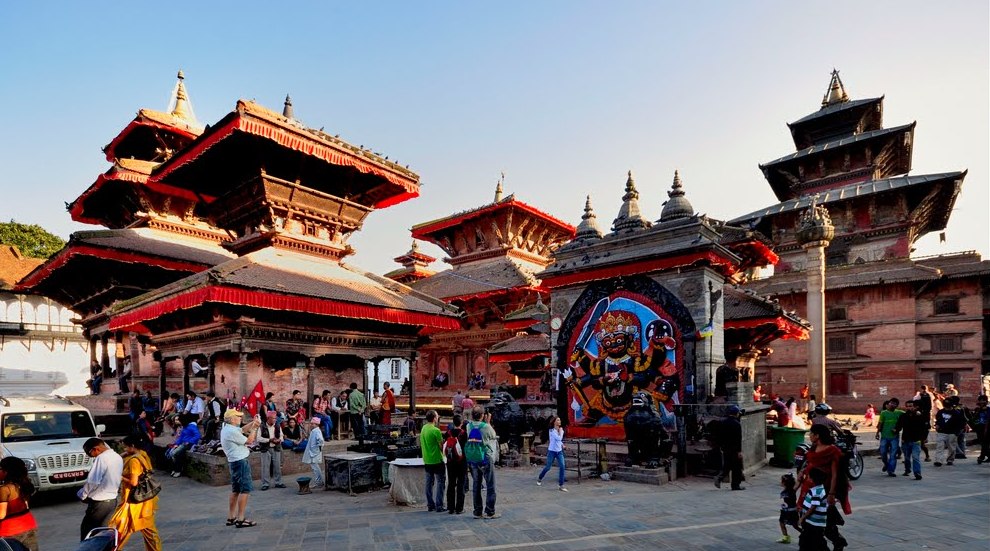
1. Kathmandu Culture and Newari Heritage Tour
The tour begins in Kathmandu, exposing the students to Newari culture and heritage. Students visit Patan Durbar Square, Bhaktapur Durbar Square, and Kathmandu Durbar Square, seeing intricately ornamented temples, centuries-old old palaces, and brightly colored traditional squares. The tour guide gives information about Newari life, architectural historical significance, and methods of craftsmanship, allowing the students to gain knowledge about the social and cultural evolution of Nepal.
The students also tour Boudhanath Stupa and Swayambhunath (Monkey Temple), learning about Buddhist meditations, symbolism, and practices. Observational activities, interactive narrative, and participatory activities like drawing or photography engage the visit as interactive.
The day is designed to alternate learning with viewing, and the students have a reflection log as well as group discussion. The building day gets one ready for the cultural and spiritual awareness that they will gain on the Everest region trekking, balancing learning with experience.
2. Daring Flight to Lukla
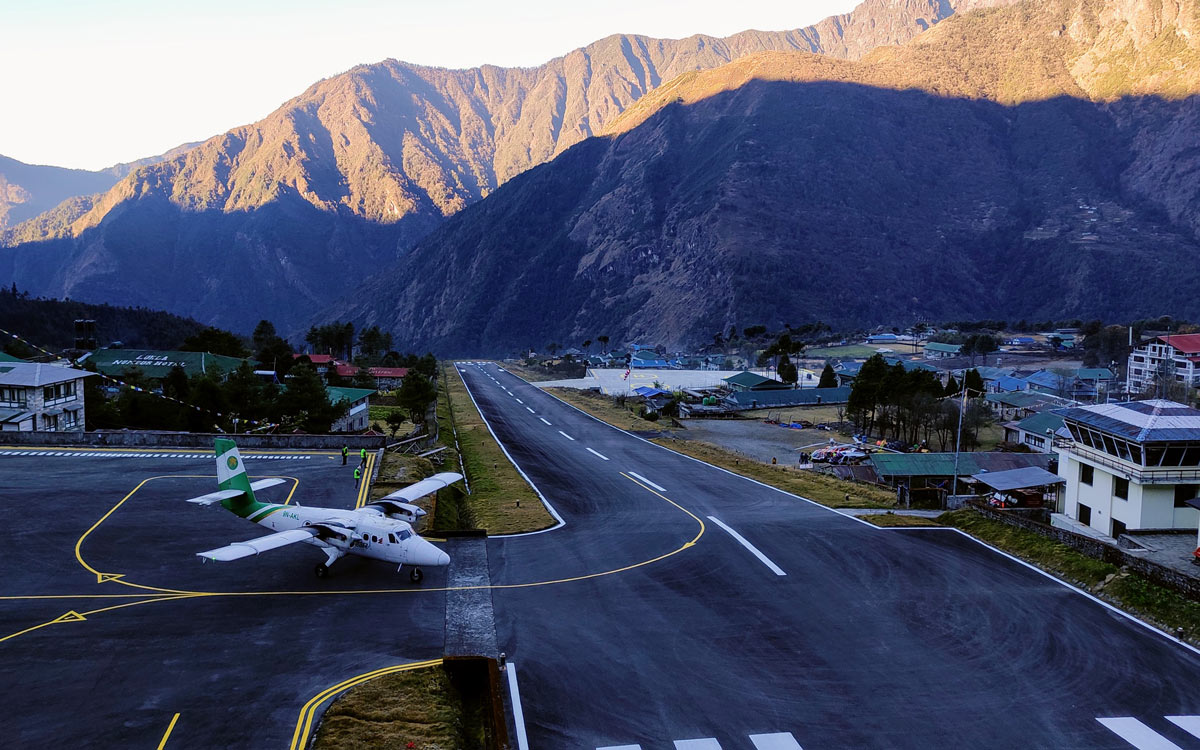
A flight of scenic beauty over stunning landscape starting the trekking journey from Kathmandu to Lukla is one of the most adventurous flights in the world, with students enjoying aerial views of Himalayan snow-capped mountain ranges like Everest, Nuptse, and Lhotse. Mountain construction, geography, and glacial systems are explained by guides during the flight.
Upon arrival in Lukla, students begin trekking to Phakding (2,652 m) following the Dudh Koshi River. Students observe Sherpa villages, prayer flags, and agricultural fields en route, gaining insights into high-altitude communal life and environmental adjustment. Guides share information on river systems, vegetation, and local agriculture, integrating adventure and science learning.
The day is filled with adventure and education. Students document the experience on film with photography, sketching, and journaling, and nighttime activities focusing on environmental consciousness, local culture, and trekking etiquette. This component blends adventure, education, and immersion and provides an excellent start to the Everest View Trek with Newari and Sherpa Culture Tour.
3. Sherpa Cultural Immersion and Namche Bazaar
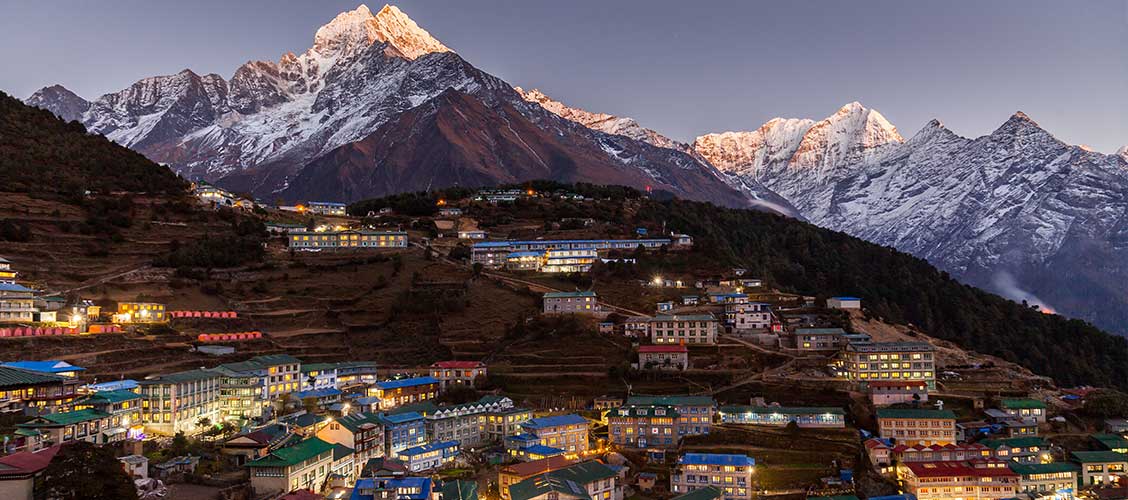
Namche Bazaar (3,440 m) introduces students to Sherpa culture. During the hike, crossing suspension bridges, pine forests, and villages, guides explain Sherpa traditional architecture, agricultural activities, and survival strategies at altitude. Students learn how individuals acclimatize to extreme conditions without abandoning their culture.
In Namche, the students come into contact with local markets, tiny museums, and scenery. Panoramic views of Everest and mountains around are provided through treks that are optional, boosting geography and environmental education. The students can have access to the villagers for interaction and observation of daily routine, handicrafts, and trade practices, making trek-based experience connect to real cultural learning.
The afternoon classes are focused on journaling, group discussion, and reflection with emphasis on Sherpa culture, mountain ecology, and sustainable living. Namche is the hub of learning the blend of culture, history, and environment and gives students an holistic learning and adventurous experience.
4. Tengboche Monastery and Spiritual Learning
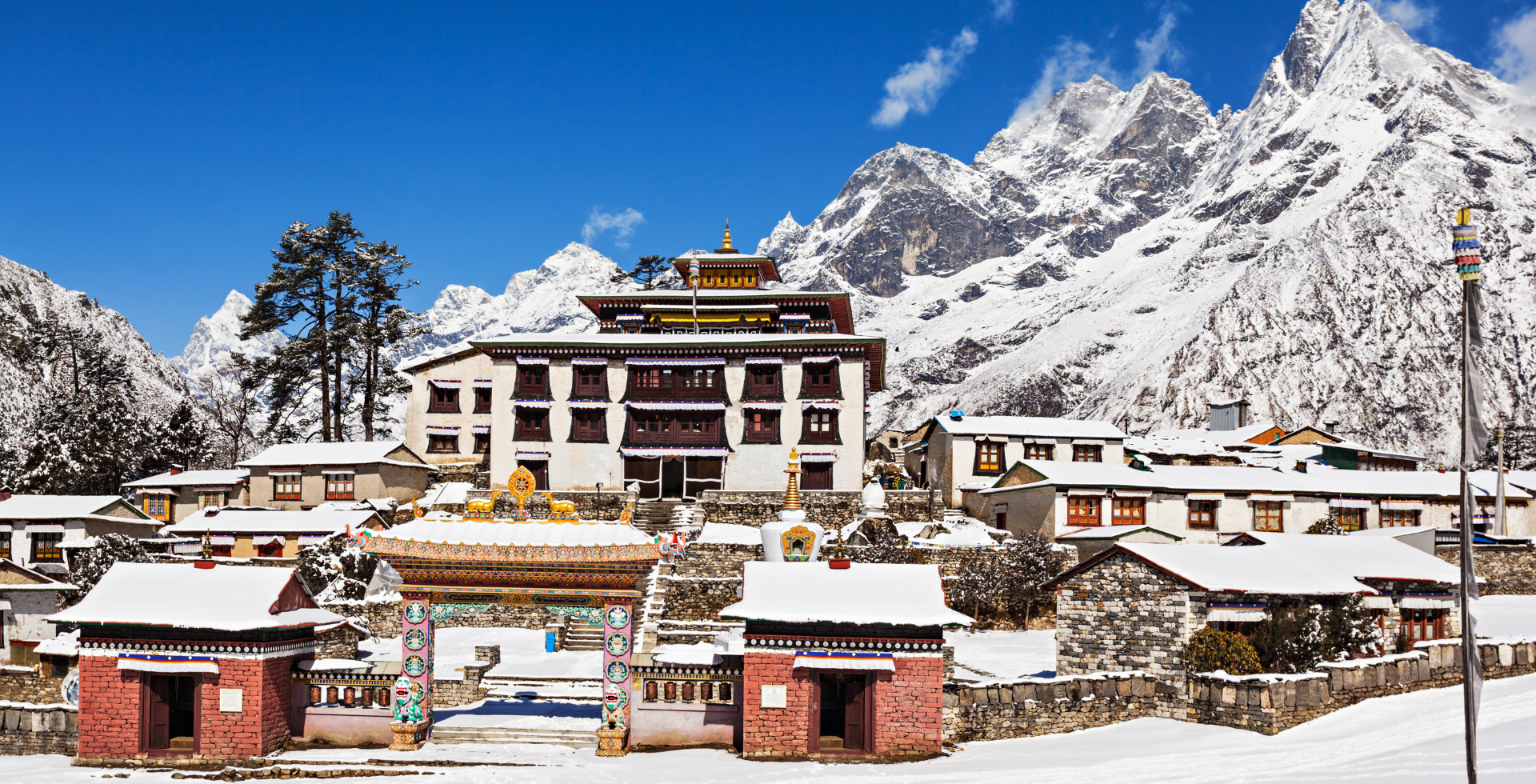
A trek to Tengboche Monastery (3,867 m) is above the valley with breathtaking views of Everest, Ama Dablam, and Lhotse. Students observe monastic rituals, prayer ceremonies, and religious teachings and study Buddhist philosophy, sacred art, and architectural heritage.
The picturesque setting supports the instruction of glacial geology, alpine ecology, and environmental adaptation at the high elevation. Journal writing, mandala design, and photography skills are integrated in the curriculum as students use spiritual observation as a gateway to experiential learning.
Evening classes are all about sustainable living, community living, and cultural preservation. This is a day of spiritual discovery, learning, and trekking where students explore the symbiotic harmony between Himalayan environment and Sherpa culture.
5. Everest Base Camp Trekking Route
The trekking is along the standard Everest Base Camp route, Dingboche-Lobuche-Gorak Shep. Students are directly experiencing mountain ecology, glacial field observation, and high-altitude physiology. Historic climbing achievement, Sherpa pioneering effort, and Himalayan geography are explained by guides en route, giving instructional context to the adventure.
Members go through experiential learning exercises, such as trail mapping, field recognition of flora and fauna, and recording environmental and cultural observations. Rural community encounters along the trail provide information on rural adaptation, Sherpa culture, and subsistence agriculture.
This trekking segment emphasizes teamwork, perseverance, and experiential learning, as students are able to physically and mentally touch nature. The adventure and learning are also enhanced through the process of reaching Everest Base Camp, thus becoming a distinctive aspect of the Everest View Trek with Newari and Sherpa Culture Tour.
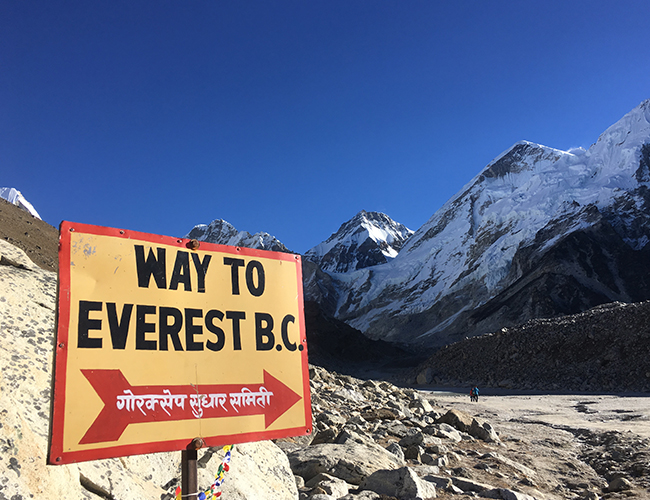
6. Everest View Point and Reflection
The hike ends at the Everest View Point, with sweeping views of Mount Everest, Nuptse, and other nearby Himalayan mountains. Students can see glacial features, mountain environments, and processes of local adaptation while guides lead students through observations of climate change, mountaineering history, and Sherpa culture.
Students undertake fieldwork, photography, journaling, and group discussion and integrate geography, ecology, and cultural studies. While descending through Pheriche and Lobuche, students observe village life, sustainability, and community acclimatization at high altitudes.
The day is spent in reflection, learning, and experiential learning, combining physical trekking with cultural and intellectual exploration. Participants gain a profound appreciation of Sherpa culture, Himalayan ecology, and the synergy of adventure, culture, and learning, completing the transformative Everest View Trek with Newari and Sherpa Culture Tour.
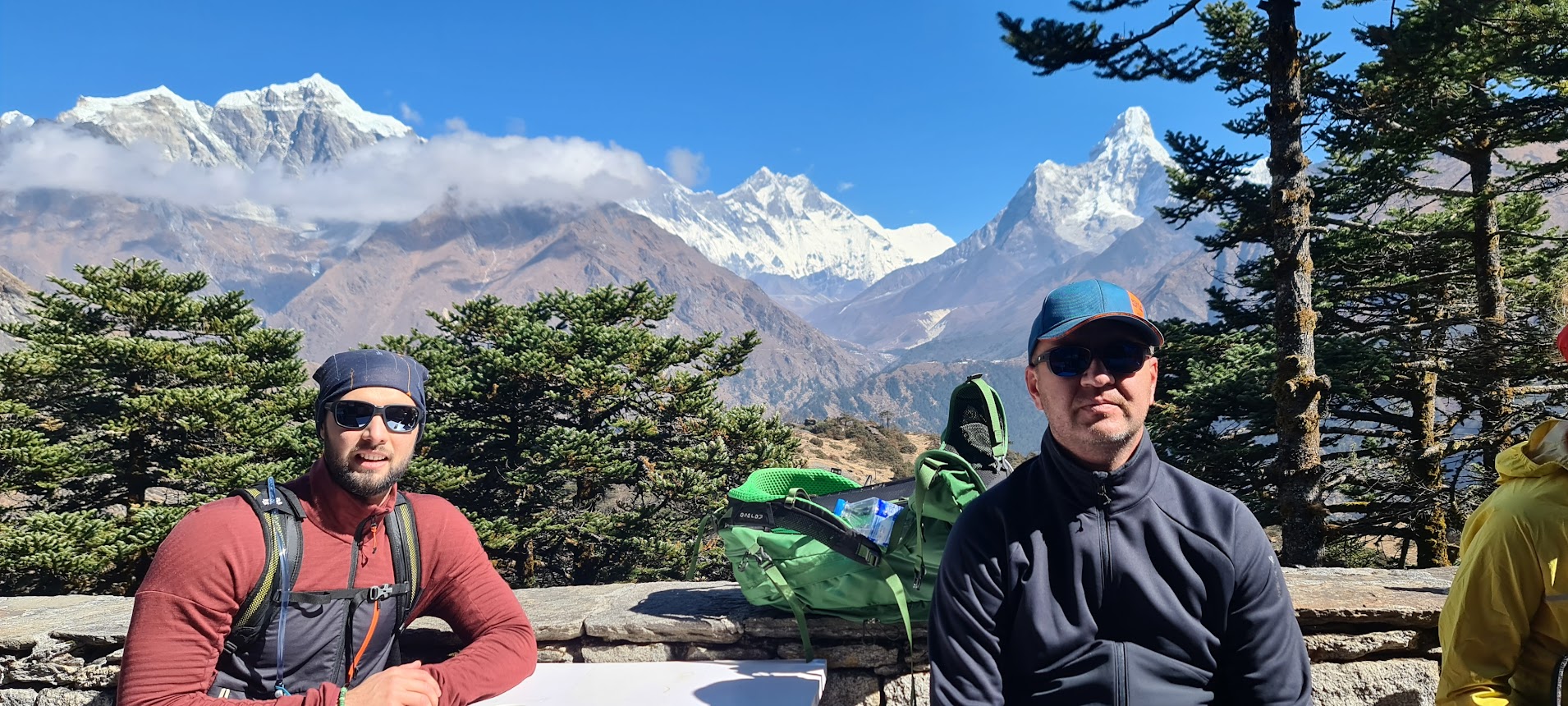
Food and Accommodation facilities for the Everest View Trek with Newari and Sherpa Culture Tour
On the Everest View Trek with Newari and Sherpa Culture Tour, tourists get properly selected accommodations and expertly prepared meals to give them comfort and cultural experience. In Kathmandu, the tourist gets luxury 4-star hotels, providing spacious rooms, modern amenities, and a cozy environment after international flights or city tours. These hotels are a wonderful blend of comfort and convenience, where trekkers and students can relax, acclimatize for the trek, and as well enjoy cityscape. A mix of Nepalese cuisine, Newari cuisine, and international food is available for meals in Kathmandu, served within hotel dining rooms or specially selected local dining rooms, a true Breakfast & Dinner experience.
On the trekking trail, accommodations are upgraded to welcoming guest houses and lodges that reflect the charm and lifestyle of Sherpa communities. The lodges have warm and comfortable rooms with hot showers, basic heating, and shared living areas where students can relax and socialize. Sherpa local cuisine is highlighted on the trail, including dal bhat, momos, thukpa, and vegetables, giving learners a real taste of high-altitude living. Breakfast, lunch, and dinner are offered (BLD), keeping members well nourished and energized for trekking and educational outings.
Special attention is given to cultural dining experiences, where students learn to cook Sherpa and Newari food, their nutritional benefits, and their use in traditional practices. Even on the trail, meals are prepared from fresh produce, practicing hygiene and quality. Dinner turns into a discussion board, a time for reflection, and exchanging experiences, transforming food into a focal point of adventure and education.
This combination of luxury hotels in Kathmandu and authentic lodges on the Everest trail ensures that participants experience comfort, culture, and cuisine learning, offsetting the adventure and learning focus of the Everest View Trek with Newari and Sherpa Culture Tour.
Transportation Service of the Everest View Trek with Newari and Sherpa Culture Tour
Transportation during the Everest View Trek with Newari and Sherpa Culture Tour is designed for comfort, safety, and uninterrupted movement throughout the entire journey. There is private transportation available in Kathmandu for city transfers and sightseeing tours. Guests are driven in clean air-conditioned vans, Toyota Hiace, or Coaster buses depending on group size. These vehicles are equipped with heaters during winter and large windows for viewing, thus making it a comfortable and convenient city tour. The vehicles arrive on schedule, courtesy of experienced drivers, and the group can enjoy the cultural and Newari heritage of Kathmandu without any hassle.
For the trekking section, the journey to the Everest region begins with a flight from Kathmandu to Lukla, which itself is regarded as one of the most thrilling flights in the world. It provides astounding bird’s-eye views of the Himalayas, including Everest, Nuptse, and Lhotse. Return flights from Lukla to Kathmandu are also reserved. In cases of unforeseen flight cancellations due to weather or operational factors, an upgrade by helicopter transfer can be arranged as an optional addition, hence keeping the itinerary intact without compromising experience or safety.
Along the trekking trail, travel is replaced by hiking with the help of trained porters, who carry goods, equipment, and take care of the smooth progress of the trek. Private taxis in Kathmandu, flights to Lukla, and well-supported treks offer a comprehensive, reliable, and informative holiday experience so that tourists can focus on cultural learning, adventure, and exploration without the hassles.
Entry permits, visas, and tour guide services for the Everest View Trek with Newari and Sherpa Culture Tour
All the entry fees and permits needed for the Everest View Trek with Newari and Sherpa Culture Tour are arranged so that the trek is hassle-free and legal. Upon arrival in Nepal, the participants can obtain a Nepal tourist visa on arrival at Tribhuvan International Airport, valid for stay during the entire trip. The tour operator, Graceful Adventure Travel, offers visa guidance, paperwork, and submission to make it convenient for tourists and students.
For the trek to the Everest region, the trekkers require some permits. The most important is the Sagarmatha National Park Entry Permit, which all those going to visit the park require and helps preserve the fragile Himalayan environment. Also, students are required to have a Trekkers’ Information Management System (TIMS) card, which offers safety, manages trekking trails, and enables emergency handling. The guide explains the function of these permits and how they enable preservation of the environment, culture, and promote sustainable tourism.
Apart from that, there are also entrance fees of cultural and heritage places of Kathmandu such as Patan Durbar Square, Bhaktapur Durbar Square, Swayambhunath, and Boudhanath Stupa which allow visitors to contribute towards heritage conservation projects. All the entrance fees and permits are pre-arranged by the tour operator so that students can stay busy with studies, photography, and explorations without any administration concern. This integrated planning ensures the trek is not only adventurous but also safe, law-abiding, and informative too, emphasizing the ecological and cultural value of every place visited.
Graceful Adventure Travel as the operator for the Everest View Trek with Newari and Sherpa Culture Tour
Graceful Adventure Travel is one of Nepal’s top-rated tour operators, specialized in guiding luxury, cultural, and educational travel in the Himalayas. Experienced at organizing top-quality travel, Graceful Adventure Travel has developed a reputation for professionalism, safety, and customized service. For Newari and Sherpa Culture Tour Everest View Trek, Graceful Adventure Travel ensures that every aspect of the trip, from accommodations to permits, food, and guides, is well taken care of to provide a hassle-free yet rewarding experience.
The operator provides package services like 4-star Kathmandu hotels, guest houses on the trekking trail of Everest, BLD daily meals on Trek, private land transport inside Kathmandu, and air transport to Lukla. Every permit, entry fees, and trek documents are also organized so that the trek becomes legal as per Nepalese law. The operator facilitates participants to focus solely on learning, cultural immersion, and adventure through its organization of logistics.
Among the virtues of Graceful Adventure Travel provides Professional English-speaking Guides and take the participants through the tour. The guides have received training in Sherpa and Newi culturear, Himalayan ecology, and mountaineering history, and provide daily commentary, interactive learning sessions, and cultural training. The firm also arranges porters, backup for safety, and emergency reservations, giving assurance, comfort, and learning improvement to pupils and travelers during the Everest View trekking with Newari and Sherpa Culture Tour.
Contact Details for Everest View Trek with Newari and Sherpa Culture Tour Booking
| Particular | Details |
| Booking office | Graceful Adventure Travel |
| Phone Number | +977-9851219412, 014700180/81 |
| Office Location | Sorhakhutte, Kathmandu, Nepal |
| [email protected]/ [email protected] |
Reviews


✖
Talk To Expert

Mr. Padam Timilsina
Travel Expert
Custom vacations, perfectly planned to fit your wishes.
Request for Assistance ⮞