


Talk to Expert +9779856019412

Early bird offer for Everest base camp trek - 20% discount for 2026 & 2027.


US$ 9900

Graceful Adventure Travel organizes the Himlung Expedition for thrill-seekers and mountaineering enthusiasts who dream of summiting a beautiful and technically moderate Himalayan peak. Located in the remote Nar Phu Valley of Nepal, Himlung Himal stands tall at 7,126 meters and offers an unforgettable adventure amid raw wilderness, Tibetan-influenced culture, and panoramic Himalayan views.
The journey begins in Kathmandu, receiving the climbers and preparing them for the upcoming high-altitude adventure. After a day of preparation and gear checks in the capital, the team departs on a scenic drive to Besisahar, and from there, continues the journey off-road to Koto, a quiet village surrounded by pine forests. The real adventure begins here, on foot, as trekkers head into the restricted and untouched Nar Phu Valley—a hidden Tibetan realm north of the Annapurna region that requires a special permit to enter.
As the trek continues, the group passes through picturesque Tibetan-style villages such as Meta, Kyang, and Phu. These villages remain largely unaffected by mainstream tourism, offering an authentic experience of rural Himalayan life. Phu village, nestled deep within the valley, provides stunning views of towering peaks like Kang Guru and Himlung Himal, and offers a glimpse into the region’s rich Buddhist culture, with monasteries, chortens, and prayer flags dotting the landscape. The trek also offers a chance to connect with the local communities, who rely on yak herding and traditional practices for their livelihoods.
From Phu, the path climbs further to Himlung Base Camp, situated in a tranquil glacial basin. This becomes the base for acclimatization and preparation for the summit push. Climbers spend several days at Base Camp, training, acclimatizing, and adjusting to the high-altitude environment. Once acclimatized, the team ascends gradually, establishing higher camps—Camp I and Camp II—where they will use fixed ropes, snow safety techniques, and expert guidance from experienced Sherpas to reach the summit.
The summit of Himlung is technically moderate, making it suitable for climbers with basic mountaineering experience and strong physical fitness. From the top, climbers are rewarded with breathtaking views that stretch across the Annapurna range, the Manaslu range, and even the Tibetan plateau.
The Himlung Expedition is not just a test of physical endurance but a profound cultural journey as well. It offers climbers the chance to experience the spiritual serenity of the Himalayas while traversing through isolated valleys, ancient monasteries. Graceful Adventure Travel ensures that the logistics are expertly handled, providing all necessary support, experienced Sherpas, and safety measures to ensure a successful and enjoyable experience.
More than just a summit, the Himlung Himal expedition is a passage through hidden valleys, cultural enigmas, and towering glaciers of Nepal. For those seeking a combination of technical mountaineering and in-depth cultural adventure, this climb offers a once-in-a-lifetime opportunity to test personal limits and stand tall at over 7,000 meters in one of the most remote regions of Nepal.
| Season | Kathmandu (1,300m) | Meta (3,560m) | Phu (4,050m) | Base Camp (4,900m) |
| Spring (Mar–May) | Day: 22–28°C Night: 10–14°C | Day: 8–14°C Night: 0–5°C | Day: 5–10°C Night: -3 to 2°C | Day: -2–5°C Night: -10 to -15°C |
| Summer (Jun–Aug) | Day: 26–32°C Night: 18–22°C | Day: 10–16°C Night: 5–10°C | Day: 8–12°C Night: 2–6°C | Day: 0–6°C Night: -6 to -10°C |
| Autumn (Sep–Nov) | Day: 20–28°C Night: 10–14°C | Day: 6–12°C Night: -2 to 4°C | Day: 4–10°C Night: -4 to 0°C | Day: -4–4°C Night: -12 to -18°C |
| Winter (Dec–Feb) | Day: 12–20°C Night: 2–6°C | Day: -2–6°C Night: -6 to 0°C | Day: -4–4°C Night: -8 to -4°C | Day: -12–0°C Night: -20 to -25°C |
| Fact | Details |
Tour Name | Himlung Himal Base Camp Expedition |
Maximum Elevation | 7,126 meters (Himlung Summit) / 4,900 meters (Base Camp) |
Duration | 30 Days (Kathmandu to Kathmandu) |
Trek Distance | Approx. 130–150 km (round trip) |
Difficulty Level | Challenging (High-altitude expedition with technical climbing) |
Best Time to Visit | April–May, September–November |
Accommodation | Hotels in Kathmandu, Teahouses/Lodges on Trek, Tents at Base Camp |
Group Size | 2–12 people (ideal for safety and logistics) |
Major Highlights | Remote villages (Phu), Tibetan culture, Himlung Base Camp, Himalayan views |
| Day | Activity (From–To / Description) | Time (hrs) | Elevation (m/ft) |
| 1 | Arrival in Kathmandu | – | 1,300 m / 4,265 ft |
| 2 | Preparation Day in Kathmandu | – | 1,300 m / 4,265 ft |
| 3 | Drive from Kathmandu to Besisahar | 7 hrs | 800 m / 2,624 ft |
| 4 | Drive from Besisahar to Koto | 5–6 hrs | 2,675 m / 8,774 ft |
| 5 | Trek to Meta | 6–7 hrs | 3,560 m / 11,678 ft |
| 6 | Trek to Kyang | 6–7 hrs | 3,740 m / 12,267 ft |
| 7 | Trek to Phu | 5–6 hrs | 4,050 m / 13,284 ft |
| 8 | Excursion in Phu village | – | 4,050 m / 13,284 ft |
| 9 | Trek to Himlung Base Camp | – | 4,900 m / 16,076 ft |
| 10 | Puja (Prayer Ritual) and Rest Day | – | 4,900 m / 16,076 ft |
| 11–23 | Climbing Period (Himlung Himal) | – | Up to 7,126 m / 23,379 ft |
| 24 | Cleaning and Packing | – | 4,900 m / 16,076 ft |
| 25 | Trek back to Phu | 3–4 hrs | 4,050 m / 13,284 ft |
| 26 | Trek to Meta | 5–6 hrs | 3,560 m / 11,678 ft |
| 27 | Trek to Koto | 5–6 hrs | 2,675 m / 8,774 ft |
| 28 | Drive to Besisahar | – | 800 m / 2,624 ft |
| 29 | Drive Besisahar to Kathmandu | – | 1,300 m / 4,265 ft |
| 30 | Final Departure | – | – |
You are welcomed at Tribhuvan International Airport in Kathmandu by our representative, who is to take you to your destination-the hotel. After settling in, you can have some rest and catch up on your much needed sleep after a hectic journey. The streets of Kathmandu buzz with the sound of acid introduction to the culture and history of Nepal.
In the evening, there will be an orientation where you will meet other members of the expedition team and discuss the journey ahead. It is a splendid opportunity to pose any questions and clear any concerns. As the hallmark of traditional Nepali hospitality and flavors, the group will be hosted for a welcome dinner featuring Nepali cuisine.
Activity: Arrive in Kathmandu
Meal: Welcome Meal
Accomodation: 4* hotel
This is the last day of preparing for the trip. You’ll go into a long briefing about everything from itinerary to safety protocols to climbing strategies; all the things that have to be said and done before departure.
After the briefing, you’ll have time to check your gear and make any purchases or rentals possible. Visiting local markets and gear shops can also be an exciting experience. If you would like, you can do some sightseeing on the rest of the day; examples of places you could visit are UNESCO World Heritage Sites like Swayambhunath (Monkey Temple) or Boudhanath Stupa for a deep cultural embrace with Kathmandu.
Activity: Preparation day in Kathmandu
Meal: BB
Accomodation: 4* hotel
Leaving Kathmandu begins the winding scenic way along which the trip to Besisahar, the gateway to the Annapurna region, is made. The journey takes about 7 hours, through which beautiful green hills, terraced fields, and banks of the Trishuli and Marsyangdi rivers will accompany you.
The lodge will check you in on reaching Besisahar, and then you can spend the rest of your evening relaxing. Indeed, this is a small town where you would get the notion of what rural life is in Nepal, and a short walk here could have refreshing and enlightening effects. Rest well because now the adventure gets tougher.
Activity: Drive to Besisahar
Meal: Breakfast, Lunch & Dinner
Accomodation: Guesthouse
So here you are again moving from Besisahar to Koto, which climbs to an altitude of 2675m. The journey takes 5-6 hours along rugged mountain roads revealing breathtaking sceneries of waterfalls, dense forest, and some of the highest peaks.
Nestled within the Manang district, Koto is nothing more than a small village forming the starting point for Nar and Phu valley treks. It is made up of Gurung and Manangi communities, thus giving you a completely unique feel for cultural exposure. Spend the evening adjusting to acclimatization and preparation for the trekking adventure to come.
Activity: Drive to Koto
Meal: Breakfast, Lunch & Dinner
Accomodation: Guesthouse
The trek is about a 6-7 hour hike along the Koto to Meta trail. It passes through thick pine forest, swaying on suspension bridges above the Nar Khola river. The climb is gradual, allowing for stunning snaps of snowy peaks and unspoiled views.
At 3,560m, Meta is a tiny, remote village with a few basic teahouses. There is a lot of altitude gain, so being alert for signs of altitude sickness is very important. Keeping hydrated and resting is necessary for proper acclimatization.
Activity: Trek to Meta
Meal: Breakfast, Lunch & Dinner
Accomodation: Teahouse/Lodge
Today’s trek to Kyang is about 6-7 hours long, passing through arid regions dotted with ancient chortens and mani walls. The panoramic view of the peaks and valleys from the wayside showcases the stark beauty of the region.
Kyang, at an altitude of 3,740 meters, is an abandoned settlement that served as the winter home for the people of Phu. Remnants of stone houses dot the landscape-today as a beautiful testimony to Phu’s ancient past. Setting up camp would be a serene and highly isolated experience, essentially in the towering mountains.
Activity: Trek to Kyang
Meal: Breakfast, Lunch & Dinner
Accomodation: Teahouse/Lodge
Much of the trip to Phu involves a 5-6 hours hike through one of the remote and culturally rich villages in the region. The trail involves crossing narrow gorges, suspension bridges, and steep heights.
When you get into Phu, you will be greeted by ancient-looking stone houses, monasteries, and vividly-woven culture of the Phu people. At an altitude of 4,050 meters, the village presents a juxtaposition of the natural beauty and cultural aspects. Spend the evening in amicable interactions with the locals.
Activity: Trek to Phu
Meal: Breakfast, Lunch & Dinner
Accomodation: Teahouse/Lodge
Having a resting day is a must for acclimatization at Phu. Through this time, ancient monasteries like Tashi Lhakhang can be explored, and local customs and ways of living can be well understood.
Interaction with the people in the area will give insight into their day-to-day life, unchanged for centuries. The rest also allows for better acclimatization, so ensure you can take on the next few days.
Activity: Explore Phu Village
Meal: Breakfast, Lunch & Dinner
Accomodation: Teahouse/Lodge
Leaving Phu, the trek to Himlung Base Camp takes approximately 4 to 5 hours. The trail climbs through glacial moraines and difficult ground and treats you to beautiful views of the peaks surrounding you.
After you arrive at the base camp situated at 4,900 meters, you will set up your tents and be in preparation for the climb. The camp would be well located with various routes to the mountain and will serve as your home for the following days.
Activity: Trek to Himlung Base Camp
Meal: Breakfast, Lunch & Dinner
Accomodation: Camp
Commemorated with a traditional Puja, the ceremony seeks blessings for a safe and successful ascent. Monks from the local villages lead an offering and prayers to the mountain deities.
The rest of the day is given to resting and acclimatization – conserving energy is important, as is allowing the body time to adapt to the higher altitude. Final equipment checks are made, along with briefings to ensure you’re good to go for the climb.
Activity: Rest day
Meal: Breakfast, Lunch & Dinner
Accomodation: Camp
Additional then, the climbing period lasting more or less for 13 days will comprise fixing higher camps, acclimatization rotations, and finally, the summit push. The route entails:
Camp I (5,450 m): reached after climbing through steep moraine as well as some glacier sections.
Camp II (6,000 m): On an extensive plateau with a possible navigation through crevassed terrain.
Camp III (6,350 m): Climbers set off for their final ascent from here, which rests beneath the summit ridge.
The summit push starts under the cover of darkness. It traverses steep snow and ice slopes with 40-50 degrees angles. At 7,126 meters, climbers will be amply rewarded with views of Annapurna,
Activity: Climb to Himlung Himal
Meal: Breakfast, Lunch & Dinner
Accomodation: Camp
With the end of the climbing period, today is reserved for cleaning up the base camp and packing gear. In accordance with Leave No Trace principles, any leftover rubbish or equipment is prepared for carry-out. Porters and yaks help transport loads down to lower altitudes.
It is also a day for reflection. The team would often gather to exchange experiences about the summit and to express their gratitude to the Sherpas and support staff. Some climbers may choose to write or meditate, taking in the last of the stunning beauty. A small celebration dinner might be arranged to commemorate the successful expedition.
Activity: Cleaning and Packing
Meal: Breakfast, Lunch & Dinner
Accomodation: Camp
And thus begins the descent: three to four hours back to the village of Phu. Though it is downhill, the rocky path leaves little room for complacency. It just happens to be the faster way; however, the return portion will not feel very pleasant for the knees and joints after days of being high in altitude.
It feels warm and friendly at Phu; you can go to the monastery again, converse with the residents, or merely enjoy that thicker air. After the raw and quiet empty space of base camp, Phu’s small community offers a warm return to social life.
Activity: Trek back to Phu
Meal: Breakfast, Lunch & Dinner
Accomodation: Teahouse/Lodge
Today the trek goes back along the same route to Meta, passing by Kyang. The descent makes for a whole new landscape, with vegetation being richer and a significant change in the weather. More comfortable than the first approach, this walk is 5-6 hours long.
Here, you’ll spend the night in a simple teahouse or pitch your tent. Ideal for stretching legs, cleaning up gears, and having a wholesome meal. The descent to low altitudes accelerated recovery for the body, but views remained as outstanding as ever.
Activity: Trek to Meta
Meal: Breakfast, Lunch & Dinner
Accomodation: Teahouse/Lodge
The end of your trekking days is that you have come back to Koto. The trail gives you long views of green forests, river crossings, and possibly wildlife sightings. And then, of course, it’s downhill all the way, but foot placement becomes even more critical to avoid slipping on gravel and damp paths.
Slowly modern comforts start coming back in Koto – a stronger phone signal, better food, and a soft bed. This marks the final portion of your journey on foot because it carves memories of weeks spent in the wilderness. Quiet here tonight make a very good transition in the footsteps from the mountains into the civilisation.
Activity: Trek to Koto
Meal: Breakfast, Lunch & Dinner
Accomodation: Teahouse/Lodge
After breakfast, the journey should take about 5-6 hours from Koto to Besisahar. The rugged jeep road cuts through gorges, forests, and along rivers. The change is quite dramatic from alpine to subtropical as you drop.
A well-deserved hot shower and a clean bed await the guests of Besisahar. Some use this moment to call their families or post news about their successful climb. The sense of achievement begins to sink in. From 7000+ meters all the way to the green valleys-an amazing arc of adventure.
Activity: Trek to Besisahar
Meal: Breakfast, Lunch & Dinner
Accomodation: Guesthouse
Today’s long drive, approximately 7-8 hours, will reach you back to Kathmandu. It’s a day of leisure, dozing in the vehicle, and watching as the rays of the sun reflect on the Nepali countryside—villages, hills, temples, and bustling highways.
Once in the capital, you check into a hotel and reconnect with other comforts like real coffee, fast Wi-Fi, maybe a pizza. The evening is yours; celebrate, shop for souvenirs, or just stroll through Thamel and feel the difference between mountain solitude and city energy.
Activity: Drive back to Kathmandu
Meal: BB
Accomodation: 4* hotel
After breakfast, it is time to bid goodbye because some people may need to run out to do last-minute shopping or perhaps head to some temple, depending on flight schedules. Last airport transfers get organized with farewells from the team.
Activity: Fly back home !
If our standard itinerary doesn't fully meet your needs, we are happy to tailor it to your specific preferences and requirements.
The Himlung Himal Expedition is an uncommon amalgamation of adventure, cultural exploration, and high-altitude climbing in one of Nepal’s farthest recesses. Unlike the more commercial peaks, Himlung guarantees a quiet travel through virgin valleys, Tibetan-style villages, and austere alpine terrain. The trek itself is an experience to behold, taking one through places like Meta, Kyang, and the ancient walled village of Phu, where time seems to have halted. The journey converges at Himlung Base Camp at 4,900 meters, where climbers set forth to conquer the 7,126-meter-high majesty. On the way, climbers participate in the traditional rites of the Buddhist Puja for safety and blessings, which adds a spiritual flavor to the expedition. With the less-trodden path, wilderness, and a technically moderate climb, Himlung is where peace and challenge converge for any climber.
Meta (3,560 m / 11,678 ft)
Meta is the first major settlement after leaving the vehicle road and entering the restricted Nar-Phu Valley. Such great transformation in the landscape from lush forests to the barren alpine terrain is very rewarding for the draught to this very point. Trekkers get their first views of the Kangaru Himal and other peaks of the Peri Himal range with a warm welcome. The village itself is small, consisting of stone houses used by yak herders seasonally. It is a very peaceful place, providing a real sense of remoteness and solitude.
Meta is also important for acclimatization. There is a massive altitude increase, and resting here allows the body to adjust. Also, one can observe local customs and enjoy the hospitality of the region. As you settle into the silence of Meta, a deep connection with nature and simplicity will likely unleash. Also, the vista provides a wonderful atmosphere; with expansive views and ever-shifting light due to the weather at that altitude, it offers plenty of opportunity for good photographs. The days of trekking ahead would be more rugged and remote beginning from here.

Phu Village (4,050 m / 13,284 ft)
Phu is one of the most mysterious and isolated villages in the entire Himalayan range. Enclosed by rugged cliffs and in the background of soaring peaks, this ancient village is inhabited by ethnic Tibetans maintaining their lifestyle over years. Narrow stone-paved alleys, mani walls, and centuries-old gompas (monasteries) form the very character of the village. The life here revolves around yak herding and agriculture based in high altitude. The untouched raw beauty of the village gives trekkers the feeling of journeying back in time.
A full day in Phu is spent wandering through the spiritual heart of the village, which includes the historic Tashi Lhakhang Monastery. This monastery, famous for its wonderfully carved wooden interior and colorful prayer flags, provides an ideal location for meditating or simply watching the locals perform their rituals. You will see monks chanting and butter lamps flickering, as locals spin their prayer wheels. In the meantime, trekkers hunt for stunning panoramic views of Himlung Himal, Pokarkang, and other snow giants from different vantage points around Phu. Staying at Phu is regarded as the emotional and cultural highlight of the entire expedition.
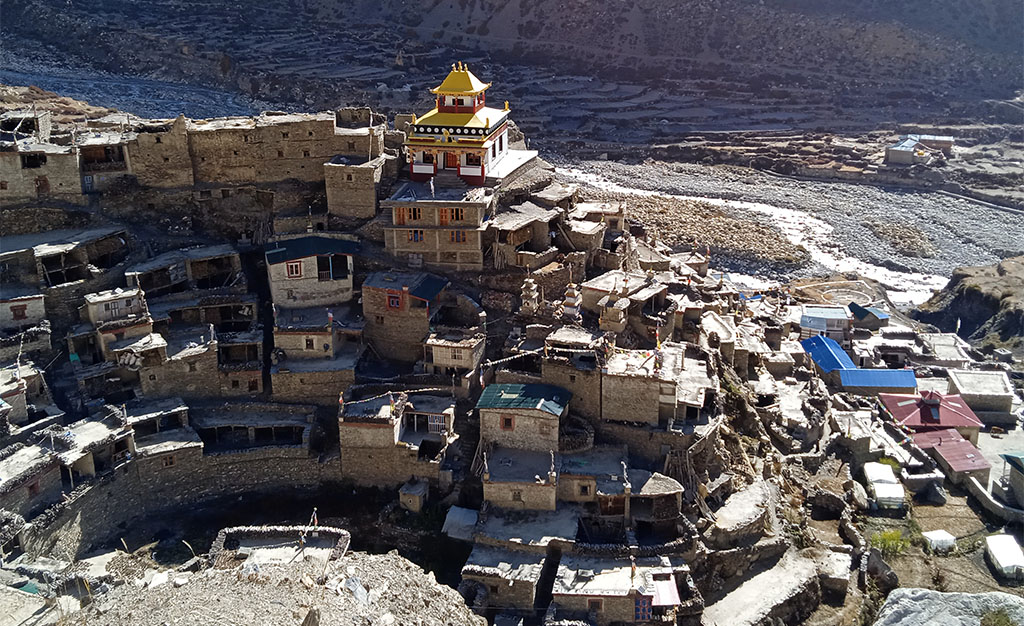
Himlung Base Camp (4,900 m / 16,076 ft)
Himlung Base Camp is where the real adventure begins for mountaineers gunning for the summit of the 7,126-meter Himlung Himal. Set in a wide glacial valley, the base camp surrounded by towering snow-covered peaks becomes home for over 10 days during the expedition. Tents are pitched in the moraine zone, and all essential logistics, including food, water, medical kits, and oxygen, are handled from here. It’s a buzzing area during peak climbing seasons, filled with excitement and anticipation.
Rest days here are meant to facilitate acclimatization, technical training, and preparation. The Puja (prayer ritual) on the 10th day is a sacred mountain-blessing for safe passage. Base Camp also provides a clear view of the summit route and surrounding peaks, thus being a good photo spot. While there are no villages nearby, the area feels alive with the activity of climbers, porters, and Sherpas. Even when the environment is treated harshly, the prevailing spirit at Base Camp unites climbers with unforgettable memories of solidarity and fortitude.
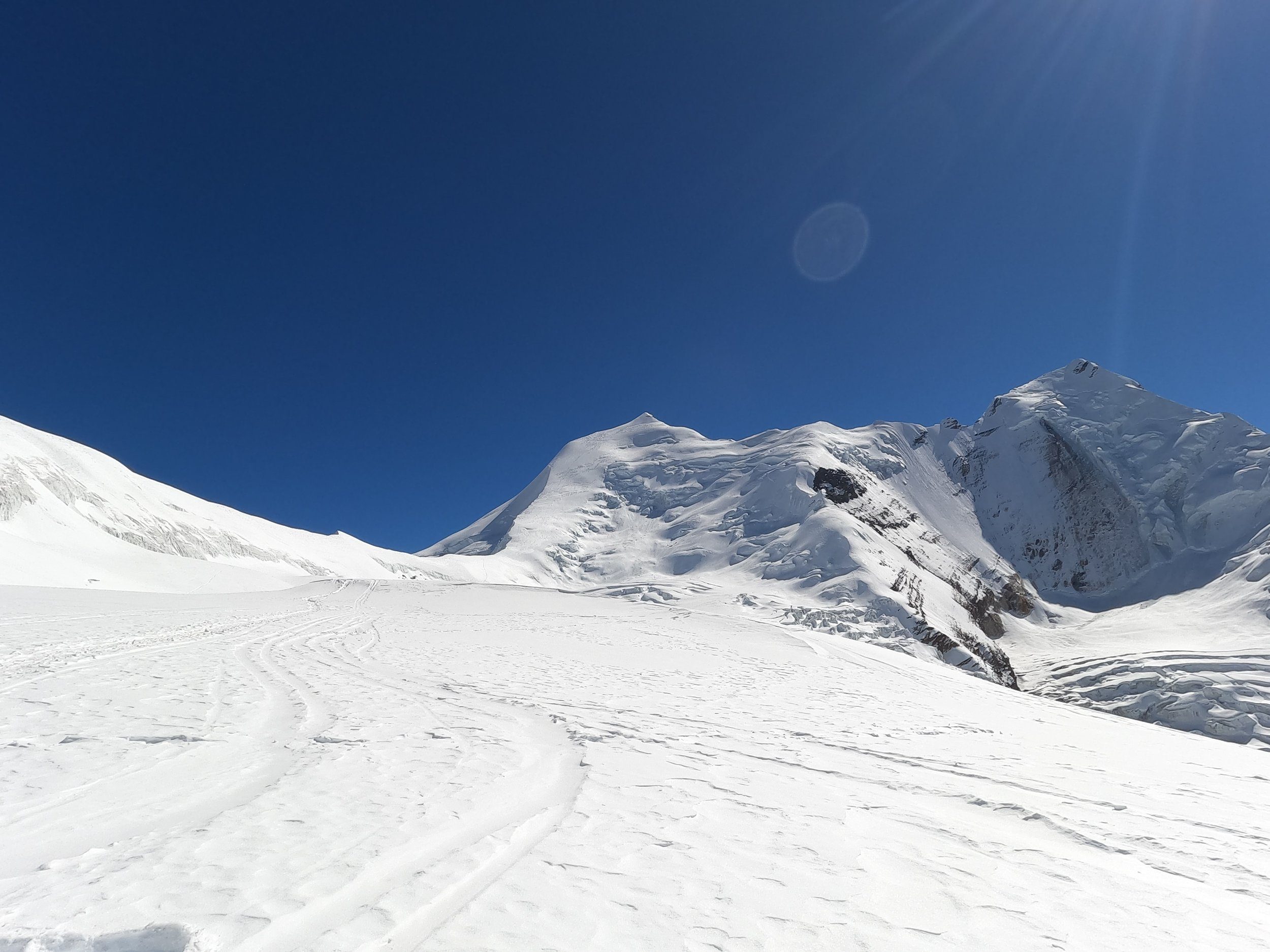
Himlung Climbing Period (Up to 7,126 m / 23,379 ft)
The climbing period on Himlung Himal spans multiple days and involves establishing higher camps above Base Camp. Climbers go through Camp I, Camp II, and sometimes Camp III, depending on weather and route conditions. The ascent includes glacier travel, crevasse crossings, and fixed rope sections. Each day requires early alpine starts, sometimes in sub-zero temperatures, with long hours of slow, steady climbing. Altitude makes everything harder—breathing, moving, even thinking clearly—but the challenge is part of the journey.
The summit push is usually launched between midnight and 2 AM to catch favorable weather. As you climb higher, views expand to distant Himalayan giants like Manaslu and Annapurna. Reaching the summit of Himlung is an emotional moment that combines joy, exhaustion, and triumph. Standing at over 7,100 meters, you’re literally above the clouds, surrounded by some of the highest places on Earth. The descent is equally critical, demanding focus and teamwork. Completing this climb becomes a lifelong memory and a testament to personal strength and perseverance.
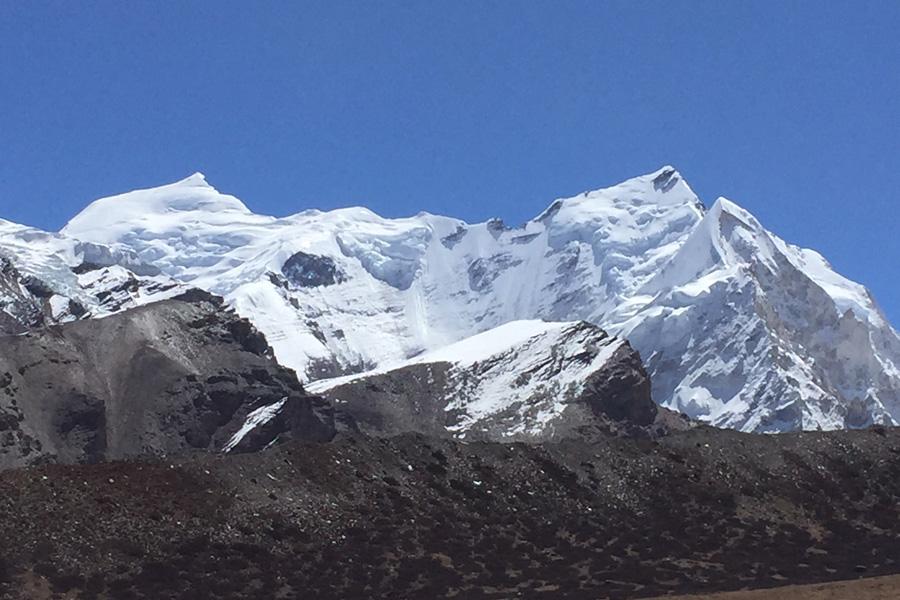
The best time to attempt climbing the Himlung Himal is autumn (September to November), although it is closely followed by spring (March to May). During these weeks, it becomes possible to get the best weather: clear skies and moderate temperature with low chances of heavy snow or rain. The autumn brings crisp and unobstructed mountain views due to the post-monsoon atmosphere, which is ideal for photography and for climbing. On the other hand, spring comes with a riot of wildflowers along the lower trails while at higher altitudes it becomes warmer. Most of these seasons are favored by expedition teams for better predictability and beauty. Either of these windows would thus enhance your safety, summit success percentage, and overall enjoyment of the trip.
Spring Season (March to May)
Spring time is one of the best times for the Himlung Expedition. The long winter ends, and the weather gets warm, with the trails to Base Camp often having blooming rhododendrons and wild alpine flowers. Most of the skies are clear, which gives great views across the Annapurna and Manaslu ranges. Snow remains on the upper slopes, but it is no longer as much as during winter. Days become longer, and sunlight stronger, including providing an easier trekking and acclimatizing period. Spring brings a buzzing trekking experience, along with a caravan of other expedition teams and travelers on the route, making the trails feel even more communal.
Summer Season (June to August)
The monsoon hits Nepal in the summer time and renders this season very arduous for Himlung Expedition. It makes most of the routes wet, slimy, liable to be hazardous by heavy rains, and crawling with landslides, as in the lower regions between Besisahar and Koto. Visibility also goes right down, as clouds come down from the sky, hanging misty and dark over the place for days. While higher areas above Phu and the Base Camp remain dry, the way in can be a lot unpleasant and leech-infested. Expedition logistics of tranport and resupply are subject to weather disruption. It is, however, the season for solitude and little company, a chance to experience the quieter, more raw Himalayas, so long as one is adequately prepared for severe conditions.
Autumn Season (September to November)
Autumn is considered by many to be the best for expeditions to Himlung. The rains from the monsoon wash out the dust from the atmosphere, leaving behind dirt-free, dry trails and exceptionally clear skies. It is the time that is most optimal for climbers to summit under stable weather conditions and safe snow conditions in all of their attempts. Temperatures cool down but are not extremely cold, striking the perfect balance for trekking and climbing. Phu village and the remote trails are alive with locals harvesting their crops and fellow trekkers en route. Autumn strikes a good balance between beauty and safety, making it the best mix of adventure and mountain charm for any climber.
Winter Season (December to February)
Winter brings a raw, challenging version of the Himlung Expedition. Temperatures drop significantly, especially above Meta and Phu, often going below -20°C at night near Base Camp. Snowfall is frequent, making the ascent to higher camps more technical and risky due to avalanches or hidden crevasses. The trails are mostly empty, offering extreme solitude and a peaceful, untouched Himalayan environment. This season demands serious mountaineering experience, top-tier gear, and physical resilience. While summiting is still possible, it becomes more of a daring, high-risk adventure that appeals to experienced climbers seeking isolation and challenge.
Meals served during the Himlung trek are aimed at building up depleted energy while keeping the morale high with the quick rises above altering altitudes. Hot, traditional Nepali meals – steaming dal bhat (rice and lentils), momos (dumplings), thukpa (noodle soup), and Sherpa stew are served in the tea-houses and mountain lodges on the way below the villages of Besisahar, Koto, Meta, Kyang, and Phu along with few western dishes such as pasta, fried rice, or omelettes. Fresh vegetables and some local dairy products are sourced from local farms and flown in, making sure they are of good quality and hygiene standards.
Further along the trail above Phu and at the Base Camp, nutritional energy is offered in hot one-pot dishes laden with carbohydrates and proteins like mountain pasta, rice-pulses porridge, canned fish or chicken stews, and energy bars. These are prepared in insulated mess tents in a camp kitchen and steaming cups of tea, coffee, hot lemon water, or broth are served throughout the day to stave off the chill. Mealtime is more than fuel; it is the occasion to visit about the table and take in panoramic scenery of snow-topped peaks.
Accommodations begin in simple, locally run tea‑houses and basic lodges in villages up to Phu. Rooms typically consist of twin or triple wood‑plank bunks, thick wool blankets, and a small heater or coal stove, with shared squat toilets down the hall. Despite the spartan surroundings, hosts take pride in cleanliness, offering fresh linens and hot water boiled over wood fires. We provide High-class accommodation of four-star hotel of Kathmandu, lodges/Tent for this trek is warm and welcoming.
Staying on Himlung Base Camp is through expedition tents pitched on rocky moraine. Each climber has a private two-person tent with a foam mattress, sleeping bag, and often an electric blanket when generators run. Communal mess and gear tents are heated, stocked with solar‑charged lights and charging ports. This blend of traditional hospitality and field-camp efficiency provides safe, warm retreats after long days of trekking and climbing.
Your journey begins with a private jeep or minibus ride from Kathmandu to Besisahar, winding through terraced hills and rivers for seven to eight hours. A second jeep transfer carries you from Besisahar to Koto over rough mountain roads, cutting travel time and delivering you closer to the trailhead. Private jeeps are commonly used for small groups, while larger groups might share mini bus according to group size.
From Koto onward, trekking is on foot, with porters or pack animals carrying heavy loads of gear. In some itineraries, small helicopter lifts can be arranged between Phu and Base Camp to bypass the hardest sections or for emergency evacuation. Whether by road, foot, or rare helicopter drop, the transport plan balances comfort, safety, and the thrill of venturing deep into remote Himalayan wilderness.
Nar Phu Restricted Area Permit
Manaslu Conservation Area Permit (MCAP)
Annapurna Conservation Area Permit (ACAP)
Graceful Adventure Travels Pvt. Ltd. is a highly reputable and renowned adventure travel company, registered and based in the beautiful country, Nepal. We specialize in offering exceptional tour & trekking packages to guests from all over the world, who seek to explore the awe-inspiring Himalayas.
At Graceful Adventure Travels, we are committed to excellence in all aspects of our work. Our primary goal is to ensure that our guests have a safe and unforgettable adventure, which is why we have earned a reputation for providing an exceptional level of service. Our team is composed of experienced and hardworking guides, assistant guides, and porters who are passionate about ensuring that our guests have an enjoyable and unforgettable experience. We take pride in offering a range of services and facilities that are designed to enhance the overall trekking experience, making it both fun and adventurous. We are dedicated to meeting the needs and expectations of our valued guests, and we go above and beyond to ensure that their journey is a success. From the moment they arrive in Nepal until the end of their trek, we spare no effort in providing personalized attention, exceptional service, and genuine care.
At Graceful Adventure Travels, we are committed to upholding the highest standards in the adventure travel industry. Our mission is to provide a safe, enjoyable, and unforgettable experience that creates memories that last a lifetime.
Himlung Himal is nestled in the remote Nar-Phu region of the Manang Districts bordering Tibet in northern Nepal.
Himlung Himal rises to an elevation of 7126 meters or 23379 feet above sea level.
For seasoned climbers, Himlung is generally considered a non-technical peak, yet owes those fine technicalities to altitude whereby acclimatization, climbing equipment, and physical fitness remain ideal for any climber.
Three permits are required: the Nar-Phu Restricted Area Permit, the Annapurna Conservation Area Permit (ACAP), and the Himlung climbing permit from the Nepal Mountaineering Association (NMA).
The best climbing seasons are spring from April to the beginning of June and during autumn from late September to November, when weather patterns are generally stable and provide fantastic visibility.
Yes, since Nar-Phu Valley is a restricted area, so a government-licensed guide is compulsory. Most climbers hire porters to help them carry heavy gear.
Normally the expedition takes a total of 30 days, comprising arrival, preparation, trekking, acclimatization, climbing, and returning.
Basic tea houses or lodges are used during the trekking. Tented accommodations are provided at the base camp and higher camps.
Previous experience of high-altitude trekking or climbing is highly recommended. Himlung is not very technical, but climbing any 7,000-meter peak requires a certain amount of stamina and knowledge of using crampons, ropes, and ice axes.
Definitely, with the high-altitude level, acclimatization is essential. In this itinerary, rest days are infused for the body to get accustomed to adjusting to the high altitude.
US$ 9900
Price starts
US$ 9900

