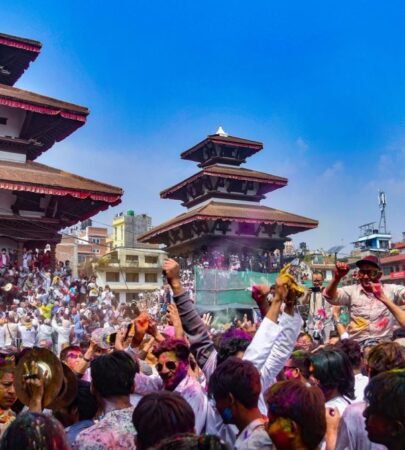
Ropai Festival, Asar 15, National Paddy Day, or Muddy Festival is one of Nepal’s most unique and culturally rich agricultural festivals. Observed annually on the 15th day of the Nepali month Asar (around late June), the festival marks the rice planting season and represents the intimate connection between Nepali life and agriculture. The following is a detailed analysis of the festival from historical, agricultural, and tourism perspectives.
History of Asar 15—National Paddy Day
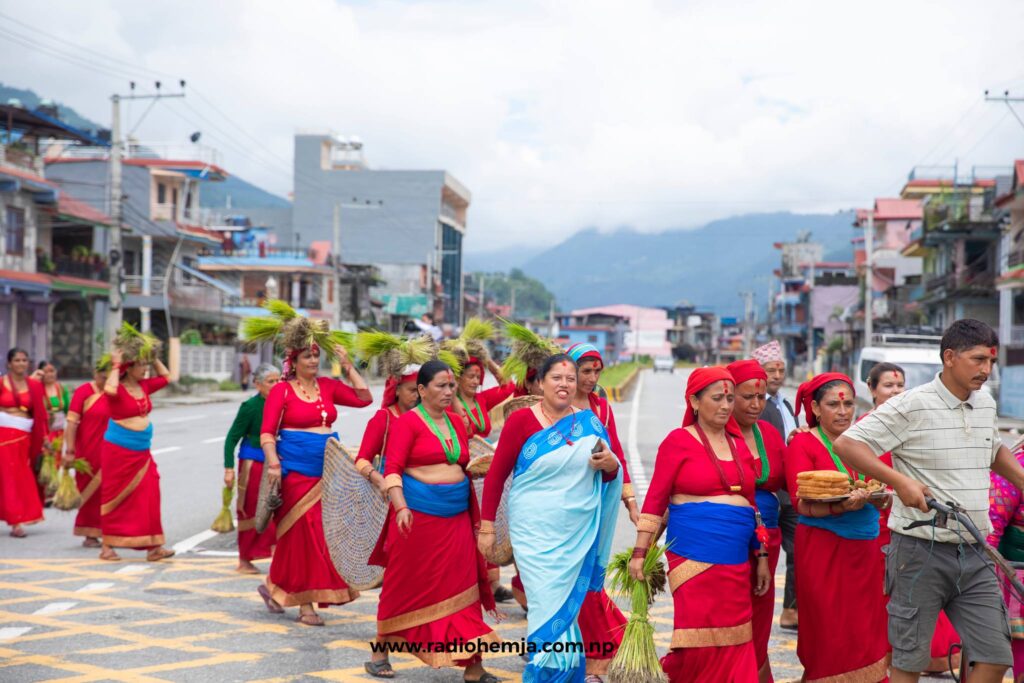 One of the most unique and native farm festivals in Nepal is the Ropai Festival, which is held on Asar 15. It is observed on the 15th of the Nepali month of Asar, mid-to-late June each year, marking the onset of the rice planting season. In 2005, the Government of Nepal officially declared Asar 15 as National Paddy Day to acknowledge the importance of paddy cultivation as a part of Nepal’s economy, culture, and food basket. Rice is Nepal’s staple food and an important means of livelihood, and this day is the starting point of the most important paddy season for millions of farmers across the nation.
Historically, Asar 15 was not a celebration in itself, but one marked by hard work and collective labour. The peasants would begin ploughing, flooding their lands and transplanted rice seedlings. Over time, this toil became celebration—filled with music, joy, and ritual. The festival took shape as communities began adding cultural songs and collective feasts, and today it is a unifying icon of agricultural and national pride.
The history of rice cultivation in Nepal stretches back thousands of years. From ancient hill-state terraced agriculture to extensive rice fields in the Terai, rice has been an integral part of Nepal’s identity. Observing National Paddy Day on Asar 15 is not only a reminder of this farming heritage but also a cultural celebration that brings together rural and urban people, demonstrating the power of cooperation, tradition, and seasonality.
How the Ropai Festival Is Celebrated
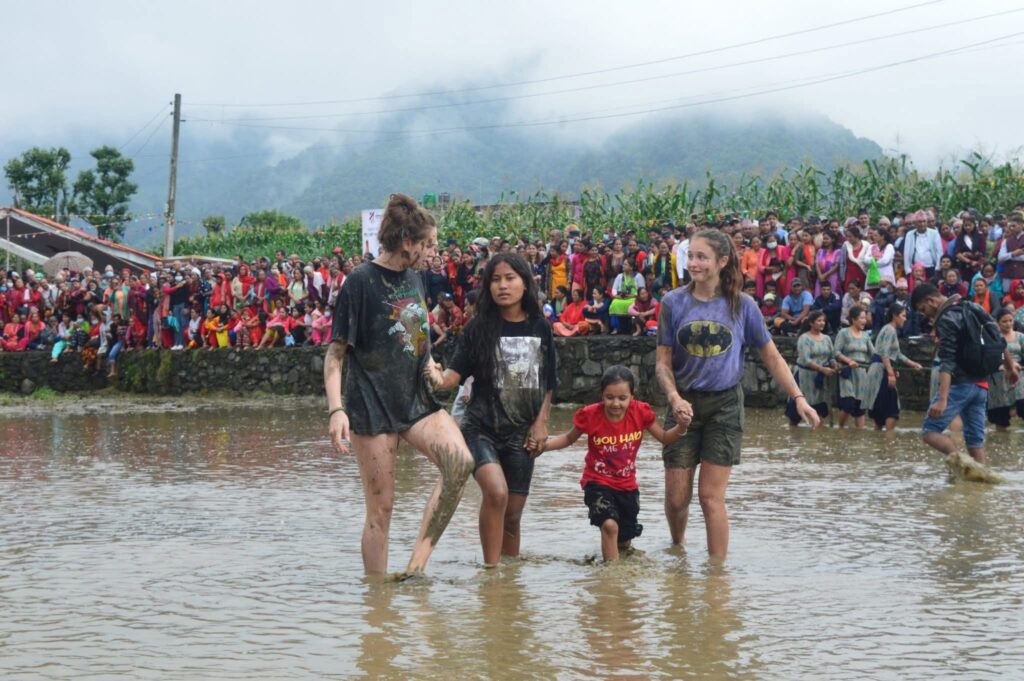 Ropai Festival, otherwise known as Muddy Festival, is being celebrated with happiness and communal spirit in rice-farming regions in Nepal. The farmers open up the fields on this day by tilling the grounds and irrigating the fields. As the earth is turned into mud, villagers gather in large numbers to relocate green rice saplings into the fields singing Asare Bhaka—feelings songs that are traditional to agriculture, rain, and rural life. The festive atmosphere turns a task-oriented job into a merry and social outing that brings together the populace with one aim.
Apart from planting, Asar 15 is a merrymaking activity that is full of splashing mud, song, dance, and communal feasts. The traditional meal of the day is dahi-chiura (beaten rice mixed with curd), soft to digest but rich in energy value, believed to predict prosperity for the new agricultural season. The women and men wear traditional clothes, and even the children join the mud fields to play and watch the festival themselves. The village is filled with merriment and laughter as they take pride in their tradition.
The celebration now extended outside villages. City dwellers and tourists in recent years also visit nearby Ropai rural farming communities to join the Ropai Festival and experience the muddy Asar 15 celebration. The tourists dress in outfits similar to those of farmers, wade into mud pools, and enjoy a lifestyle that reminded them of nature and Nepal’s agrarian past. The growing involvement of the outsiders has served to maintain the festive spirit while placing spot light on the life of Nepali peasants.
Rice Planting in Nepal—A Way of Surviving Life
Rice is not just a crop in Nepal—it is the lifeblood of Nepali food, economy, and lifestyle. Rice planting begins with the nurseries, where seedlings grow from seeds. After the monsoon arrives at Asar, the cultivators begin to flood and till their fields to prepare them. This is followed by transplanting seedlings by hand, a task that has been passed down through generations. It is a laborious process but strongly imbued with cultural and emotional significance by Nepali farmers.
This work is done communally in the majority of villages. Neighbours, friends, and relatives come together to help each other plant, sometimes shifting from farm to farm among themselves. Such communal labour, known as parma in some regions, enhances relationships between societies and keeps all hands engaged. The Ropai Festival cooperation is a prime example of how agriculture has become a part of Nepali community living.
While new devices and equipment are becoming more common, especially in the plains (Terai), hill regions are mostly still using manual methods. Ropai Festival celebrates this balance between tradition and modern technology to ensure that the importance of planting rice is not only admired as an economic product but also as a social, religious, and environmental benefit.
Cultural Significance of the Ropai Festival—Explore the Nepali culture
The Asar 15 Ropai Festival is not just rice-planting—it’s a cultural ritual that reflects Nepal’s respect for nature and respect for hard work. It is a symbol of fertility, harvest, and coexistence with nature. Singing songs of the rain, dancing in the mud, and eating locally together show how culture and agriculture flourish together in Nepal. These traditions help keep rural identity and foster pride among youth generations.
The Muddy Festival also shows gender equality and cooperation. Men and women participate in equal numbers in planting, singing, and celebration, highlighting how farming is a collaborative activity. Elders and children participate, and everyone gives their input, making this festival a multigenerational one celebrating strength and community. Being a living tradition, it promotes values like humility, sustainability, and thankfulness.
The cultural diversity of National Paddy Day renders it a major festival for the preservation of local knowledge and people’s ways. The music, games, dressing, and rituals employed during the Ropai Festival are all components of Nepal’s intangible cultural heritage. Furthermore, celebrating it annually not only raises the morale of farmers but also educates outsiders regarding the robust cultural roots associated with farming in Nepal.
Traditional and Modern Plowing Techniques: How the Mud Makes for Rice planting
The paddies need to be properly plowed and turned into muddy soils suitable for transplanting prior to planting rice during the Ropai Festival. The traditional technique utilizes a pair of oxen or male buffalos to pull a wooden plow. The farmer drives the animals while guiding the plow, turning the soil to break it up. When rainwater or canal water overflow the field, the soil is covered with dense mud, which is the perfect condition for rice sprouts.
This old method, halo jotne, has been practiced for generations and is still common nowadays in the hill regions and rural areas where mechanization is not feasible. Not only does it pay respect to indigenous knowledge but also preserves the close relationship between humans and animals in Nepali agriculture. The plowing music, the spatter of muddy water, and the sight of hardworking farmers and their animals are an timeless image of Nepal’s rural landscape.
On more developed or accessible farmland, power tillers and tractors are starting to displace animal power. The machines make land preparation faster and easier, especially for large-scale farms. While new tools lead to increased productivity, the old plowing method remains a cultural symbol—usually demonstrated during Muddy Festival festivities to show how generations of farmers labored. Traditional and new ways coexist, so Asar 15 is a bridge between tradition and modernity.
Ropai Festival and Rural Tourism in Nepal
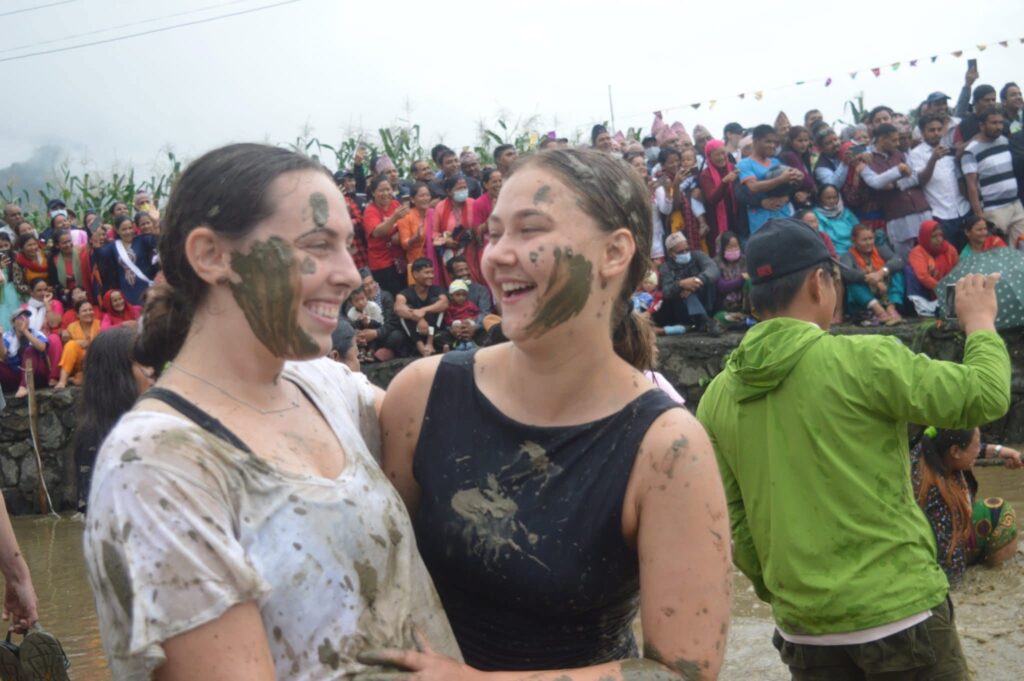 In recent years, the Ropai Festival has diversified from its agricultural roots to a core part of rural and cultural tourism in Nepal. As the demand for authentic travel grows, Asar 15 now entertains domestic and international tourists who desire to learn about traditional farming life. Villages in Kathmandu Valley (Bhaktapur, Tokha, Godavari, and Bungmati) and Pokhara (Hemja, Kaski, Lekhnath) conduct Ropai Mahotsavs, on which people visiting get an opportunity to participate in the cultivation of rice, indulge in local cuisine, and play in muddy games as well as watch cultural performances.
The festivals also include local events such as rassi tani (tug of war), bhudko futali (pot breaking in mud), catching fish from mud, and friendly mud battles between girls and boys. The tourists dress in traditional attire, enter the fields, and plant saplings together with locals. They even join folk dances, observe rituals, and enjoy seasonal delicacies such as dahi-chiura and gundruk. It keeps them connected with Nepal’s agricultural culture and rural lifestyle.
Realizing the enhanced significance of this National Paddy Day, the Nepal Tourism Board (NTB) and municipal governments have stepped in to market the festival by promoting business and facilitatinglogistics. Meager budgets are allocated to organizing Ropai Mahotsavs, which stimulate rural economies and preserve culture. This agri-tourism model has created a bridge between city and village tourists. Asar 15 has become a beautiful demonstration of how an ordinary farmer’s day can be transformed into a celebration of culture, enjoyment, and global admiration for Nepal’s farming heritage.

US$ 375
Traditional Foods of Asar 15 (Ropai Festival)
Food takes on importance during the Ropai Festival, both as a power source for farmers and as a symbol of culture, community, and celebration. Individuals come together to enjoy warm Nepali traditional foods that are healthy and invigorating after working in mud fields on Asar 15.
1. Dahi-Chiura (Curd and Beaten Rice)
The most symbolic and widely used dish of Asar 15 is dahi-chiura. It is a combination of chiura (rice beaten) and dahi (homemade curd/yogurt). It is easy to prepare, refreshing, and rich in energy—just perfect after long hours of muddy work in the rice fields. In most homes, it’s served with a pinch of sugar, fruits, or even pickles for flavor. It’s not just a food but a traditional ritual—served to everyone who visits, works there, or is a family member.
2. Gundruk and Sinki
These fermented green leafy vegetables are a side dish of rural Nepal. Beaten rice or rice grains accompanied by the gundruk ko jhol (gundruk soup) which is hot and spicy. Sinki achar or gundruk ko achar is cold and served also as a pickle. Sour in nature, probiotic in quality, they form a healthy and nutritious part of the meal.
3. Seasonal Vegetables and Achar (Pickles)
Various types of achar (pickles) made from green chili, radish, cucumber, tomato, or lapsi (Nepali hog plum) are common accompaniments. Seasonal vegetables freshly prepared, like saag (spinach), pumpkin curry, or potato-tomato gravy, will be made on this day in village homes if many helpers or guests have been invited to help with the planting.
4. Meat Dishes (Optional)
There could also be preparation of goat curry, buffalo meat, or country chicken curry in some locations, especially where there are large gatherings of people, and individuals enjoy a special treat. They are usually served in the evening as part of the group meal or as a celebratory treat. However, in most homes, the day stays vegetarian, with a focus on food that is easily digestible and cooling.
5. Local Snacks and Drinks
Other snacks like sel roti, furaula, and fried tarul (yam) can also be prepared. Homemade raksi (local liquor) or jaand (rice beer) is occasionally served in small quantities to the attendees in the evening ceremony by some societies to celebrate after a day of backbreaking labor.
Conclusion
The Ropai Festival on Asar 15 is not merely the beginning of rice farming but also a living expression of Nepal’s fertility farming culture, rural sociability, and national pride. The festival is a readout of the whole face of Nepal, from farmers singing songs to playing in the mud, and from the aroma of customary food like dahi-chiura to the rural common culture of Nepal. It spans generations, honours the earth, and offers a densely experiential encounter with the nation’s agricultural tradition.
Over the past few years, the Ropai Festival has been a trademark of agro-tourism that has drawn tourists from all around the world to witness the authentic village way of life themselves. From rice cultivation to tug-of-war, mud festivals, and folk dances, the Muddy Festival leaves lasting memories in the hearts of locals and tourists alike. It is not just a festival—it is a lifestyle that promotes sustainable tourism, safeguards rural heritage, and develops local livelihoods.
At Graceful Adventure Travel, we are happy to offer informative and ethical Ropai Festival tours to domestic and international tourists. Being one of Nepal’s top 10 travel agencies, we offer day tour and cultural packages to the most picturesque festival locations around Kathmandu, Bhaktapur, Pokhara, and nearby villages. Join us to celebrate National Paddy Day in the most adventurous, culturally rich, and muddiest manner conceivable—where adventure and culture meet, and each squelch of mud draws you closer to Nepal’s heart.
Contact Details for Ropai Festival Tour
| Particular | Details |
| Booking office | Graceful Adventure Travel |
| Phone Number | +977-9851219412, 014700180/81 |
| Office Location | Sorhakhutte, Kathmandu, Nepal |
| [email protected]/ [email protected] |