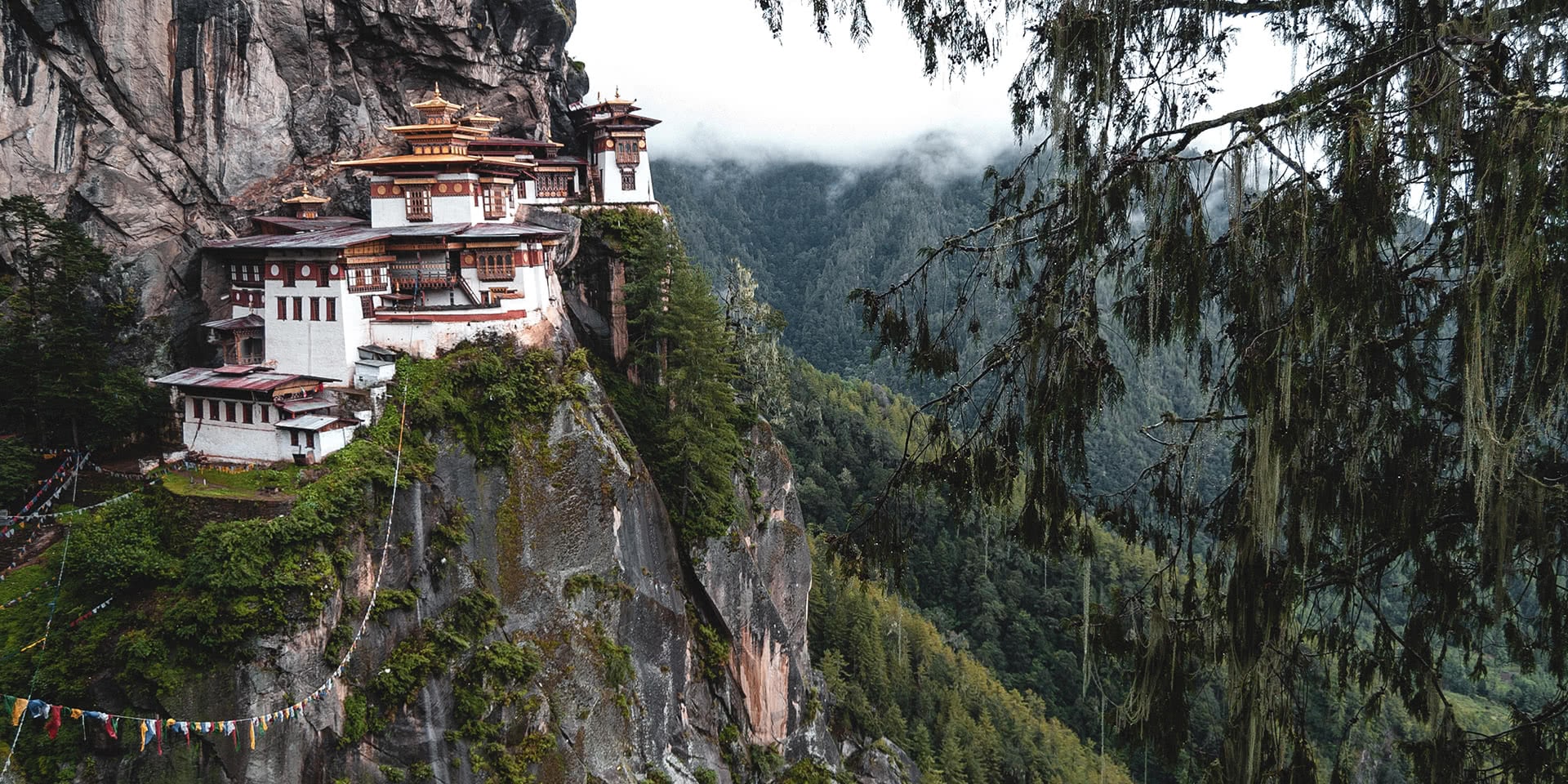

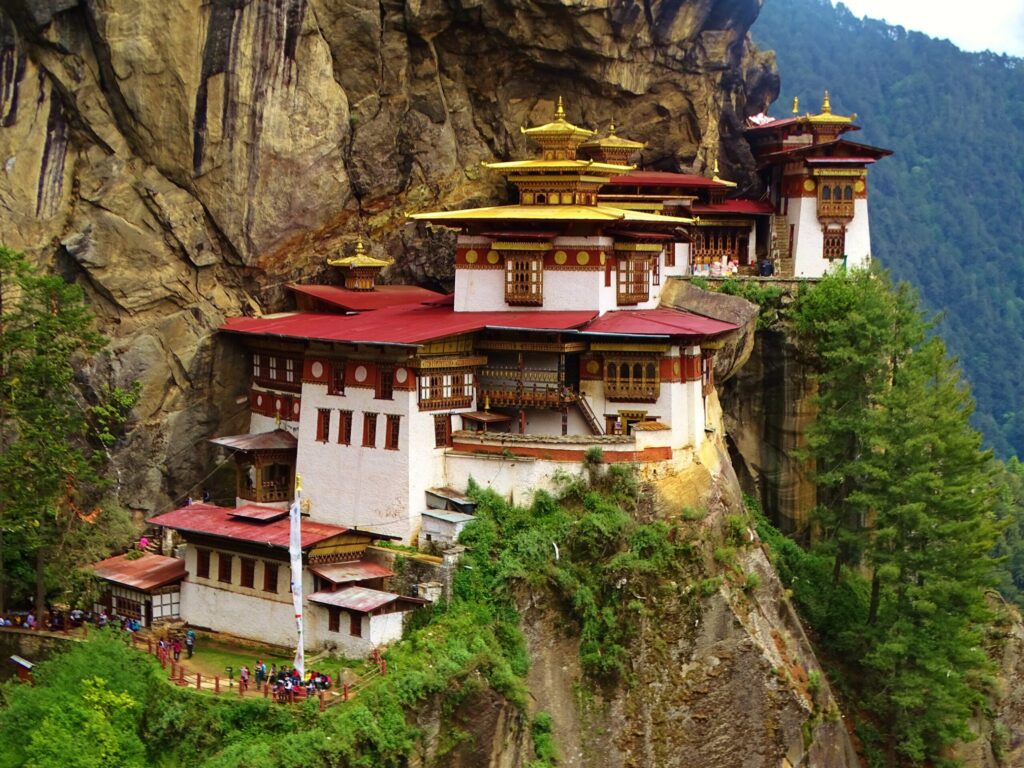
Tiger’s Nest Monastery, or Paro Taktsang, is Bhutan’s most renowned spiritual destination and one of the country’s most cherished cultural symbols. Striking dramatically from a vertical cliff at an altitude of 3,120 meters, it towers over the green Paro Valley below. It is stunning and symbolic to see as the whitewashed monastery appears to cling to the cliff face amidst clouds and floating prayer flags. It is the ideal synthesis of natural landscape and religious fervor.
The monastery was built in the late 17th century around the sacred cave where Guru Padmasambhava, or Guru Rinpoche, reportedly meditated in the 8th century. He reportedly rode to this remote cliff on the back of a tigress, said to have been his yogic consort undergoing transformation. He defeated evil forces in the region and founded Buddhism in Bhutan. This heavenly story gave the monastery its mythical name—Tiger’s Nest.
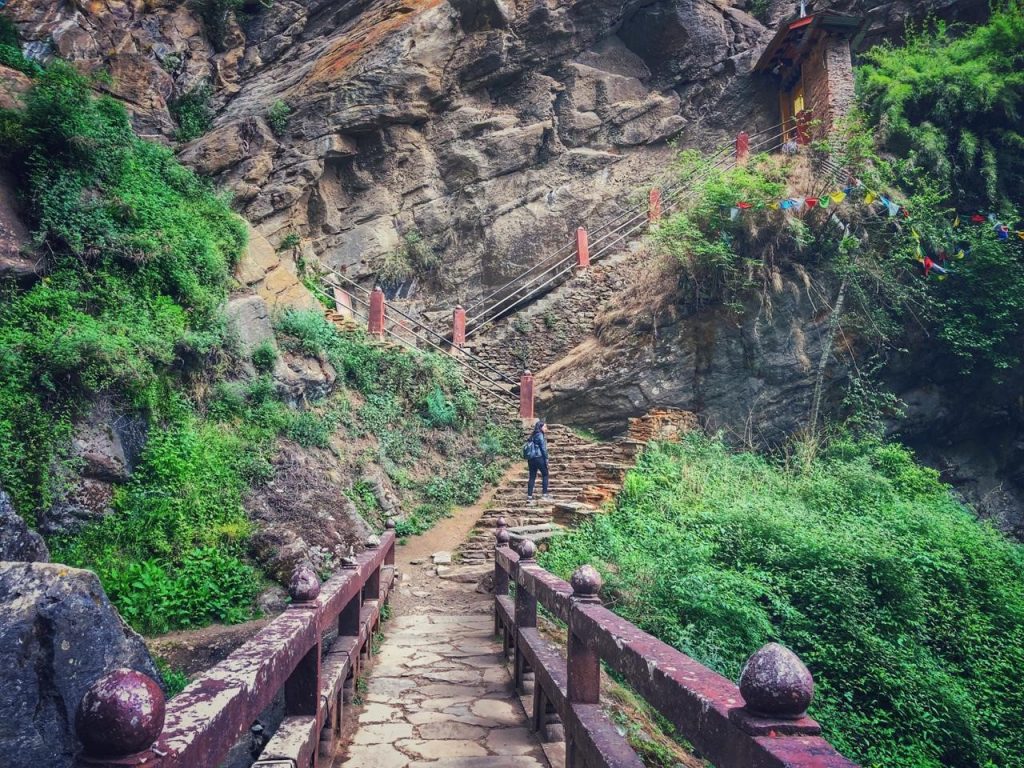
Coming to the monastery is an adventure in itself. To reach Tiger’s Nest is a challenging 2 to 3-hour trek through pine forests, stone stairs, and idyllic mountain routes. Along the way, visitors pass by tiny stupas, shrines, and a peaceful cafeteria that overlooks the monastery from the opposite side of the valley. As the trail goes up higher, the trail opens up to breathtaking views of the valley below and cliffside sanctuary above, making an air of anticipation and wonder with every step.
Inside the monastery, a series of shrines, temples, and spiritual meditation grottos exist. The interior is tastefully decorated with statues, thangka paintings, and butter lamps. Photography is prohibited inside, but the spiritual atmosphere, coupled with the scent of incense and the chanting of the monks, leaves a profound impression. The monastery is a continuous center of worship and pilgrimage where pilgrims from all around Bhutan and the world come to visit.
Tiger’s Nest is not just a tourist destination—it’s a spiritual experience. For Bhutanese Buddhists, it is the pilgrim site and a place of worship. To foreign travelers, it’s a way to experience the peaceful nature of Bhutanese culture, explore the Himalayan landscape, and meditate amidst a very peaceful environment. A journey to this sacred site is typically the crowning glory of any trip to Bhutan.
In every way, Tiger’s Nest Monastery embodies the spirit of Bhutan: distant yet welcoming, ancient yet timeless, and always steeped in religion. Whether you visit for the legend, the heart of the trek, or to witness one of the globe’s most beautiful monasteries, Paro Taktsang provides a once-in-a-lifetime experience.
Why Tiger’s Nest Monastery is an Important Destination in Bhutan Tour Packages
1. Signature Landmark of Bhutan: Tiger’s Nest is the most recognized and symbolic emblem of Bhutan. Its cliff-hanging location and bold architecture make it the national pride and attraction, drawing travelers globally. Having it included in a tour package signifies that travelers get to witness Bhutan’s most renowned wonder.
2. Deep Spiritual and Cultural Significance: The monastery is Guru Padmasambhava’s spiritual meditation ground, who introduced Buddhism into Bhutan. It offers tourists a special experience of being in contact with Bhutan’s rich Buddhist traditions, seeing traditional religious structures, and feeling living spiritual traditions.
3. Uncommon and Rewarding Trekking Experience: Tiger’s Nest is accessed through a 2 to 3-hour trek along beautiful pine forests, prayer flags, and mountain trails. The journey provides not just scenic beauty but also spiritual experience of contemplation and awareness, hence making the trip physically engaging and spiritually fulfilling.
4. Enhances Tour Package Value: Including Tiger’s Nest inherently increases the value of any tour to Bhutan. It is often the peak experience that any traveler looks forward to most, thereby making the package attractive and competitive in the market.
5. Exciting and Memorable Visual Experience: The monastery’s breathtaking location on a cliff offers spectacular views and a powerful emotional experience. Tourists remember the dramatic scenery and the monastery’s seeming disregard for gravity, which is memorable.
6. Highest Demand and Tourist Expectation: Almost all tourists visiting Bhutan desire to visit Tiger’s Nest. Excluding it results in disappointment and a sense that the tour was incomplete as it is regarded by many as an absolute must-visit place.
7. Represents Bhutan’s Tourism Philosophy: Tiger’s Nest demonstrates Bhutan’s commitment to the conservation of its spiritual heritage, cultural heritage, and natural resource base. Including it aligns the tour with the country’s philosophy of Gross National Happiness and authentic cultural tourism.
Best Time to Visit Tiger’s Nest Monastery—In-Depth Guide
Tiger’s Nest Monastery (Paro Taktsang) is one of the most stunning landscapes in Bhutan, and the choice of best time to visit can literally make a huge difference in your experience. The spring season (March to May) and autumn (September to November) are the best times to visit because of their pleasant weather and clear skies.
Spring Season: Spring boasts warm weather and blooming rhododendrons, bursts of red, pink, and white flowers among the pine trees. The new leaves combined with the multicolored flowers make the hike a visual feast. The air is crisp and pure, and the sky typically is a clear blue, with a breathtaking view of the monastery perched on the cliff and the towering Himalayas in the background.
Autumn season:—It is the best time to enjoy tours. After the rains of the monsoon, the atmosphere is refreshed, the sky is very clear, and the visibility is excellent. The weather is pleasant and cool during the daytime, and rain chances are negligible. Photographers especially enjoy the crisp and clear light, which provides a boost for the dramatic vistas of the monastery and the Paro Valley below.
Winter Season: Although winter, which includes the months of December to February, is chilly, traveling during this time has a beauty of its own. The monastery and hills around it like to attired themselves in a beautiful mantle of snow and remain quiet and magical. But the mercury drops below zero, especially in the morning and evening. The trail could be slippery or icy, and thus special caution and warm clothing are a necessity.
Monsoon Season: Monsoon season (June to August) is generally the worst time to visit. Consistent rain leads to slippery, muddy paths, increasing the chances of landslides and turning the trek more difficult and unpleasant. The monastery itself may also be blanketed in clouds or a fog veils, hiding the views.
Overall, traveling in spring or autumn gets your best chance for good weather, pleasant trekking, and breathtaking scenery. Traveling at this time lets you enjoy the spiritual atmosphere at Tiger’s Nest and Bhutan’s mountaineous natural beauty full-scale.
How Many Days Are Needed to Visit Tiger’s Nest Monastery on a Bhutan Tour?
Visiting Tiger’s Nest Monastery generally requires at least a full day of your Bhutan tour itinerary. This is divided into around 2 to 3 hours for the hike up to the monastery, visit to the site, and back down. Because of the physical effort and the altitude, one should not attempt to rush through the visit in order to allow time to absorb the experience and have time available to rest.
The majority of tourists take tour packages like two nights three days or three nights four days, which include Paro mainly and a trek to Tiger’s Nest. These shorter packages allow tourists to go to the monastery and some cultural sites in Paro but it quite rushed and might not even give enough time for acclimatization or travel to other parts of Bhutan.
For a more relaxed tour, four-night, five-day, or five-night, six-day bhutan tour packages are recommended. The tours usually include a dedicated day for Tiger’s Nest, as well as visits to Thimphu (the capital), other temples, museums, and markets. The extra days allow for a better altitude acclimatization and a more meaningful cultural experience at a more relaxed pace.
Longer tours of seven nights eight days and more provide a relaxed and detailed Bhutan tour. The schedules have time for acclimatization, two or more days at Tiger’s Nest and surrounding attractions, and excursions to other parts of Bhutan like Punakha or Gangtey Valley. This duration is ideal for visitors who desire a comprehensive and lifelong memorable experience.
In brief, while it is doable to visit Tiger’s Nest on a two- or three-day tour, four-day or longer tours enable a more leisurely pace and more rewarding experience. It’s a matter of your schedule and personal travel style, but most travelers find that they are able to enjoy this amazing destination more by spending at least three or four nights in Bhutan.
Official Documents and Permits Needed to Visit Tiger’s Nest Monastery
There are certain official documents and permits that one needs to visit Tiger’s Nest Monastery in Bhutan since Bhutan strictly manages tourism to maintain its culture and nature.
1. Genuine Bhutan Visa: It is compulsory for every foreign traveler to possess a Bhutan visa before arrival in Bhutan. Foreigners cannot directly apply for a visa; it must be reserved from a government-authorized Bhutanese tour operator or international travel agency. The visa is usually issued electronically upon confirmation and payment of your tour.
2. Entry Permit to Paro Area: Upon arrival in Bhutan, you will receive an entry permit to enter certain areas, like Paro where Tiger’s Nest is located. This entry permit is processed and issued by the government of Bhutan and typically is included in your tour package.
3. Special Permit for Tiger’s Nest: No special permit as such is required for Tiger’s Nest Monastery, but the visit is controlled within your entry permit to Paro and Bhutan. Most of the time, entrance fees to the monastery are included within your tour package or paid on arrival.
4. Identification Documents: The traveler should have their passport and photocopy of Bhutan visa and trekking and traveling permits with them. It is advisable to have these documents prepared in advance as it may be requested by officials at various checkpoints along the trekking route.
5. Requirement of Local Guide: All foreign visitors to Tiger’s Nest must be accompanied by a licensed Bhutanese guide employed by the tour company. Independent travel without a guide is not permitted in Bhutan.
Rules and Regulations in Visiting Tiger’s Nest Monastery
1. Showing Reverence: Tiger’s Nest is a highly revered Buddhist monastery. Visitors must behave appropriately, remain quiet or whisper, and do not carry out any distracting activity on the monastery premises.
2. Dress Humble: Men and women should dress modestly with their knees and shoulders covered. Avoid dressing in shorts, sleeveless, or revealing clothes as a sign of respect in the religious environment.
3. Photography Prohibitions: Photography and videography are strictly prohibited inside the monastery and its temples to preserve the sanctity of the site. Photography is permitted outside the monastery and along the trekking trail but according to any notices displayed.
4. No Alcohol or Smoking: Smoking, consuming alcohol, and any form of drunkenness are strictly prohibited inside the monastery complex and along the trekking path.
5. Follow the Instructions of the Guide: Every tourist must be accompanied by a licensed Bhutanese guide and follow his/her instructions during the tour, such as avoiding local custom or safety regulations.
6. Follow the Laid Trail: Tourists are to follow laid-down paths and not enter closed or private areas. Straying from the track can damage the fragile ecosystem and be disrespectful to the monastery’s sanctity.
7. No Loud Music or Talking: Keep quiet. Do not play music, shout, or make excessive noise that will disturb monks and fellow travelers.
8. Refrain from Touching Religious Items: Do not touch statues, thangkas, or other religious items in the monastery. Such items are holy and have to be handled carefully.
9. Don’t Litter: Keep it clean by taking back all your trash or disposing of it responsibly. Bhutan places utmost importance on environmental protection and the “Leave No Trace” policy.
10. Health and Safety: Be physically fit for the trekking and carry adequate water and snacks. Be cautious on rugged terrain and steep slopes and let guides know in case of sickness.
Conclusion About Tiger’s Nest Monastery
Tiger’s Nest Monastery, or Paro Taktsang, is Bhutan’s most sacred spiritual destination and a pilgrimage must for any visitor to this Himalayan kingdom. Perched dramatically on a cliff at 3,120 meters above sea level, the monastery offers breathtaking views down the Paro Valley and is Bhutan’s manifestation of rich Buddhist heritage. Built above the meditation cave of the founder of Buddhism in Bhutan, Guru Padmasambhava, Tiger’s Nest is more than a cultural icon, though – it is a site of profound religious significance and pilgrimage. The 2 to 3-hour hike that is arduous through pine forests, prayer flags, and mountain trails only serves to enhance the spiritual dimension of the pilgrimage, making the experience a thrilling adventure.
Well-planned tours ensure all the permits, transportation, and local guides are taken care of hassle-free for a rewarding and easy experience. Well-planned packages range from short 2-night, 3-day trips to long 7+ nights in-depth explorations to enable the traveler to acclimatize as comfortably as possible and explore Bhutan’s unique culture. The best seasons to travel are spring and autumn with pleasant weather and clear blue skies to enjoy the magnificent monastery and Himalayan landscapes at its best. Visitors are invited to respect Bhutan’s tradition and monastery manners, including modest dress, no photography inside, and respect, which staff help facilitate.
A trip to Tiger’s Nest Monastery is far from a tour of attractions—it’s a pilgrimage of spirituality and culture that encapsulates the Bhutanese heritage. Being the country’s iconic landmark, it lifts every Bhutan tour package with its iconicity, richness of culture, and eternally memorable trekking experience. Whether adventure, spirituality, or cultural immersion you seek, Tiger’s Nest is the peak of your Bhutan journey, with memories you’ll cherish forever.
Contact Details for Tiger’s Nest Monastery Tour
| Particular | Details |
| Booking office | Graceful Adventure Travel |
| Phone Number | +977-9851219412, 014700180/81 |
| Office Location | Sorhakhutte, Kathmandu, Nepal |
| [email protected]/ [email protected] |